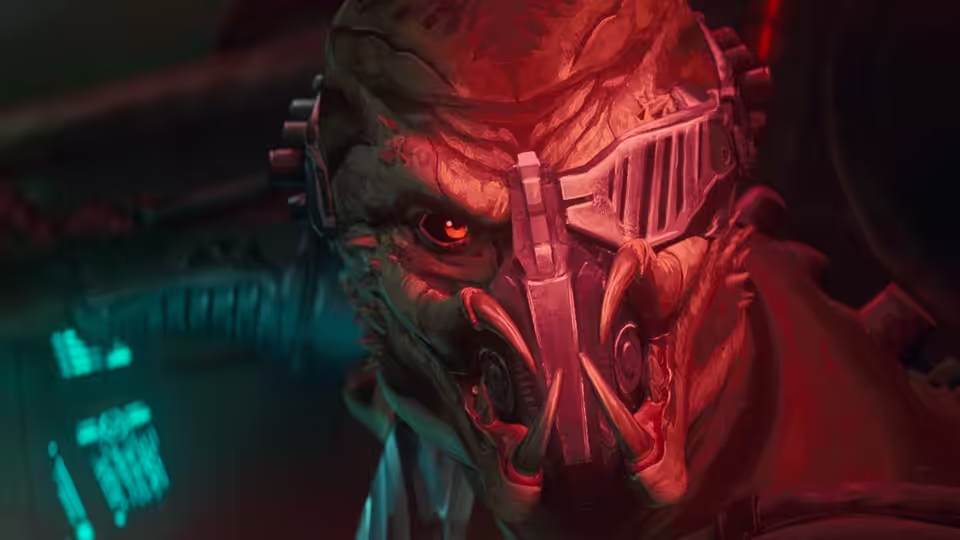
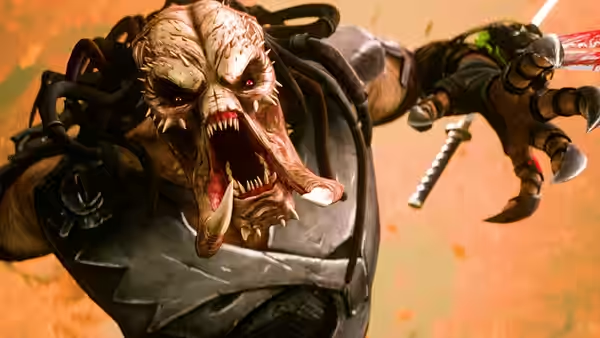
Dan Trachtenberg takes the Predator through the Viking age, feudal Japan and the Pacific war in 85 animated minutes, and the fights are as inventive as any the series has staged. The people being fought over are thinner than the blades. Worth an evening if the franchise is yours.
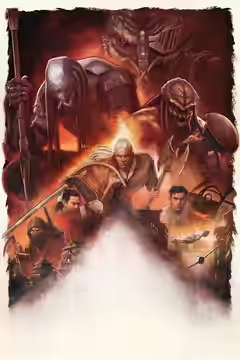
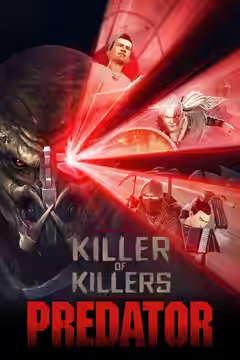
Dan Trachtenberg made Prey in 2022, the best thing to happen to this series since 1987. Predator: Killer of Killers is his follow-up, and it is a different animal: animated, an anthology, 85 minutes long. Micho Rutare’s screenplay sends the creatures after a Viking raider, a Japanese swordsman and an American pilot, then binds the three together in a wraparound we will not describe. It is good, it is lopsided, and it is best when it stops talking.
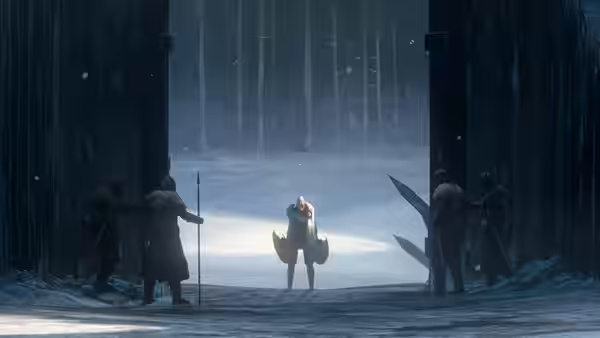
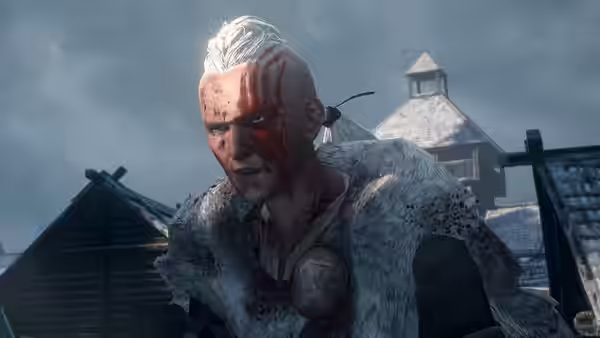
The first story belongs to Ursa (Lindsay LaVanchy), who sails a longship across grey water to kill Chief Zoran (Andrew Morgado) and settle an old debt, with her son Anders (Damien C. Haas) beside her to learn how it is done. The look is set here and holds: heavy outlines over backgrounds like wet paint, snow nearly white, blood nearly black. Joel Chang and Amee Carter’s production design gives Zoran a fortress of black timber on broken rock, and the raid is staged with a clarity live action rarely manages. Then the snow starts moving on its own. We winced at the first kill, as intended; by the fourth we had stopped, which is a problem the film never solves.
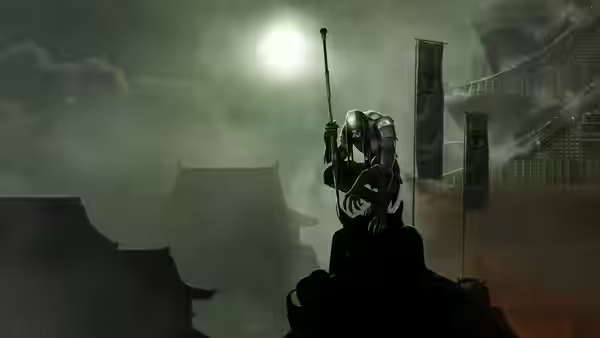
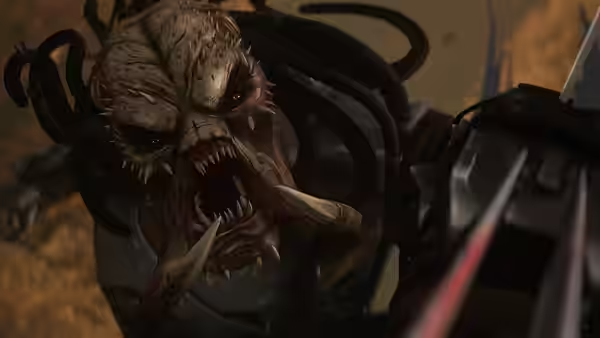
The second, set in feudal Japan, is almost wordless and the handsomest of the three. Kenji (Louis Ozawa Changchien) returns to the castle held by his brother Kiyoshi, whom Changchien also voices, and the film climbs the walls with him in the rain, over tiled roofs and through paper screens that tear like skin. Trachtenberg has always known the Predator works best as a shape you half saw, and here Benjamin Wallfisch’s score drops to a struck drum and a held string while the brothers and their uninvited guest circle one another. It is also the story we had seen most often before. Two brothers, one castle, a father’s shadow: the film knows we can fill in the rest.
The third is the best. Torres (Rick Gonzalez) is a mechanic in the Pacific in the Second World War who wants to fly and is told to stay in his lane by the pilot Vandy (Michael Biehn, of Aliens, a voice like an old friend at a wake), while Delgado (Alessa Luz Martinez) gets on with the job. What follows is a dogfight between propeller aircraft and something that does not need propellers, and it is where the animation earns its keep. Aircraft roll, stall and shed pieces; the camera does things no camera on a real carrier could; Stefan Grube cuts it fast without losing us once. We sat up. We had been admiring the film until then, which is not the same as enjoying it; Torres is the first person on screen we were afraid for.
The animation is not consistent. The fights run at a stuttered frame rate that gives the blows weight, but in quieter scenes faces go slack and lips disagree with lines, like an expensive video game cutscene. Wallfisch is good at menace and less good at people: a great deal of low brass, not much melody. Grube’s cutting between stories is clean, but 85 minutes divided three ways, plus a fourth to house them, leaves each warrior the depth of a trading card. Ursa is brave and angry. Kenji is quiet and angry. Torres is eager. The film tells us this is about honour and what you owe the people beside you, then says so out loud, twice.
It sits below Prey, which understood that one hunter and one hunted is the whole engine, and well above the two Alien vs. Predator films, a low bar cleared easily. It is closer in spirit to the 1987 original than anything since: the creature is a problem to solve with what is to hand, not a mythology to recite, though the wraparound cannot resist a little reciting. Most critics have been warmer, and we understand why: the kills are inventive, the pace is quick, nothing here is lazy. We wanted one of the three stories to have room to breathe, and the anthology is built so that none can.
It was made for the small screen and it suits one. Watch it with the sound up on a dark evening, forgive the faces, and wait for the aircraft.