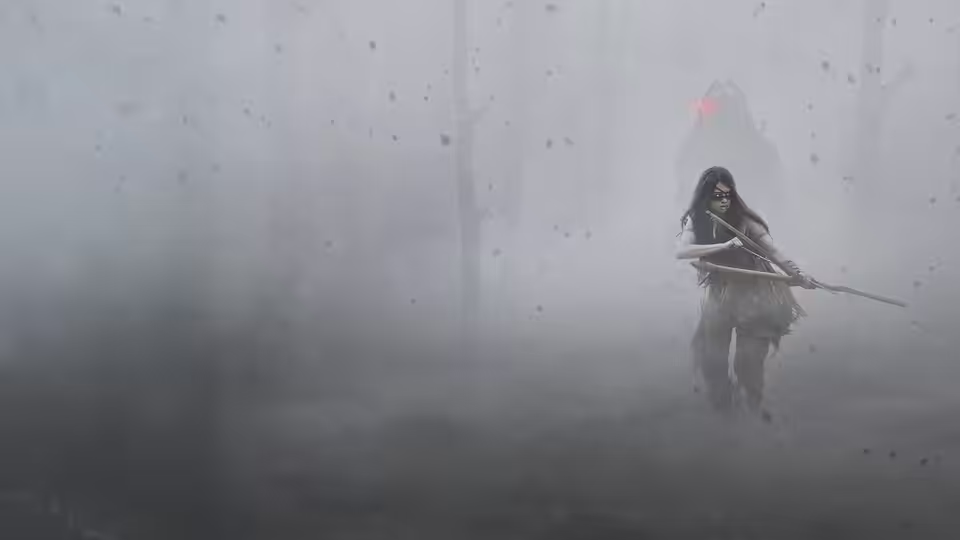
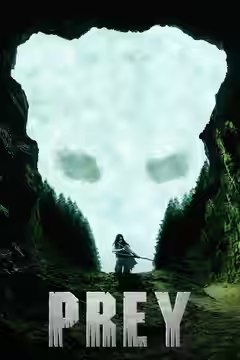
Dan Trachtenberg strips the Predator back to one hunter, one alien and a lot of open grass, and Amber Midthunder carries it without raising her voice. It is lean, bloody and satisfying; the digital animals and a few modern lines are the price.
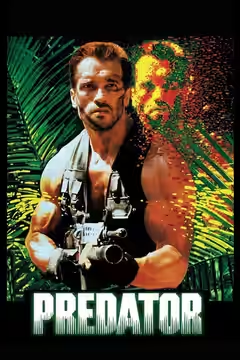
The Predator series has spent thirty-five years trying to get back what John McTiernan’s 1987 film managed first time: a few capable people somewhere remote, and something better at killing than they are working through them. Prey throws the accumulated lore out. Dan Trachtenberg, whose 10 Cloverfield Lane was also a franchise entry that behaved like a film of its own, goes back to 1719, to the northern Great Plains and a Comanche band, and gives the alien one serious opponent: Naru, a young woman nobody at home will take seriously as a hunter. It is a good, lean film, 100 minutes long, and it earns most of the praise it has had.
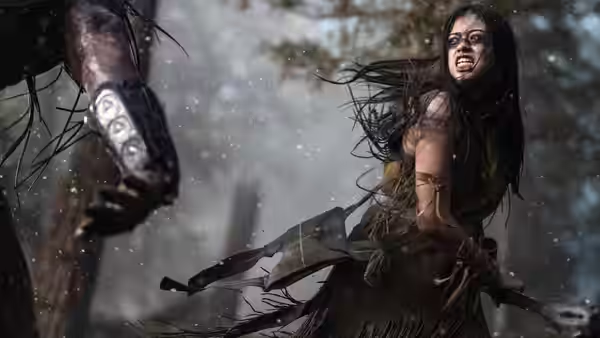
Amber Midthunder carries it, and she does so quietly. She loses fights, misreads the ground, gets stuck in a bog and has to be hauled out. What Midthunder plays is attention: Naru watches how the thing kills, and what it declines to kill, and the film’s best idea is that this is her weapon. Dakota Beavers, as her brother Taabe, is the band’s real hunter and could have been the obstacle; instead he is the one person who half believes her, and Beavers gives him an easy authority that makes the half hurt. Michelle Thrush, as their mother Aruka, has little screen time and uses it well.
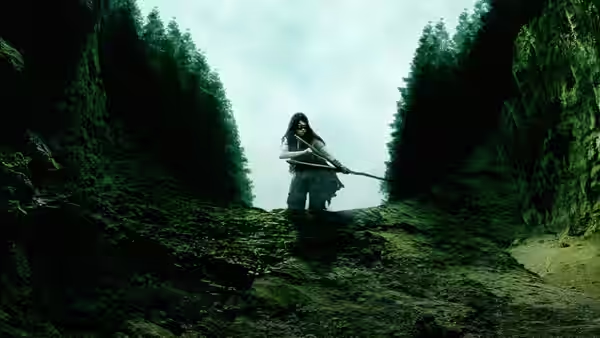
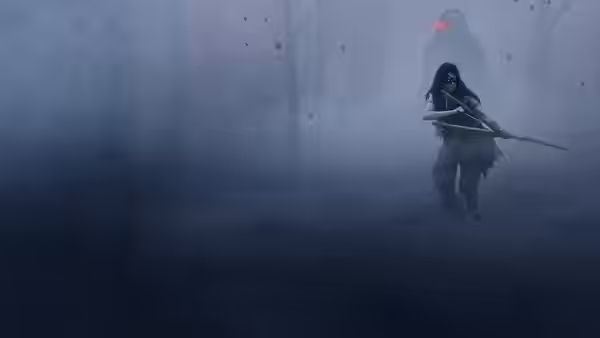
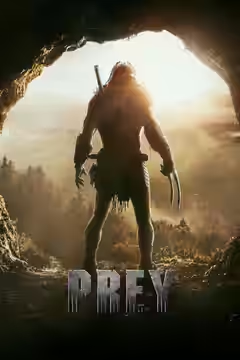
Jeff Cutter shoots the plains early and late, so the grass goes gold and the figures in it throw long shadows, and lights the night scenes with fire and not much else, which suits a creature you mostly see as a shimmer against the trees. Kara Lindstrom’s production design keeps the Comanche camp lived in rather than displayed: hides drying, meat on racks, tools with wear on them. Stephanie Portnoy Porter’s costumes do the same job. The alien has been redesigned with a bone mask in place of the familiar metal one, and Dane DiLiegro, a head taller than anyone else on screen, moves it like something that has never once been afraid.
The moment that got to us was not the alien. About a third of the way in, Naru walks into a field of skinned buffalo, dozens of them, stripped and left to rot, and Cutter holds on it in flat daylight while Sarah Schachner’s score drops to almost nothing. We were sickened, and then we understood what the film was doing. The French trappers responsible, led by Bennett Taylor’s Raphael, are the second predator in the story, and the more thorough one. The film does not press the point. It shows the field and moves on.
Angela M. Catanzaro and Claudia Castello cut the action so that you can follow it, which should not be worth mentioning and is. Each fight has a geography: where Naru is, where the thing is, what lies between them. There is a sequence in a river with a bear that we will leave for you, and a long stretch in the trappers’ camp where the alien works its way through armed men, and both are as good as anything the series has done. Schachner’s score is mostly drums and a low drone, and it knows when to stop.
The flaws are real. The animals are digital and look it: the lion is poor, and the bear gets away with it only because water and the alien hide most of it. Patrick Aison’s dialogue has a habit of sounding like the present day, and a few lines land as if from another film. And the structure is tidy to a fault. Everything Naru learns in the first half hour is used in the last twenty minutes, in order, and once you have spotted the pattern the ending loses a little of its danger. A few critics found the whole thing thin, and it is thin. It is thin the way a good knife is.
Set against its own series, this is the second-best Predator film, and nothing else is close. Watch it with the lights off and the sound up. For much of its length the alien is a shimmer and a click, and both need the dark.