Nimród Antal’s back-to-basics sequel starts with real menace: strangers dropped into a jungle that turns out not to be ours. The first hour is lean and tense; the second loses the map, and Adrien Brody’s hard man never quite convinces.
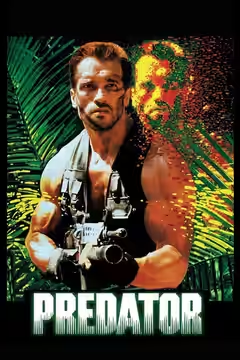
Robert Rodriguez, producing, and Nimród Antal, directing, have taken John McTiernan’s Predator (1987) and turned it inside out. In the original a squad went into a jungle and something hunted them. Here the soldiers are dropped by parachute into a jungle on a planet that is not ours, and the hunting is what the place is for. Michael Finch and Alex Litvak’s script is open about the borrowing, down to a river crossing, and for an hour it works. Then the film loses its nerve.
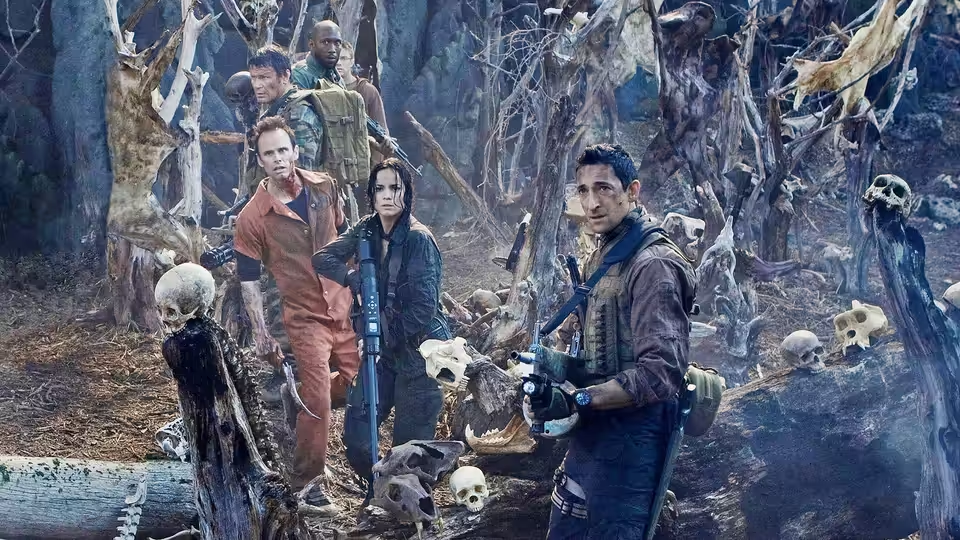
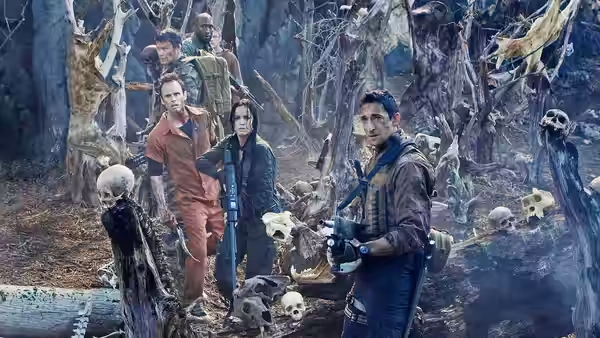
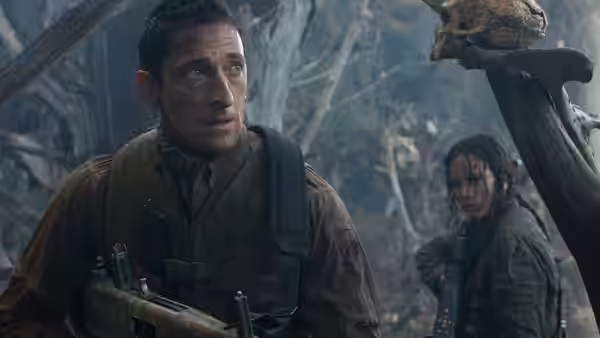
The opening is the best of it. Adrien Brody’s Royce wakes up falling, and his parachute opens late enough that we flinched. Gyula Pados shoots the canopy from below, heavy green under a hard white sky, and Dan Zimmerman cuts the first half hour as one arrival after another, each stranger tumbling out of the trees with a weapon and a lie. When the group climbs to a ridge and sees a horizon with too many moons in it, nobody speaks, and neither did we. It is the one properly frightening image in the film.
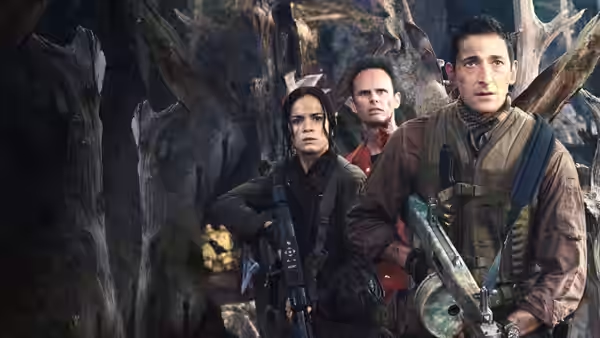
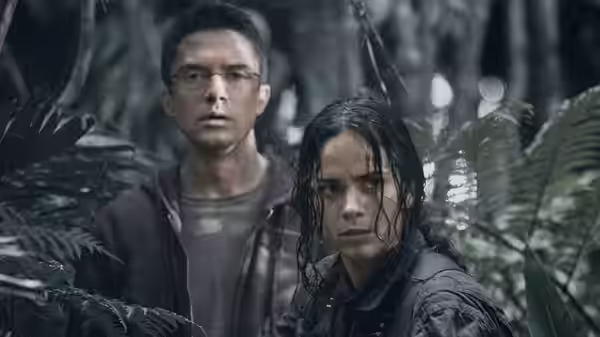
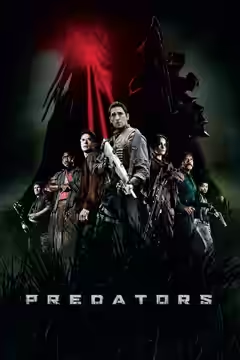
Walton Goggins is the only actor who has noticed what kind of film he is in. His Stans, a death-row convict with a filthy mouth and no gun, treats the whole thing as a bad day out and gets every laugh going. Alice Braga’s Isabelle, a sniper, is the group’s conscience and the one who has heard of a hunt like this before. Oleg Taktarov’s Nikolai, hauling a minigun through the undergrowth, gets one quiet scene about his children that lands harder than any of the shooting. Mahershala Ali says little as Mombasa and we watched him anyway.
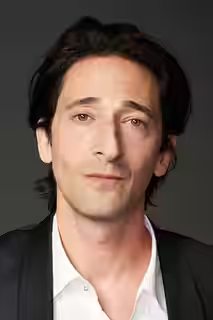
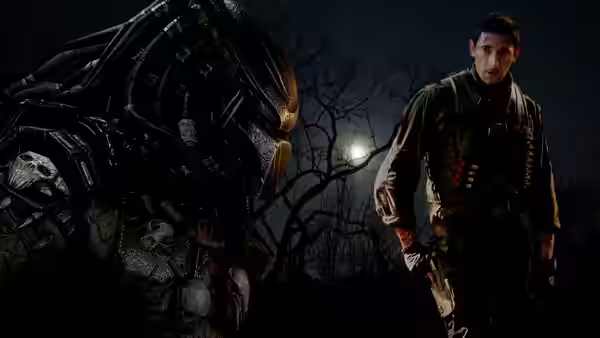
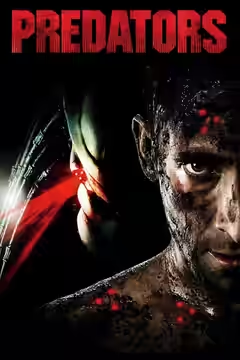
Brody divides people, and we see why. He has bulked up, dropped his voice to a growl and decided that Royce will not be liked, and he plays a hard man the way a clever man imagines one. Yet Royce is a mercenary whose plan is to let the hunters find somebody else first, and Brody’s watchfulness fits that. It is the right choice for the character and it leaves the film with nobody to hold on to when the shooting starts.
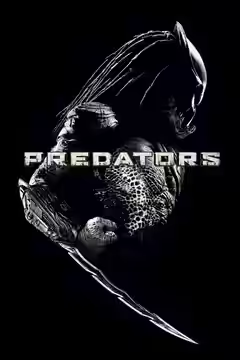
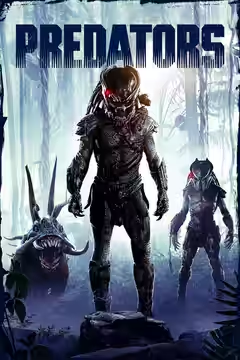
The predators are a let-down, though not the fault of the men inside them. Brian Steele’s Berserker and Carey Jones’s Tracker are practical creatures, big and heavy in the frame, and when Derek Mears appears in the 1987 design, tied to a post, the film gets a small charge from the recognition. But Antal shows them in daylight, at length, standing still. McTiernan hid his monster for most of the film; this one has three and cannot stop looking at them. Steve Joyner and Caylah Eddleblute’s design is strongest in the hunters’ camp, bones and trophies and a totem, and weakest in the ship, which is a corridor.
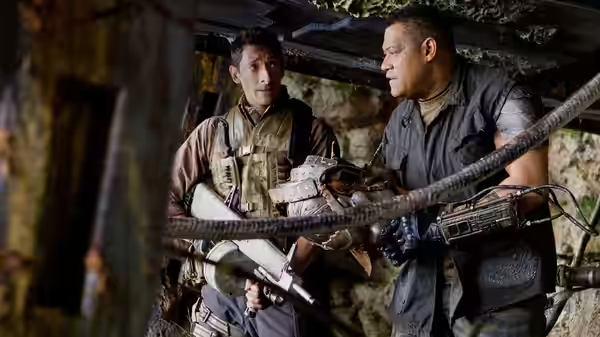
Laurence Fishburne arrives around the hour as Noland, a survivor who has lasted here longer than anyone should, and for ten minutes he is a pleasure: singing to himself, talking to someone who is not there, delighted to have company and not to be trusted with it. Then the film does something with him we will not describe, and it never gets its footing back. The last half hour is a run through dark undergrowth, cut fast and lit low, with John Debney’s score left to tell us where the tension is because the pictures no longer can. Somewhere in the final fight we realised we had lost track of who was standing where, and had stopped minding.
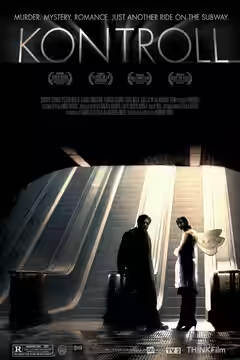
It is easy to place in the series: better than the two Alien vs. Predator films, which forgot to be about anything, and less than the original, whose quiet it copies for an hour and then abandons. Antal made Kontroll (2003), set in the Budapest metro, and that eye shows in the early stretches. Nina Proctor’s costumes tell you each fighter’s past before they open their mouths, which is more than the dialogue manages. It runs 107 minutes, carries a 15 certificate, and is worth a Saturday night with the volume up, provided you accept that you may drift in the last twenty minutes and miss nothing that matters.