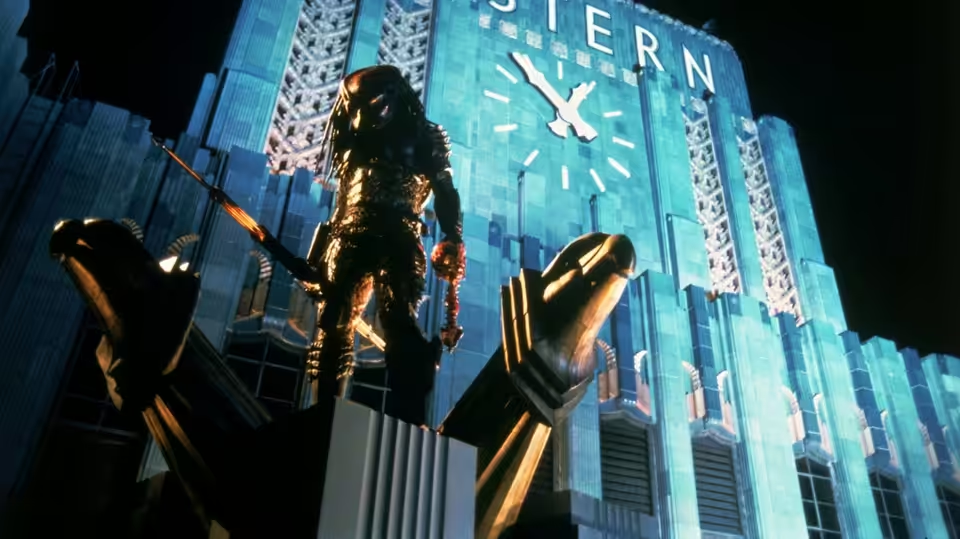
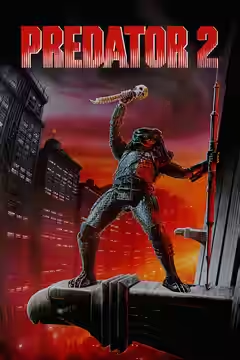
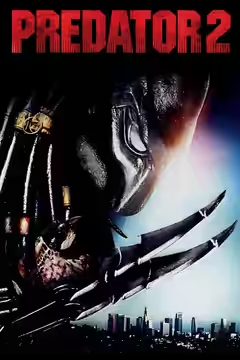
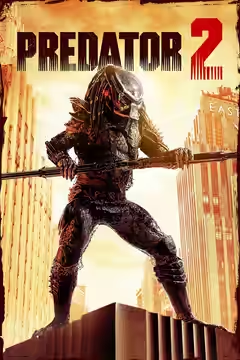
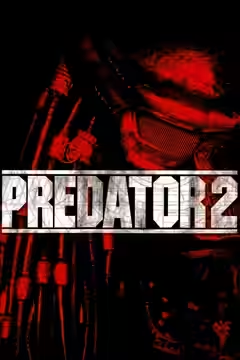
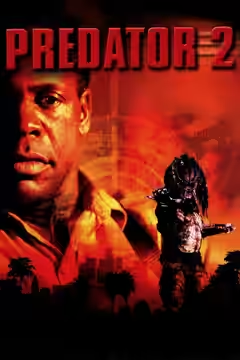
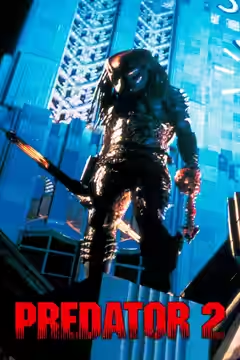
Stephen Hopkins takes the hunter out of the jungle and into a sweating, shouting Los Angeles, and the noise is the point. It is cruder than the original, but Danny Glover and a subway car full of armed commuters make it worth an evening.
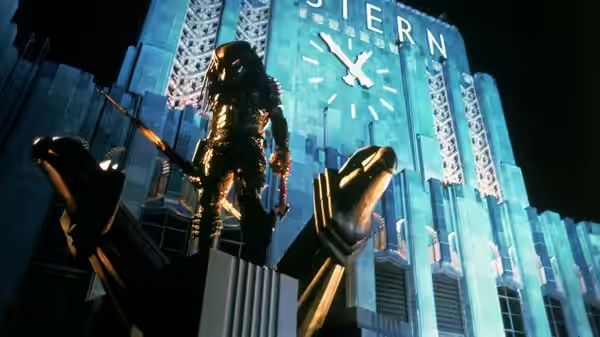
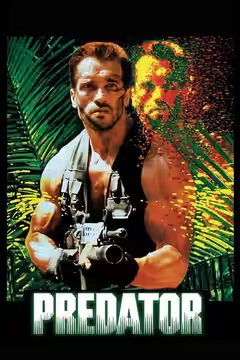
The first Predator, in 1987, was a jungle picture. John McTiernan put Arnold Schwarzenegger and a squad of large men in the undergrowth, let something they could not see pick them off one at a time, and got most of his effect from waiting. Jim Thomas and John Thomas, who wrote that film, have brought the creature to Los Angeles in 1997, in a heatwave, in the middle of a gang war, and handed it to Stephen Hopkins to direct. Nobody waits for anything. The result is cruder than the original and a good deal louder, and it is also, for about half of its 108 minutes, a decent, sweaty action picture that deserves more than the shrug it has mostly had.
Hopkins opens with a street gun battle that seems to last a quarter of an hour, and it is the weakest stretch of the film. Peter Levy shoots the city in orange haze, every window flaring, every face slick, and Mark Goldblatt and Bert Lovitt cut it so fast that we often could not tell who was firing at whom. Alan Silvestri brings back his jungle drums and lays them under sirens and helicopters. We were worn out before the plot had started, and we began to fear the whole film would be like this. It is not, quite.
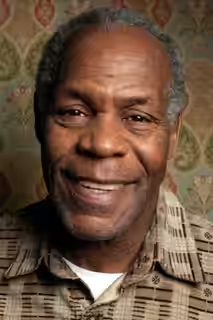
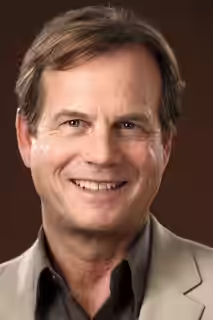
Danny Glover is the main reason it is not. His Lieutenant Mike Harrigan is not a hero in the Schwarzenegger sense; he is a middle-aged detective who sweats through his shirt, argues with his captain and runs as if it hurts. Some of the reviews call him miscast. We think they have it backwards: the film needs a man the creature might reasonably kill, and Glover supplies one. Marilyn Vance keeps him in a tie through all of it, which tells you what sort of policeman he is before he opens his mouth. Around him Rubén Blades plays Danny Archuleta as the partner who keeps him upright, María Conchita Alonso gives Leona Cantrell more steel than the script does, and Bill Paxton, as the new man Jerry Lambert, talks without pause and is a pleasure each time.
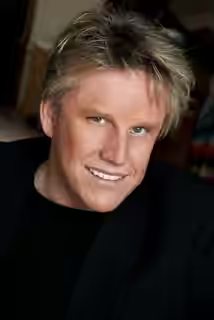
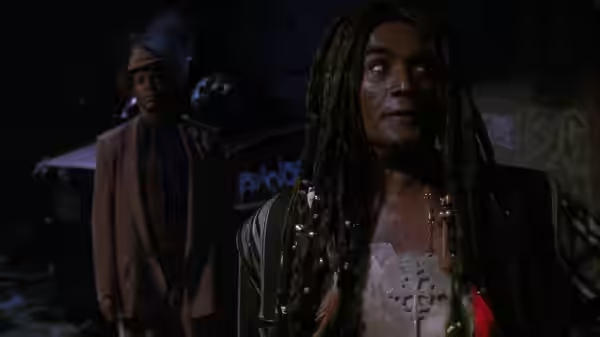
Gary Busey’s Peter Keyes arrives with a federal task force, a pair of sunglasses and no intention of explaining himself, and Busey plays him as a man who enjoys knowing things other people do not. Robert Davi’s Captain Phil Heinemann shouts at Harrigan; Morton Downey, Jr.’s Tony Pope, a television reporter, shouts at everybody. Calvin Lockhart gets a scene as the Jamaican gang leader King Willie, in an alley at night, that is the best-written thing in the film, quiet and strange and a little frightening. The film has no idea what to do with it. Its Jamaican gang is otherwise a cartoon of dreadlocks and ritual, lazy in 1990 and worse now.
Then comes the subway car, and we sat up. A carriage of night commuters, a few young thugs, a detective on his way home, and something drops in through the roof. The lights go, and half the passengers turn out to be carrying guns, which they all draw at once. Hopkins holds the carriage in a strobe of muzzle flash while Kevin Peter Hall, inside the suit, moves through the crowd, and Lawrence G. Paull’s design gives the creature a low, rattling box to work in. It is frightening in a way nothing before it has been, and it is the one place where the film’s idea, that a hunter would come to a city because a city is already armed, is shown rather than said.
The rest is a chain of massacres joined by arguments. Keyes explains his plan in a lecture over a bank of monitors, and the creature’s new weapons are brought out one at a time like a salesman’s samples. The last half hour goes somewhere we will not describe, except to say that it is dark, long and repetitive. The 18 certificate is earned; bodies are skinned and hung, and the camera does not look away.
McTiernan’s film built dread from stillness, and Hopkins has no stillness in him. That is the whole difference between them, and the reason the reviews split down the middle, four for, four against, the rest shrugging. We are a little warmer than most. The film knows exactly how much noise it is selling, and it never pretends otherwise. Watch it at home on a hot night with the windows open, which is roughly the condition it was made in, and keep the volume down for the first quarter of an hour.