Shane Black’s sequel is funny for stretches and never once frightening, and its parts do not join. A strong cast trades insults on a bus while the creature waits in a lab; when they finally meet, the lights go out.
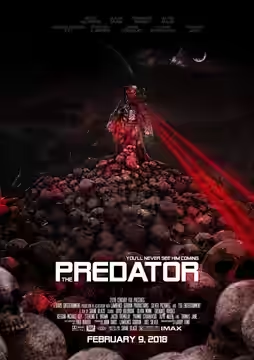
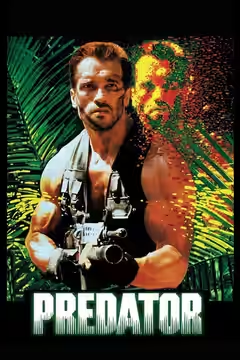
Shane Black was in the original Predator in 1987, as the soldier who told the dirty jokes, and he has come back to the series thirty-one years later with the jokes intact. He and his co-writer Fred Dekker have a plan that sounds workable on paper: bring the creature out of the jungle and into an American town, surround it with a busload of damaged soldiers who talk the way Black’s characters talk, and put a boy at the centre of it. What reached the screen is often funny, not once frightening, and put together as if the reels had been shuffled. It runs 107 minutes and spends most of them talking.
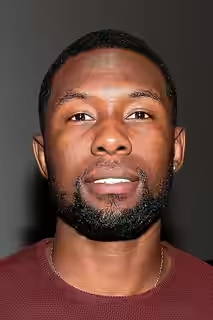
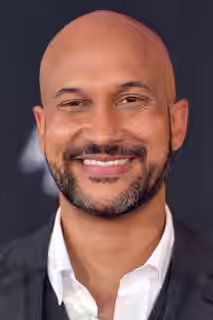
The bus is the good part. Quinn McKenna (Boyd Holbrook) is dumped among a group of veterans on their way to a psychiatric hospital, and Black gives them the scene he writes best: men insulting each other with affection in a confined space. Trevante Rhodes plays Nebraska Williams as the calm one, Keegan-Michael Key is the loud one, and Thomas Jane and Alfie Allen fill in around them. We laughed, a lot, in that first stretch, and then we felt uneasy about it, because the biggest laughs come from Baxley’s Tourette’s and from a running gag about a man’s suicide attempt, and the film never decides whether it is laughing with these men or at them. Holbrook is the flattest thing on the bus; he has the jaw and the scowl but not the timing, and the picture treats him as its lead for a reason we could not find.
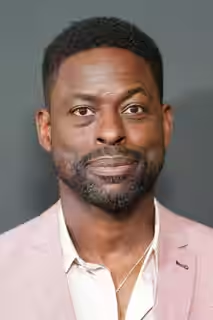
Sterling K. Brown has a better time as Traeger, the government man who has the creature in a tank and a stick of gum in his mouth in every scene. He plays the villain as a man who finds the whole business amusing, and he is the only performer who seems to have understood what the film is going for. Olivia Munn is not so lucky. Her Casey Brackett is introduced as an evolutionary biologist, is out of her clothes within the same reel, and is never afterwards allowed to do any biology; she is handed a gun instead. Jacob Tremblay’s Rory is meant to be the film’s heart, and the film’s idea about him, that autism is the next step in human evolution and therefore of interest to visiting hunters, is the sort of thing that sounds kind and is not.
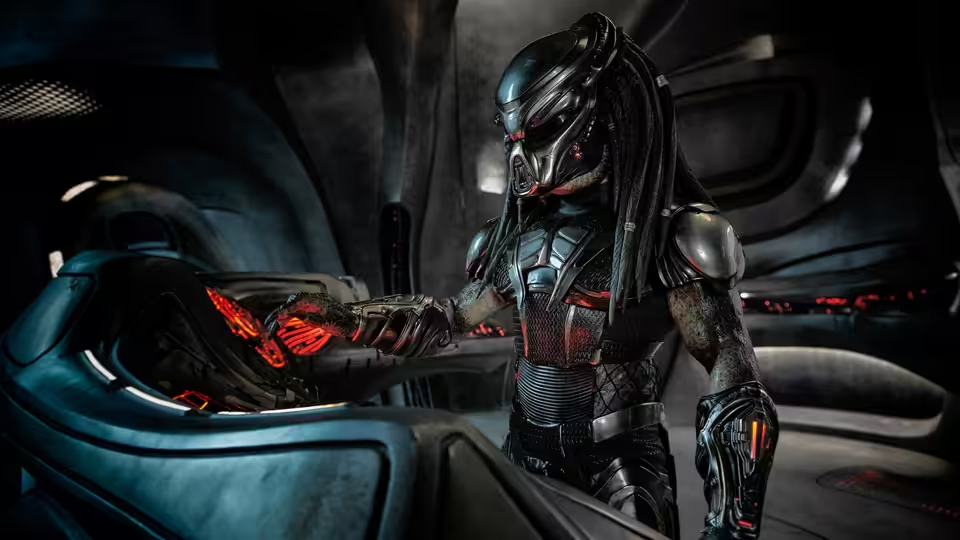
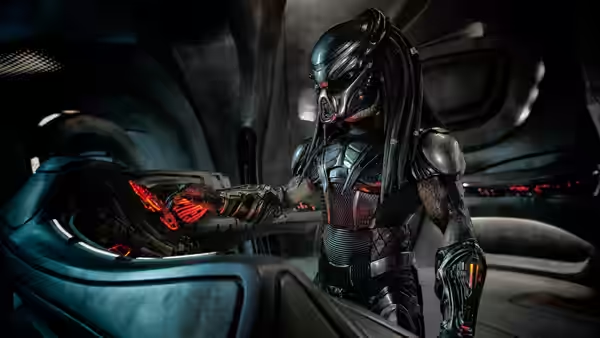
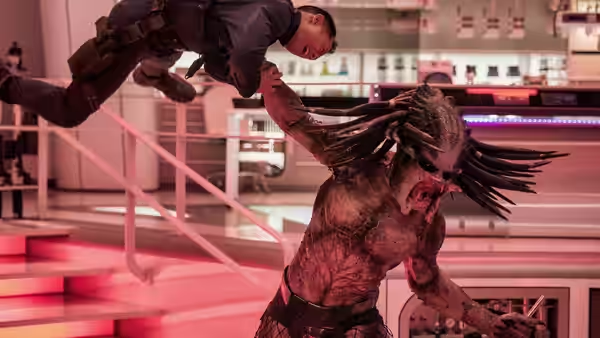
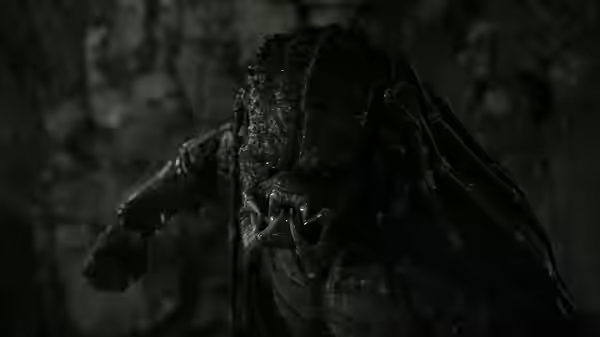
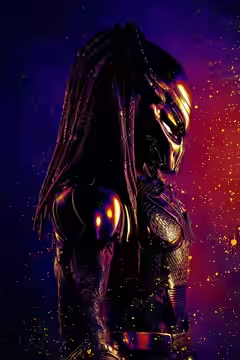
The creature is well served for exactly one sequence. Brian A. Prince wears the suit, and when the thing wakes in Martin Whist’s white, over-lit laboratory and starts taking the staff apart, Larry Fong shoots it in full light and lets us see every move. It is the best action in the film and the only time the hunter gets to hunt. After that the film turns the lights down and never turns them back up.
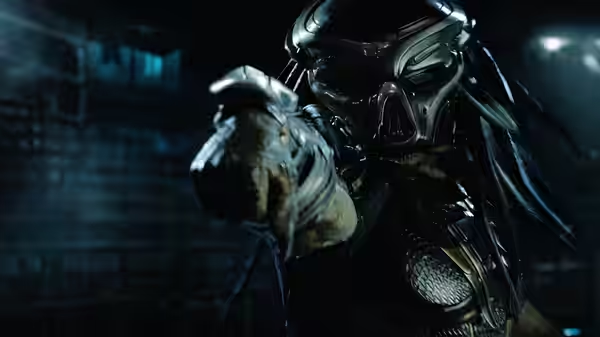
That is where it comes apart. Harry B. Miller III and Billy Weber have cut a final hour in which scenes end before they finish and characters turn up in places we did not see them go. At least one of the soldiers leaves the film without the film appearing to notice. Fong shoots the last act so dark that when bodies start falling we could not always tell whose they were, and by the last twenty minutes we had stopped trying. We were not angry, exactly; we were checking the time, which for a film about being hunted is the worse verdict. Henry Jackman’s score brings back the old brass fanfare at intervals, and each time it reminded us of a film that knew how to stage a fight in the dark.
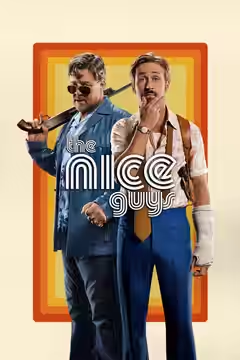
Black’s own standard is high. Kiss Kiss Bang Bang and The Nice Guys were tight, cheerful pictures in which every quip belonged to a person and every scene led to the next. This is his loosest film by a distance, and the looseness is not the charming kind. The 1987 original was a plain thriller about men who discover they are the prey; this one never lets that fear in, because somebody is always talking.
See it for the bus if an hour of soldiers trading insults sounds like an evening, and expect the alien to be an afterthought. At home you can turn the brightness up, which helps with the last act and nothing else.