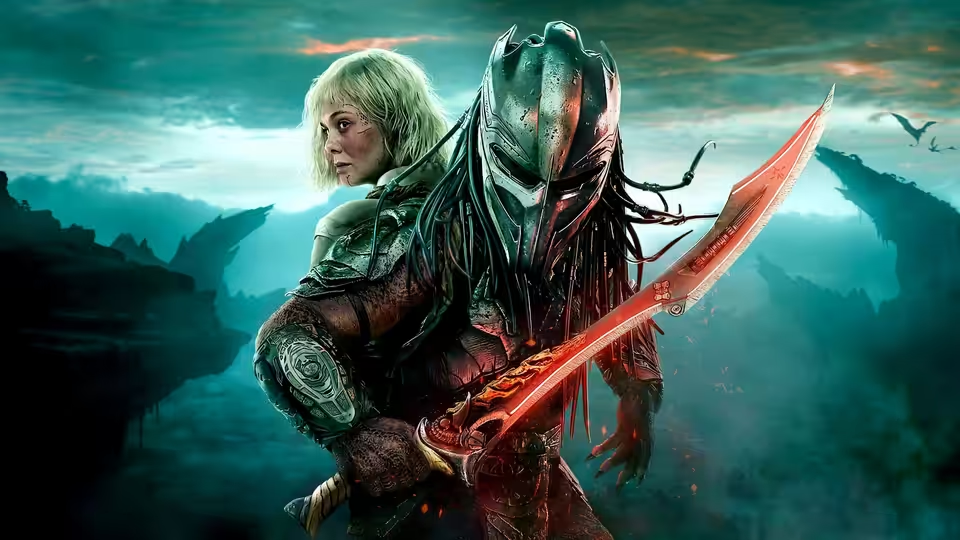
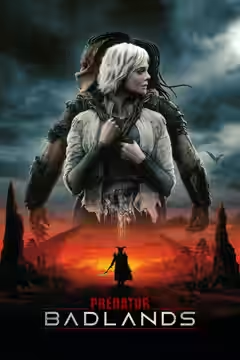
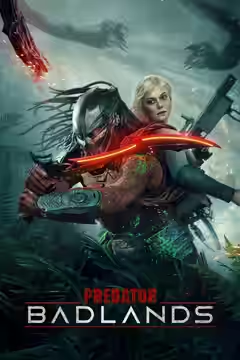
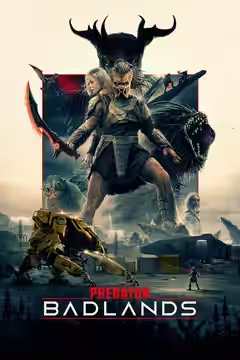
Dan Trachtenberg turns the series’ monster into its underdog and pairs him with Elle Fanning’s talkative synthetic, and the odd couple carry it. It is likeable, well built and gentler than a Predator film has any business being.
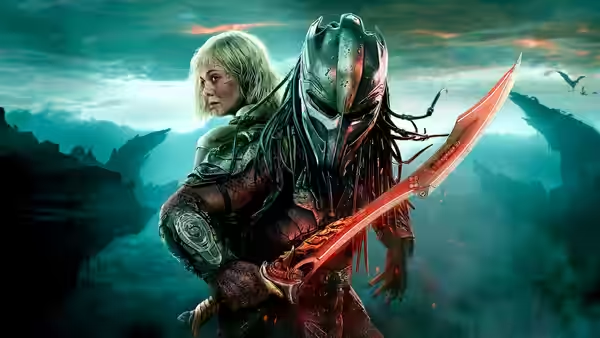
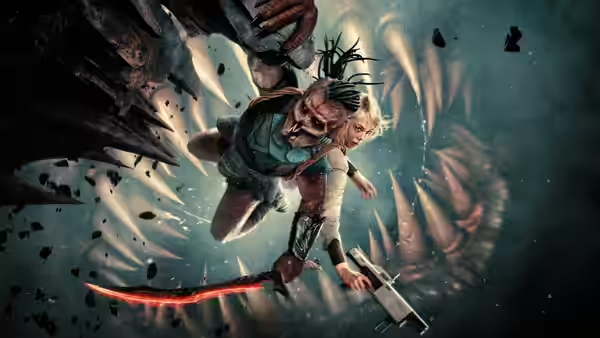
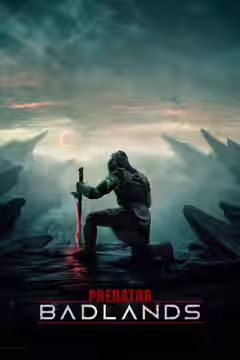
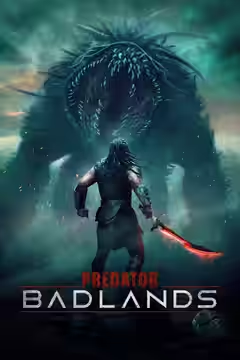
Dan Trachtenberg’s previous Predator film, Prey, stripped the series back to one hunter, one huntress and a great deal of grass. Predator: Badlands goes the other way. Its hero is a Predator, Dek, the runt of his clan, who leaves home for a planet where everything he meets is trying to kill him and finds instead a companion in Thia, a damaged synthetic played by Elle Fanning who has a lot to say. It is a buddy film in monster make-up, and the pairing is strong enough to carry 107 minutes. It is good, it is gentler than any Predator film before it, and the gentleness is where the arguments will start.
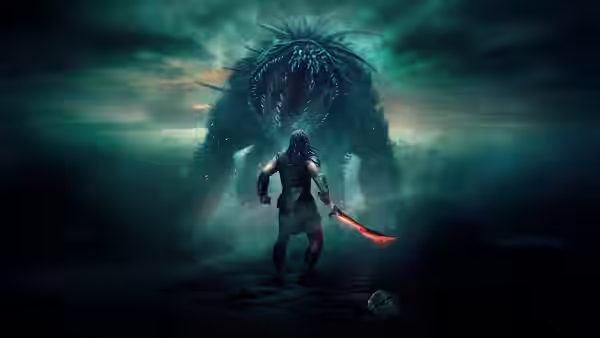
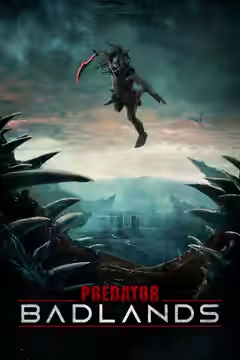
Jeff Cutter shoots much of the planet in daylight, which for a series built on shapes you cannot quite see is a bold decision, and mostly a good one. Ra Vincent’s production design gives the place a life of its own: plants that move when you are not looking, ground that is not quite ground, animals at every scale from the pocket-sized to the geological. Ngila Dickson dresses the Yautja in bone, hide and metal that looks as though it has been worn for years rather than fitted last week. The score, from Sarah Schachner and Benjamin Wallfisch, is electronic and low and pushes the set pieces along without telling you how to feel about them.
Fanning is the film. Thia talks the way people talk when they are frightened of silence, and Fanning plays her as cheerful, broken and a little too pleased with her own jokes, which is the right pitch for a character whose job is to make a wordless killer bearable. Dimitrius Schuster-Koloamatangi plays Dek under the prosthetics and gives him a way of moving, hunched, wary, always checking for the exit, that says more than any of the dialogue. The scenes where the two of them are simply travelling are the best in the film.
We did not expect to feel much for a Predator, and for the first half we resisted. Then there is a stretch, which we will not describe, where Dek fails at something he has been raised to believe is the whole point of him, and Thia watches him fail, and we found we minded. It was the smallness that did it. The series has spent nearly forty years telling us this creature is the most dangerous thing in any room, and Trachtenberg puts him in a room where he plainly is not.
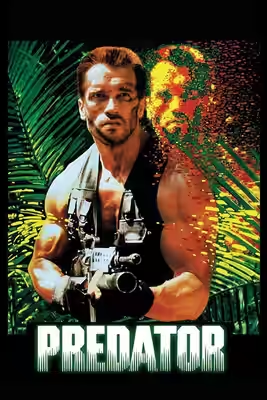
The trouble is what the film does with that. Patrick Aison’s script, from a story by Aison and Trachtenberg, is a hero’s journey with the stages laid out in order, and each one announces the next. Dek’s father (Schuster-Koloamatangi again, with Reuben De Jong in the suit) is the kind of villain who exists to be disagreed with. The 12A is honoured in spirit as well as letter: the film is bloody, in a green and glowing sort of way, and never nasty, and there are viewers for whom nasty was the point. We understand them. The creature in Predator (1987) was frightening because it wanted nothing you could bargain with. Dek wants approval, and approval is bargainable.
David Trachtenberg and Stefan Grube cut the action clearly, so you always know who is hitting whom, which is rarer than it should be. Grube also provides the voice of Kwei, which is the kind of economy this production seems to enjoy. The lore is thicker than it needs to be. A computer called MU/TH/UR, voiced by Alison Wright, will mean something to anyone who has seen Alien, and Matt and Ross Duffer turn up as the voice of another ship’s computer. The film keeps opening doors into other rooms when we would rather it stayed in this one.
Most critics have liked it about as much as we have, and the disagreement among the rest is easy to read: the ones who wanted a monster are cross and the ones who wanted a film are not. Set against Trachtenberg’s own Prey it is bigger, busier and less pure, and the purity was what made Prey stick. This one is more fun and less frightening, and it knows which of those it has chosen.
See it for Fanning, and for a planet that is more interesting than most of the people who have walked across one in this series. Take a child who is old enough for the certificate. They will like it more than you do, and they may be right.