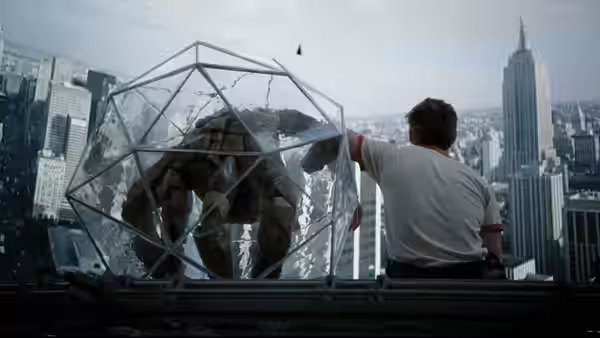
Lord and Miller’s adaptation of Andy Weir’s novel is warm, clever and likeable, with Ryan Gosling at his most puzzled and a puppet co-star worth the ticket on its own. It is half an hour too long, and the flashbacks are to blame.
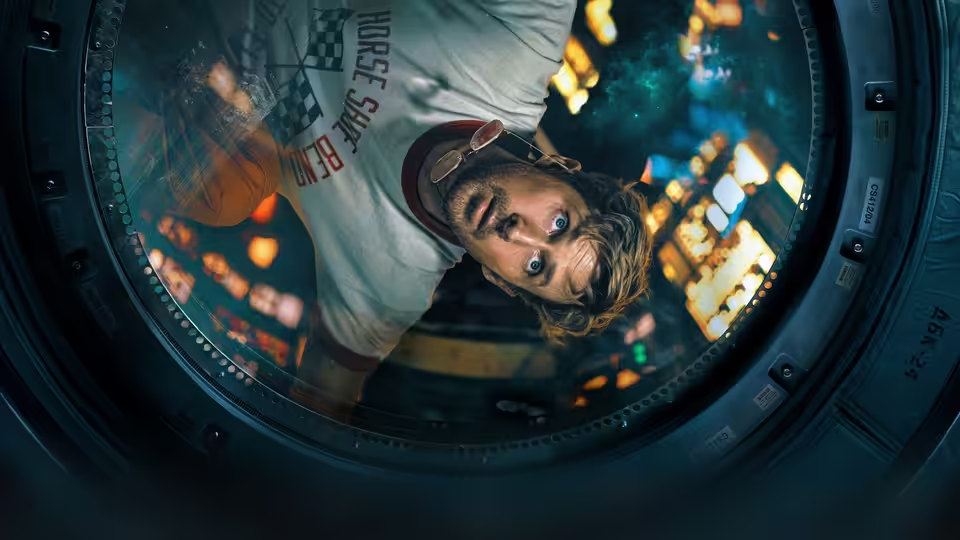
Ryland Grace wakes up in a bed he does not recognise with a tube in his arm, a computer asking him what two plus two is, and two dead people in the beds beside him. He does not know his name or that he is on a spaceship. Phil Lord and Christopher Miller, working from Andy Weir’s novel with a script by Drew Goddard, let Ryan Gosling find all this out at the same pace we do, and it is the most enjoyable stretch of exposition we have sat through in years. The film that follows is warm, clever and easy to like. It is also 157 minutes long, and it earns perhaps 120 of them.
Gosling plays Grace as a man who talks himself through his own fear, out loud, and is mildly surprised each time it works. Goddard gives him a great deal of thinking to do on camera, and Gosling does it without strain: baffled, then pleased with himself. The memory returns in flashbacks to Earth, where Eva Stratt (Sandra Hüller) is assembling a mission to find out why the sun is dimming and has decided, against all advice, that she needs a school science teacher to fly it. Hüller plays Stratt as a woman who stopped apologising for anything some years ago, and she is good company for the minutes she is given.
Grace does not stay alone for the whole voyage, and we will not say what he finds; the film takes its time getting there. The company he eventually keeps is a puppet rather than a computer effect, and that is the right call. It has weight; when it moves you can hear it, and Grace flinches, and so did we. The long stretch in which the two of them work out how to say yes, no and eventually friend moved us more than we expected, and more than anything else in the film. Lord and Miller turn the jokes down here and let it run.
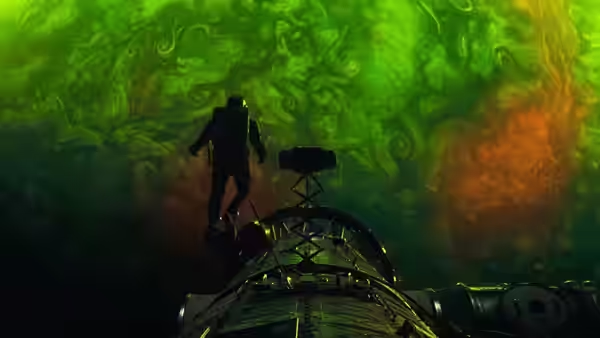
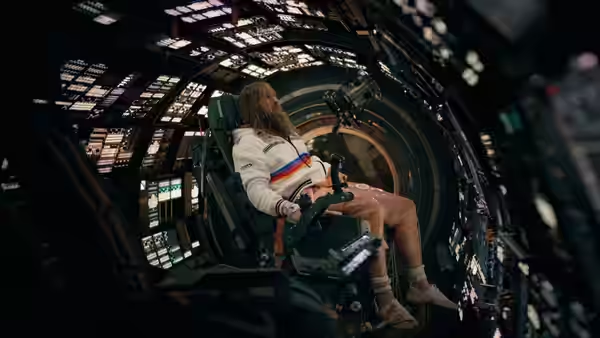
Greig Fraser, who shot Dune, lights the ship with the sun pouring through one small window and the rest of the cabin lit by screens, so that Grace’s face is either blazing or blue. Outside, the ship is a small bright thing against a great deal of black. Fraser has no interest in making space frightening; he makes it big and quiet and rather lovely instead. Charles Wood’s production design gives Grace a laboratory in which everything is strapped down, labelled and slightly too small, and the film gets a good deal of comedy out of a man doing serious science with his elbows pinned. Daniel Pemberton’s score is brass and warm strings, and it knows when to stop.
The trouble is Earth. Joel Negron cuts back to the flashbacks every ten or fifteen minutes, and each one tells us something we need to know and stops the film to do it. Stratt’s story, of a woman handed absolute authority and using it, is interesting, and the film treats it as a set of instructions. Hüller deserved more. We noticed the time at around the ninety-minute mark, during a flashback in a conference room, and once we had noticed it we kept noticing. The script also cannot leave a solemn moment alone; there is always a line waiting, and a few arrive exactly when the film had us, and we could feel it letting go.
Weir’s The Martian was about a man keeping himself alive with duct tape and arithmetic, and this is the same idea with better company. There are no villains here, no sabotage, no crew member going quietly mad, and it is a relief to sit through a science-fiction film in which the problem is the problem. Lord and Miller made 21 Jump Street, and their instinct for a gag every forty seconds is here in full. What is new is the patience.
See it in a cinema, where the ship is small and the black is enormous. At home it will be a good, long, friendly film. That is not nothing, but the size is doing some of the work.