Carey Mulligan is remarkable as a woman who lets men take her home so they can find out she is sober. Emerald Fennell’s debut looks like nothing else in the genre, talks too much, and ends in a way that will divide any sofa.
Cassandra (Carey Mulligan) is thirty, lives with her parents, works in a coffee shop and has, as far as anyone can see, stopped. She dropped out of medical school years ago and will not say why. What she does at night, and what the film opens on, is sit in a bar looking too drunk to stand until a man decides to be kind, takes her home and finds out how sober she is. Emerald Fennell, writing and directing her first feature, has made a revenge thriller in the colours of a sweet shop, and for most of its 114 minutes it is sharp, funny and hard to shake. It is also uneven, and the reviews calling it faultless are being kind.
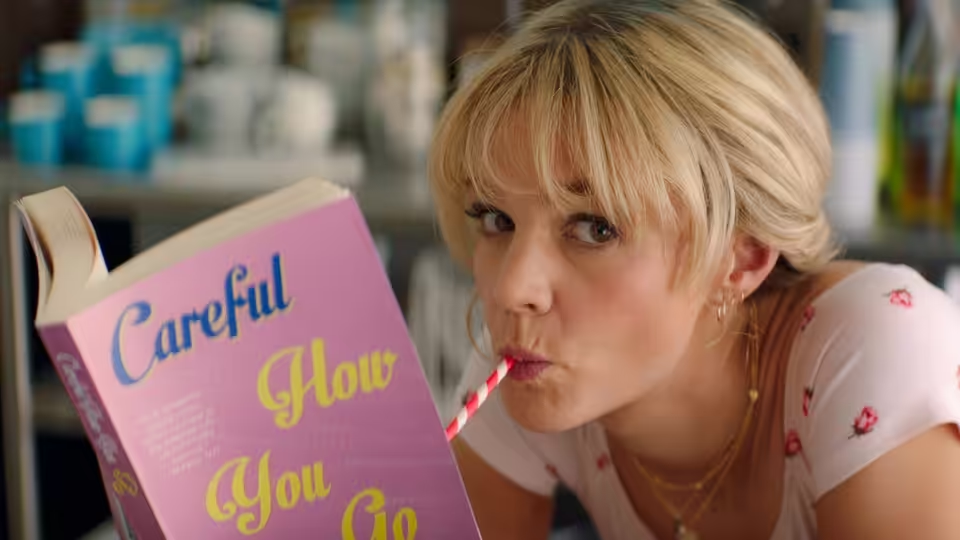
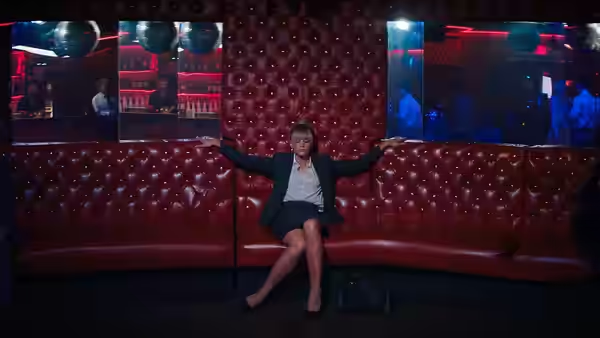
Benjamin Kračun shoots it in pinks, blues and bar neon, and likes to put Cassie dead centre of a wide, still frame, so she sits there like something on a shelf. Michael Perry’s production design gives her parents’ house pastel walls, floral bedding and shelves of china: the bedroom of a girl who was expected to leave and did not. Nancy Steiner dresses Mulligan in cardigans, hair ribbons and a manicure with a different colour on every nail. The joke, and it is a good one, is that the costume for hunting men is the costume for being harmless. Anthony Willis keeps the score low and stringy underneath, and the pop songs are chosen with malice.
Mulligan is the film. She gives Cassie a flat, tired voice and a face that goes from slack drunk to level sober in the time it takes a man to reach for his belt, and that switch is the best effect Fennell has. Frédéric Thoraval cuts the pick-up scenes long, so we watch each man talk himself into it. In the first, with Adam Brody’s Jerry, we laughed at his patter, and then, about a minute before the film asked us to, we stopped laughing and sat there feeling caught. That is what the film is for. When it is doing it, it is as good as anything in the genre.
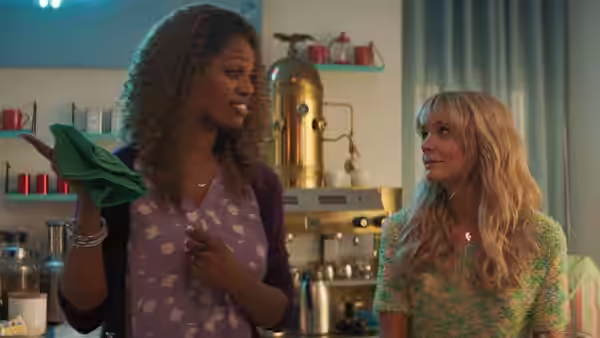
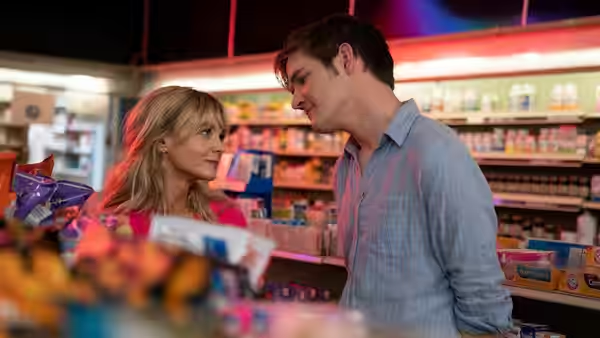
Then Ryan (Bo Burnham), an old classmate now a paediatric surgeon, walks into the coffee shop where Cassie works for Gail (Laverne Cox) and asks her out. Burnham plays him gangly, self-mocking and plainly decent, and for twenty minutes the film turns into a romantic comedy, complete with a pharmacy aisle and a Paris Hilton song. We enjoyed it and kept waiting for the floor to go. Fennell knows we are waiting, and makes us wait longer than is comfortable.
The script is where the trouble is. Fennell does not trust us to work anything out, so Cassie is given a series of scenes in which she sits an old friend or an old authority down and explains the film’s case to them in full paragraphs. Alison Brie’s Madison, over a long, boozy lunch, gets one; Connie Britton’s Dean Walker, behind her desk, gets another. Both actresses are good, and both scenes play as lessons. The tone lurches, too, from comedy to horror to romance and back, and not every join holds. Somewhere in the middle hour, while Cassie works down a list of names, the film idles.
The last half hour we will not describe. It is the reason the reviews are split, and it split us. Some of us wanted to stand up for the nerve of it; others thought Fennell had written herself into a corner and picked the loudest door out. We were still arguing on the way home, which is more than most thrillers get from us.
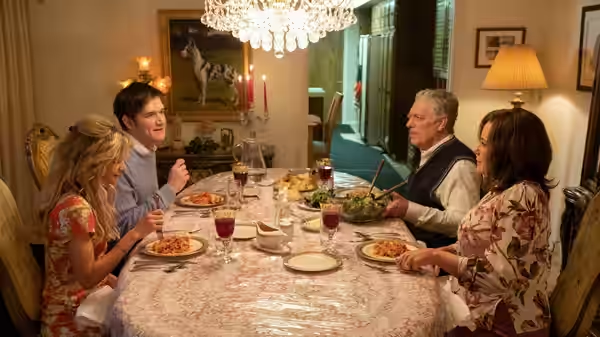
Films of this kind are usually cheap and grubby, and their heroines usually carry a gun. This one looks expensive, keeps its manners and arms Cassie with nothing but a convincing hangover, and that is Fennell’s real idea: every man in it thinks he is the nice one. Clancy Brown and Jennifer Coolidge, as the baffled parents, suggest a whole other film about the people who have to live with her.
Watch it with someone you are prepared to argue with. Not, on balance, a first date.