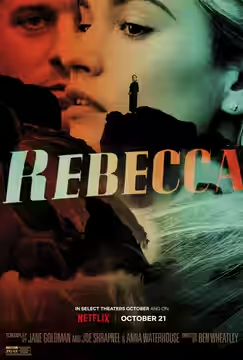
Ben Wheatley’s Rebecca offers carefully made rooms and one properly unsettling performance from Kristin Scott Thomas. The romance remains thin, though, and the late rush leaves too little suspense to justify the wait.
Ben Wheatley’s Rebecca is carefully made, intermittently unsettling and too often dull. This adaptation of Daphne du Maurier’s novel wants the romance to carry as much weight as the mystery, which is a reasonable ambition. The difficulty is that the central couple never becomes interesting enough to support that choice. Manderley gets plenty of attention, and the people inside it struggle to command as much of ours.
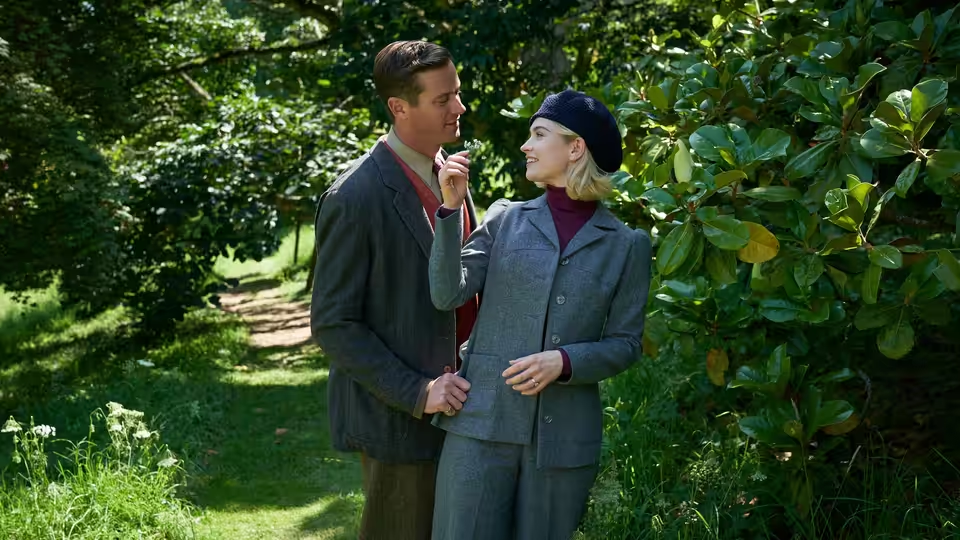
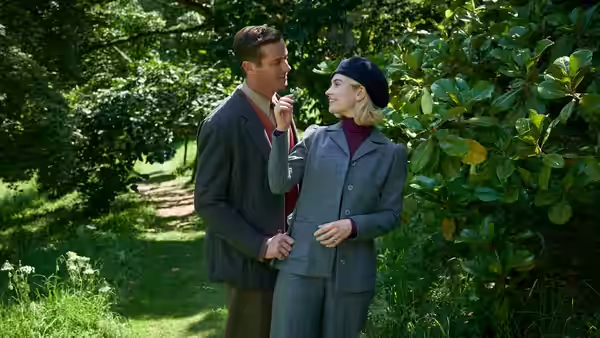
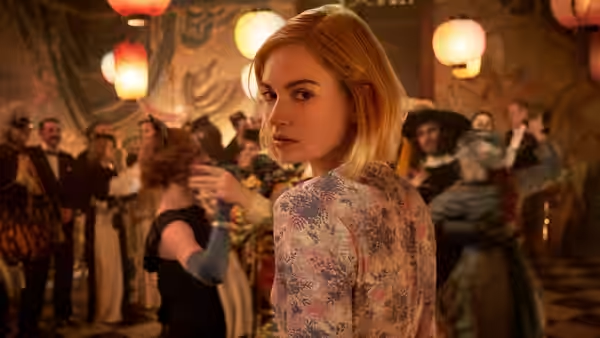
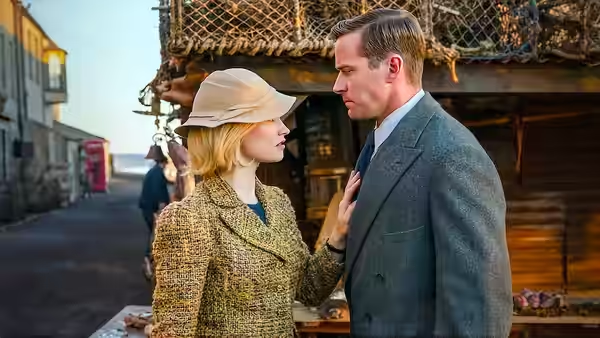
Lily James gives Mrs. de Winter a readable vulnerability, but the performance seldom develops beyond it. There is effort in the way she registers uncertainty, without enough variation to make that uncertainty gripping for this long. As Maxim de Winter, Armie Hammer is more convincing at being blunt than at suggesting anything troubling beneath his manner. Their scenes establish a romance without persuading us that either person needs this particular partner. We were bored by their exchanges, because the attraction never acquires the intensity that might make their unhappiness worth following.
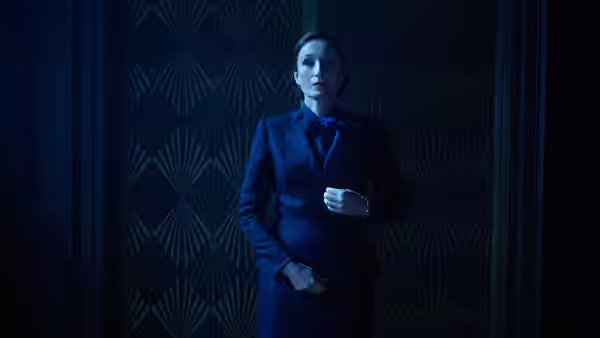
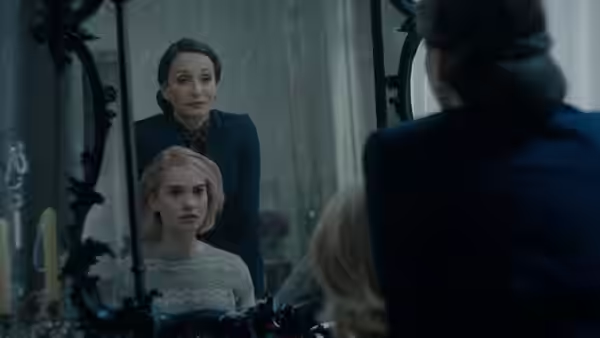
Kristin Scott Thomas is another matter. Her Mrs. Danvers makes politeness unpleasant without pushing the performance into caricature. The uncertainty about what she means gives her encounters some tension. She also suggests feeling beneath the cruelty, so the character has more to offer than a succession of intimidating looks. It is a performance that keeps the scenes involving Mrs. Danvers from settling into routine.
Sarah Greenwood’s production design gives Manderley rooms with distinct characters and enough detail to reward close attention. The mirrored anteroom to Rebecca’s bedroom is particularly effective: the decoration itself begins to feel disorientating. Laurie Rose’s cinematography makes good use of the contrast between light and deep shadow, giving the interiors some of the unease missing from the romance. These are substantial pleasures, even when the film encourages us to inspect the surroundings more closely than the faces.
Clint Mansell’s score works to supply the tension that the central performances leave wanting, but music cannot make their attraction more persuasive. Jonathan Amos’s editing gives the opening more room than it needs, then hurries when the story needs time to settle. The change in pace makes it harder to stay interested just when the mystery should be taking hold. At 123 minutes, the film is long enough to give both the romance and its complications their due, yet the balance feels wrong.
The screenplay by Joe Shrapnel, Jane Goldman and Anna Waterhouse leaves the relationships too simple for the complications placed around them. There are hints of a more uncomfortable film in the attention to class and the women’s differing perspectives, but these seldom make the encounters sufficiently tense. A Gothic romance needs to make attraction itself worrying. Here, too much depends on our accepting the couple’s attachment without the performances giving us much reason to believe in it.
The strongest reason to stay is Kristin Scott Thomas, though that is a narrow basis for choosing a film this long. Anyone chiefly interested in period interiors will find plenty to examine, and there is pleasure in the care taken over those rooms. We would look elsewhere for a romance with danger in it.