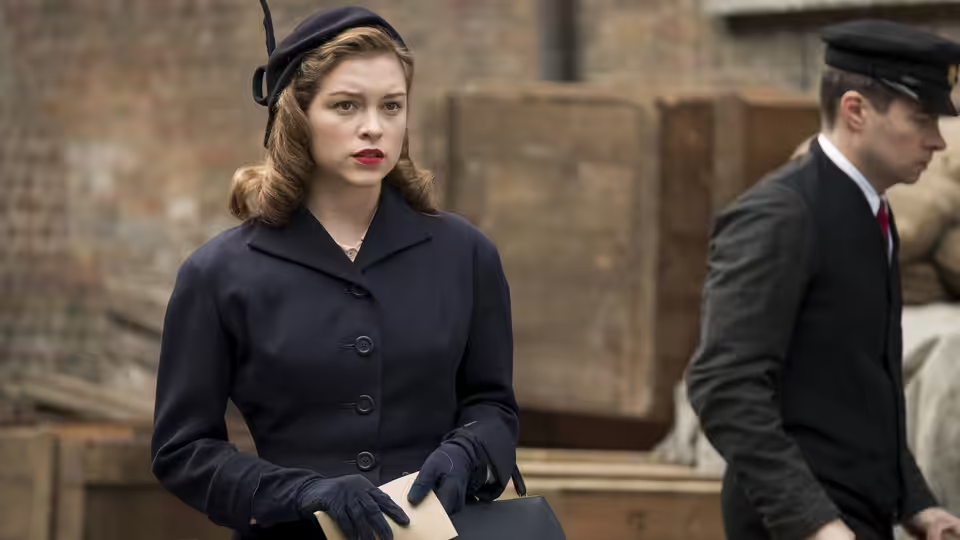
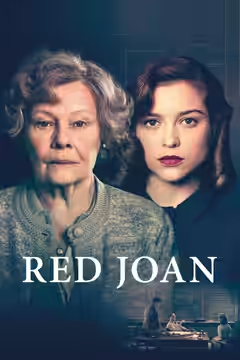
Sophie Cookson makes the young Joan worth following; Judi Dench is given a kitchen table and told to look worried. Trevor Nunn has a strange true case to tell and tells it as a cosy flashback drama, without nerve or tension.
Red Joan has a story most spy films would kill for. An elderly woman in a cardigan is arrested at home and turns out to have handed the Russians the bomb half a century earlier, and she is not sorry. Lindsay Shapero’s script, from Jennie Rooney’s novel, which was itself drawn from a real case, splits the telling between an MI5 interview room and the Cambridge of 1938, and Trevor Nunn directs it as a handsome, well-spoken, 101-minute drama in which nobody is ever in much danger. That is the problem in one sentence. A film about treason should make us sweat at least once, and this one never does.
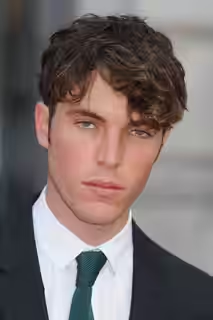
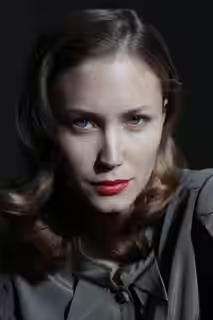
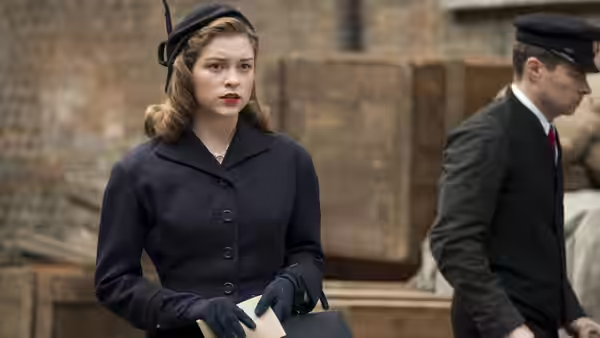
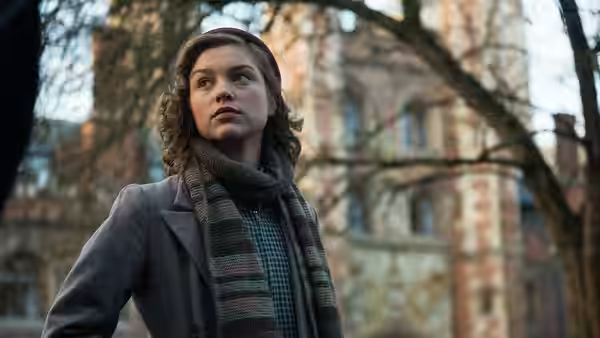
Sophie Cookson is the reason to stay. Her Joan is clever, careful and a little flattered to be noticed, and Cookson plays the flattery honestly rather than as a weakness. The Cambridge scenes give her Sonya Galich (Tereza Srbová), who smokes and knows things, and Leo Galich (Tom Hughes), who makes speeches about Russia with his collar open. Hughes is doing what the part asks, but the part asks him to be irresistible and the writing gives him only slogans. We never believed Joan would risk her life for this man, and the film needs us to at least consider it.
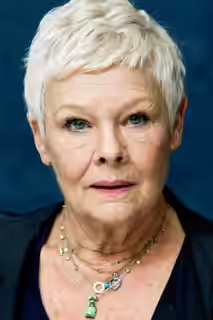
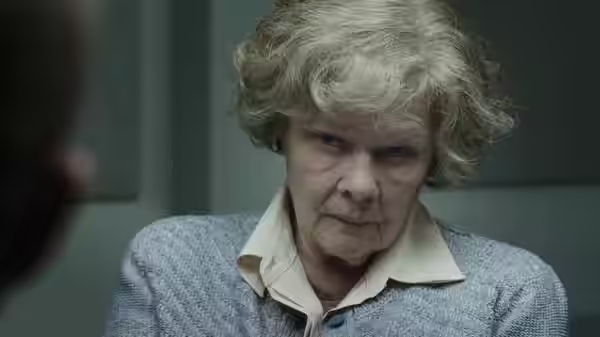
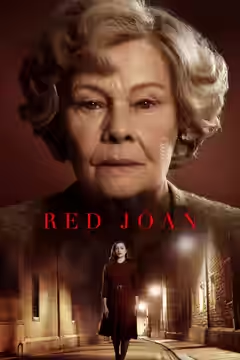
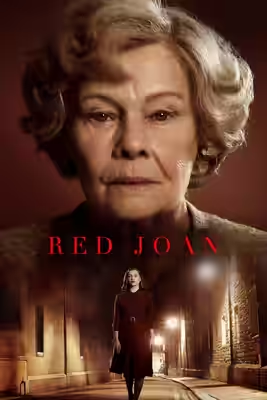
Judi Dench has far less to do than the poster suggests. She sits at a table, is asked a question by Ms. Hart (Nina Sosanya), says she does not remember, and is glared at by her son Nick (Ben Miles). Then the film goes back to the 1930s and answers the question for her. This happens a dozen times. Dench does what she can with it, and her face at the moment Nick stops defending her is a small, true thing. But we were bored by the hour mark, and the boredom turned to irritation each time Kristina Hetherington’s cut back to the present interrupted a scene that was finally getting somewhere.
The best stretch is the laboratory. Cristina Casali gives it blackboards, filing cabinets and brown linoleum, and Zac Nicholson lights it in a dim wartime grey that is a relief after the honeyed Cambridge afternoons. Stephen Campbell Moore plays Max, who runs the project, as a tired, courteous man who notices that Joan is more than a typist and is not sure what to do about it. The two of them working a problem at a blackboard have more charge than any of the political scenes, and Campbell Moore is the only actor here who seems to be hiding something.
The film’s second half gives Joan the reason the tagline promises, and we will not describe it. What we can say is that she is given the reason in a single scene, announces it in another, and the film treats the matter as settled. George Fenton’s strings swell at the appropriate moments to tell us she is right. Whether she is right is the most interesting question the material contains, and Red Joan is in too much of a hurry to be kind to its heroine to stop and argue it.
Nunn has spent most of his life in the theatre, and it shows in the way scenes are staged: people stand in rooms and state their positions, then someone leaves. The genre runs on what people conceal and for how long. Here nothing is concealed for more than a few minutes, because the structure keeps handing the answer to Dench to pass on to us.
Most critics have been a little harder on this than we are, and we do not think they are wrong, only that Cookson and the laboratory scenes earn it something. See it if you want an hour and a half of Cambridge in soft light and a good young actress carrying a film that should have been about her all along. Anyone who comes for the spying will be waiting a long time for someone to look over their shoulder.