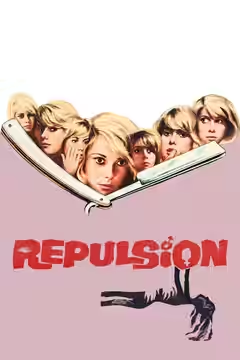
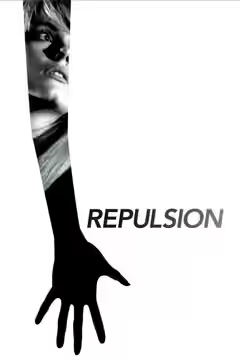
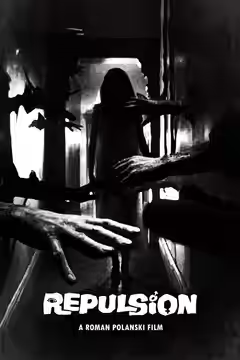
Roman Polanski’s first English-language film shuts Catherine Deneuve in a London flat and watches her mind go. Decades of imitators have not dulled it; the rot, the cracks and the dripping tap still work on the nerves, and Deneuve barely says a word.
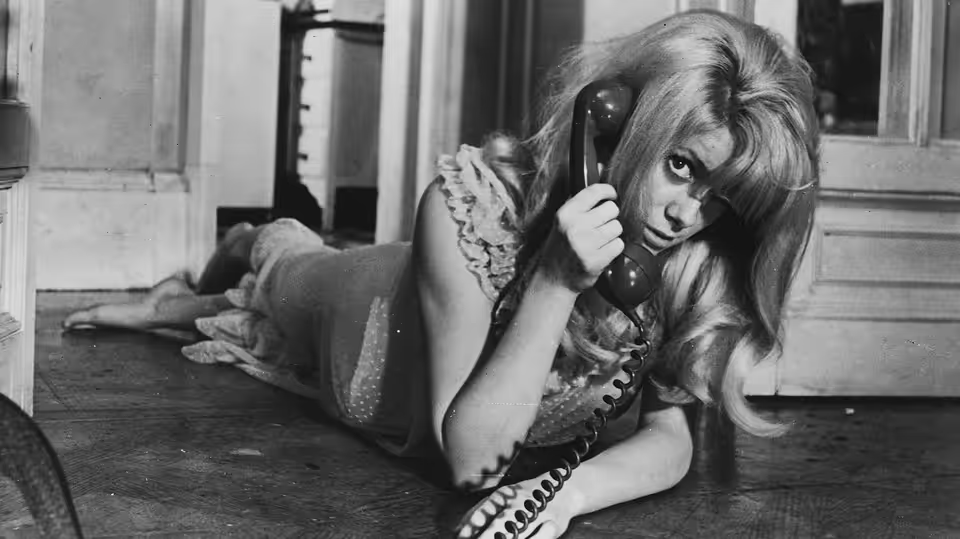
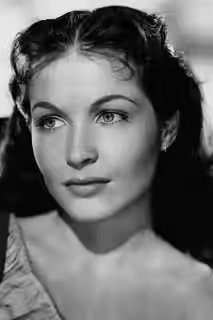
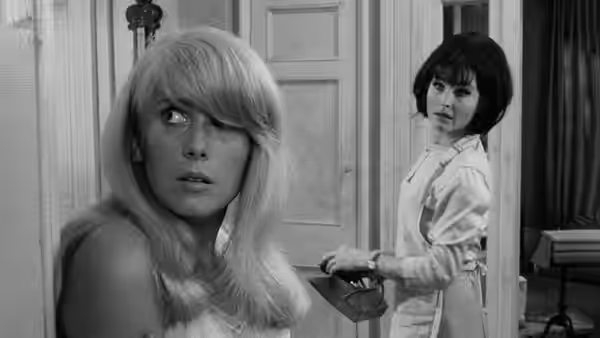
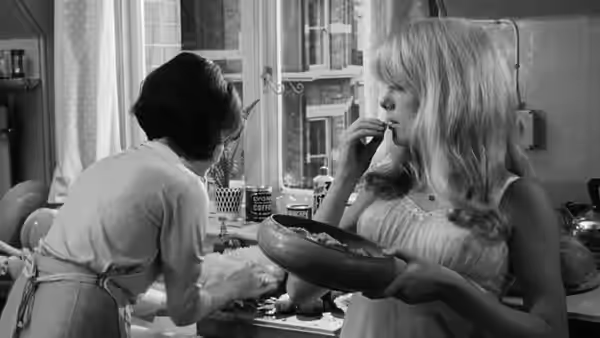
Roman Polanski arrived in London after Knife in the Water and, with the writer Gérard Brach, made a film about a young woman who does not want to be touched. Carol Ledoux (Catherine Deneuve) does nails in a salon, lives with her sister Hélène (Yvonne Furneaux) and lies awake at night listening to Hélène and her married lover Michael (Ian Hendry) through the bedroom wall. When the couple go abroad and leave her alone in the flat, the flat starts to come apart. Repulsion is 105 minutes long, most of them spent in three rooms and a corridor, and it is as frightening as anything Polanski has made. We would recommend it to anyone with the stomach for it, with the caveat that the stomach is the point.
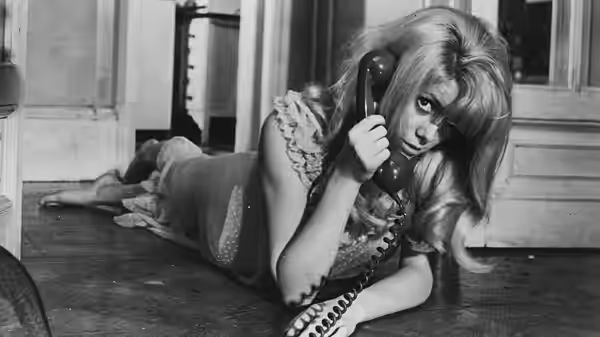
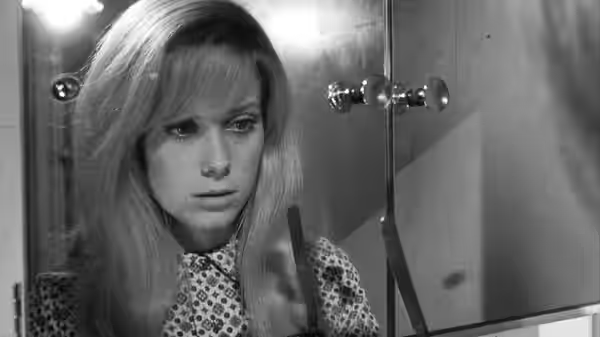
Deneuve is doing something rare here, which is almost nothing. Carol hardly speaks. She stares at a crack in the pavement while her colleague Brigitte (Helen Fraser) chatters about a boyfriend; she stares at Michael’s razor on the bathroom shelf; she stares at the wall. Polanski films her face the way another director would film a locked door, and Deneuve gives him only what is needed to make us look harder. When she does act, nicking a customer’s finger at the salon or picking up a man’s discarded vest and pressing it to her face, the film has trained us to jump.
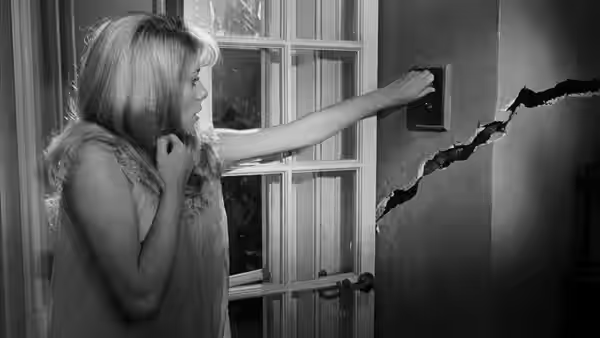
Gilbert Taylor shoots the flat in black and white on wide lenses, so that as the film goes on the corridor gets longer and the ceiling seems to come down. He lights the bathroom flat and bright, like a clinic, and the bedroom in bars of shadow. Nothing is done with fog or tilted cameras. The walls simply look wrong, and then they look worse. The sound does the rest: a tap that will not stop dripping, a clock, flies, and from the garden next door a convent bell and the shrieks of nuns playing ball, which is one of the strangest and most effective noises we know of in a horror film. Chico Hamilton’s score is drums and a little jazz, used sparingly and never to tell us when to be scared.
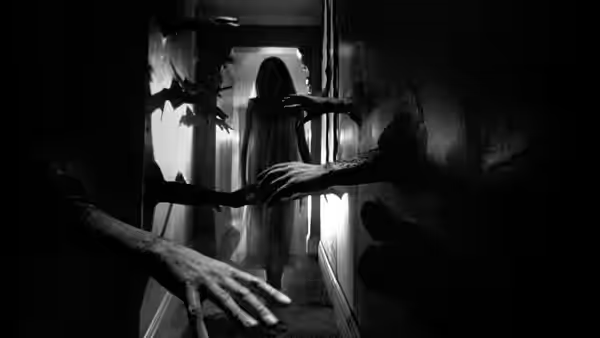
We were horrified, and not by anything with blood in it. It was the rabbit. Hélène leaves it skinned on a plate for a dinner that never happens, and Polanski keeps cutting back to it over the days that follow, on the sideboard, in the handbag, the flies thickening each time. It stands for everything Carol cannot bring herself to deal with, and it made us want to leave the cinema. Later the walls do things we will not describe, and Alastair McIntyre’s editing is what makes them land: he cuts into a hallucination without a warning note and cuts out of it the same way, so that for a second we are as unsure as she is which flat we are in.
The men are the weak part, and partly on purpose. Colin (John Fraser) is a decent drip whose decency runs out the moment a door is shut on him; Michael leaves his razor in a bathroom shared by two women and thinks nothing of it; the landlord (Patrick Wymark) comes for the rent and stays for something else. Every one of them treats Carol as a problem to be solved by being nearer to her. The film sees this clearly, and it also draws them thinly, so that Hendry in particular is left playing a moustache. There is a stretch in the middle, twenty minutes or so of Carol drifting from room to room, where we felt the film marking time before it dared to go further.
Polanski would return to flats and the people going mad in them, most famously in Rosemary’s Baby three years later, and this is the barest of those films: no coven, no conspiracy, one woman and some plaster. The only sentence of explanation comes in the final shot, and we would have cut it. The film has spent 105 minutes not needing a cause.
It carries an 18 certificate for a reason that has less to do with what is shown than with how long you are made to sit with it. Watch it alone if you can, in a flat, at night. You will notice your own taps.