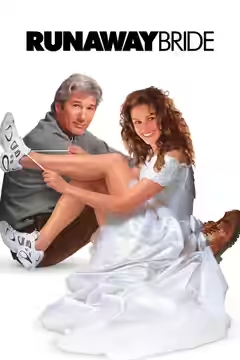
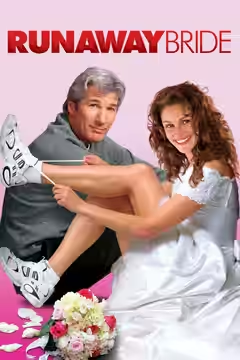
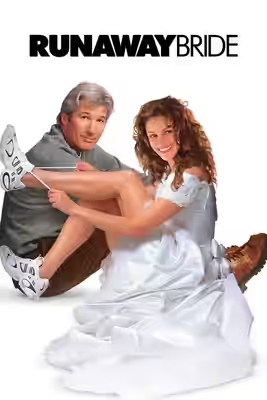
Julia Roberts and Richard Gere are agreeable company, but their appeal cannot rescue an unconvincing romance. Garry Marshall’s comedy has some warmth and too few good jokes to earn a recommendation.
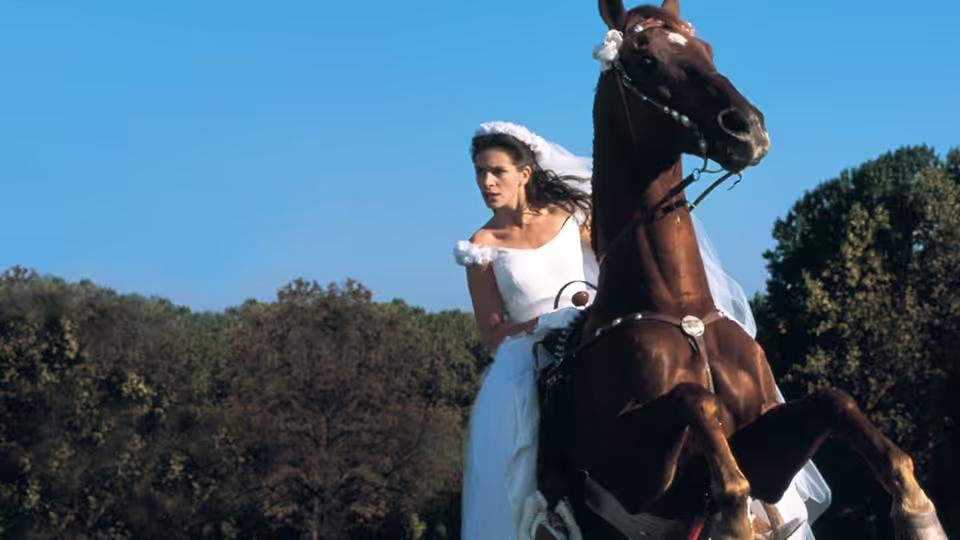
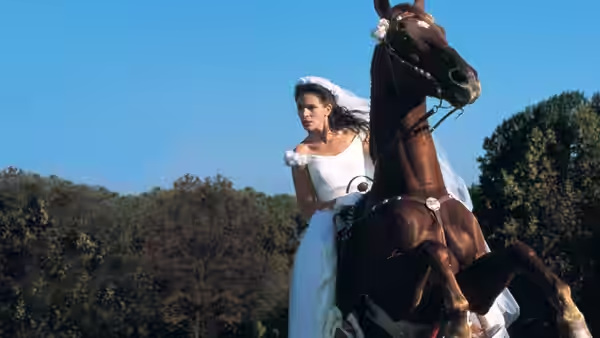
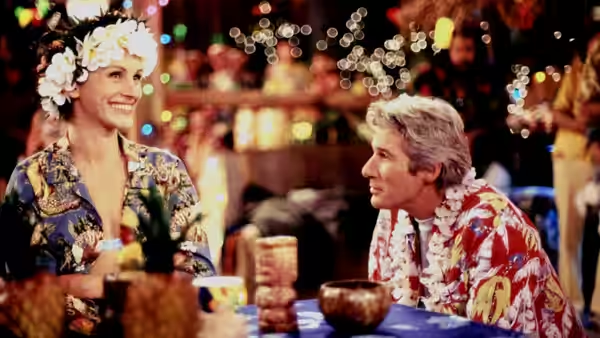
Runaway Bride is a middling romantic comedy whose performers make it easier to sit through than the writing deserves. Garry Marshall counts on the appeal of Julia Roberts and Richard Gere, and we can see the sense in that: both remain watchable when the screenplay gives us little reason to care. The difficulty is that enjoying their company does not make the attraction between Maggie Carpenter and Ike Graham convincing. We spend too much of the film waiting for that to change.
Julia Roberts gives Maggie Carpenter an expressiveness that makes even slight material worth watching. We smiled at her changing expressions, often when the jokes themselves scarcely deserved it. She can make a reaction interesting without insisting that we notice the effort, which is useful in a comedy with so little comic surprise. Josann McGibbon and Sara Parriott leave too much work to their leading performer, though: Maggie Carpenter needs writing that can hold our interest without quite so much assistance.
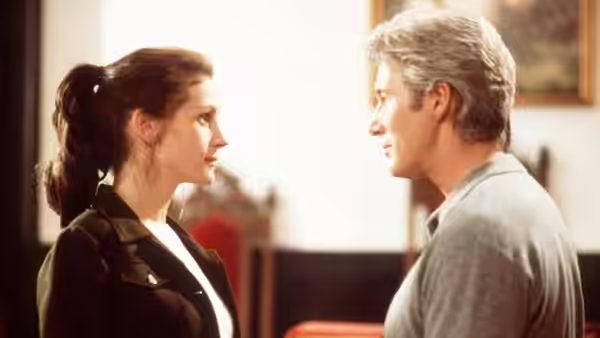
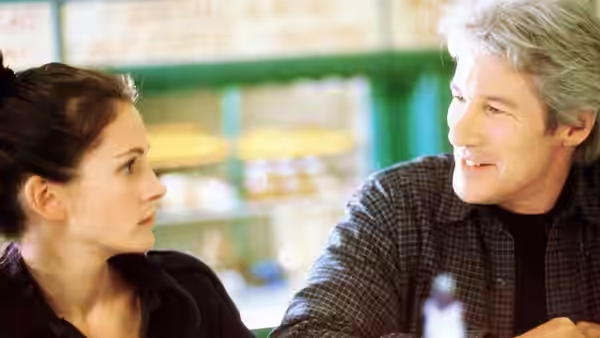
Richard Gere’s relaxed performance is useful beside that energy, and he avoids making Ike Graham seem desperate for our approval. His ease gives the pairing some pleasure, even when the dialogue is doing little to help. Yet it also exposes the weakness of the romantic writing: the film supplies an appealing man and woman and expects belief in their attachment to follow. Predictability need not trouble a romantic comedy, but here the attraction never becomes persuasive enough to distract us from how conveniently everything has been arranged.
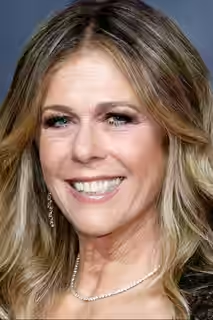
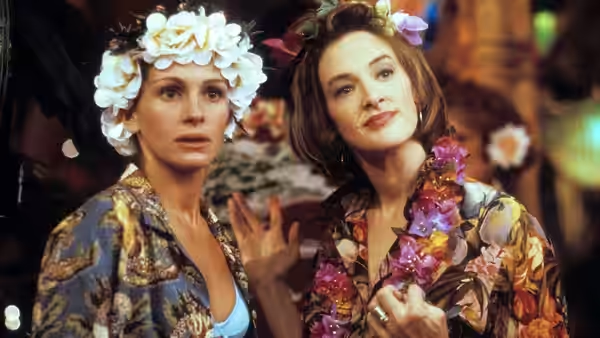
The supporting cast offer some relief from that problem. Joan Cusack is a welcome presence as Peggy Flemming, while Rita Wilson and Héctor Elizondo bring enough personality to Ellie and Fisher to make us wish the film were less dependent on its leads. Their contribution matters in a comedy where the central pairing is being asked to sustain so much of our interest. They keep individual scenes amiable, although there are not enough strong comic ideas for everyone to have a proper share.
Stuart Dryburgh’s cinematography gives the film an agreeable polish, while Mark Friedberg’s production design suits Garry Marshall’s comfortable approach. The result is easy on the eye, though neither contribution gives us much reason to look beyond the performers in a film already so dependent on faces. James Newton Howard’s music encourages a warmth that the writing only intermittently earns. We would have welcomed less reassurance from the score and more uncertainty between the characters; the film seems confident of our affection before it has done enough to secure it.
Bruce Green’s editing cannot disguise how thin the material becomes across 116 minutes, although the exchanges remain easy to follow. Familiar romantic comedies can earn that length through good jokes, convincing hesitation or sustained pleasure in the supporting characters. This one provides those things too unevenly, and Garry Marshall’s genial handling does little to sharpen the weaker writing. An evening spent mainly enjoying Julia Roberts and Richard Gere may be sufficient for their admirers; anyone hoping for a substantial supply of laughs should look elsewhere.