John Hurt gives Scandal a warmth its uneven writing cannot always sustain. Michael Caton-Jones’s historical drama is worth considering for the performances, though its narrow focus leaves too much unexplored.
Scandal is an engaging but limited historical drama, held together by John Hurt when the writing ought to be doing more. Michael Caton-Jones concentrates on making the people interesting, with some success, but is less persuasive about why their story matters. The approach gives the actors room without giving equal attention to the characters they play. For anyone drawn to historical drama, there is enough here to justify an evening, provided a strong central performance is sufficient compensation for some unfinished thinking.
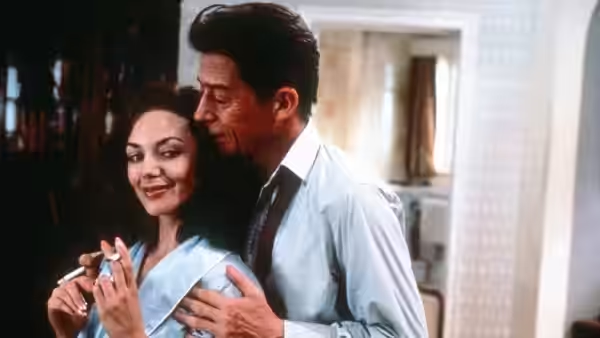
John Hurt’s Stephen Ward is charming, sympathetic and just needy enough to make that charm uncomfortable. We were moved by him, because the eagerness to be liked makes his apparent assurance feel precarious. He encourages us to enjoy this man’s company without making every question about him seem settled. That is delicate acting, and it keeps us interested even when the writing seems satisfied with having secured our sympathy.
Joanne Whalley gives Christine Keeler a welcome directness, although the screenplay by Michael Thomas leaves us wanting a fuller sense of how she understands the people around her. Bridget Fonda’s Mandy Rice-Davies adds briskness and helps prevent the film from becoming ponderous. Ian McKellen gives John Profumo definition, but has less room to complicate our first impression. These are useful contributions from actors who receive uneven amounts of material to work with.
Mike Molloy’s cinematography is most persuasive in its attention to faces, allowing expressions to hold our interest without competing too insistently with the period setting. Simon Holland’s production design supplies a convincing environment, though its polish sometimes makes the drama feel too comfortable. Jane Robinson’s costumes help communicate differences in social confidence that the dialogue need not spell out. The visual care is welcome, but we sometimes wanted the same precision applied to what these people understand about one another.
Angus Newton’s editing keeps the story accessible, although the pace occasionally feels too brisk for an emotional response to develop fully. A little more patience with the characters would have helped us weigh their choices. Carl Davis’s music supplies feeling readily, sometimes more readily than the screenplay has earned. We preferred its quieter contribution, when the actors could establish the mood without so much assistance.
The screenplay’s narrow focus matters because a historical drama needs to accommodate some curiosity beyond its most appealing character. It need not become a lecture, but it should help us understand why the other people deserve our attention. Michael Thomas gives Stephen Ward a degree of complexity that is not consistently available elsewhere, and Michael Caton-Jones accepts that imbalance too readily. The result can be absorbing from moment to moment while leaving basic questions about motive insufficiently examined.
At 115 minutes, Scandal has room to do more, and we do not think a longer film would have been the answer. It needed firmer decisions about whose experience mattered at each point and what we needed to understand about it. Even so, the sympathy and uncertainty in John Hurt’s performance keep the drama from becoming merely dutiful. Watch it for him, and do not expect the screenplay to answer every question his performance raises.