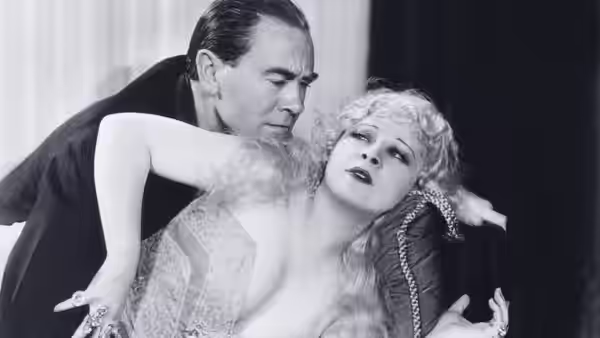
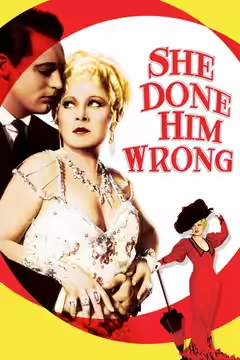
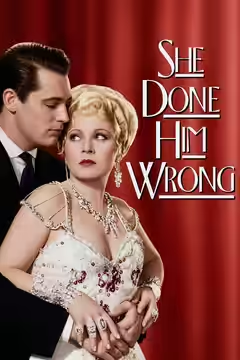
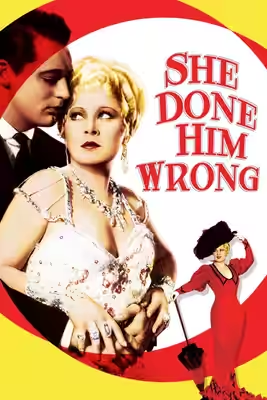
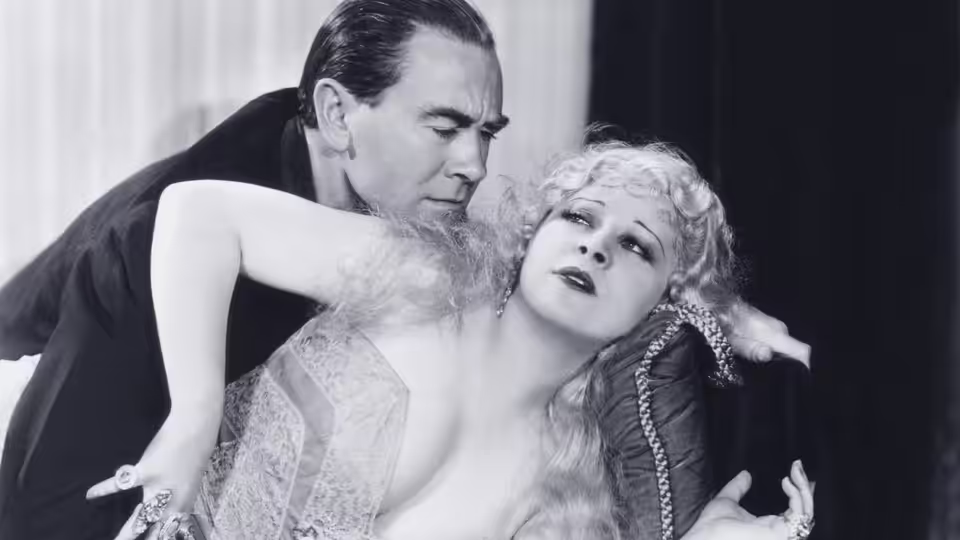
Lady Lou (Mae West) gazes up as Captain Cummings (Cary Grant) leans over her
Film review

She Done Him Wrong

1933 · Directed by Lowell Sherman · 1h 05m

In a sentenceSixty-five minutes of Mae West looking at men the way the rest of us look at dessert

New York’s Bowery in the 1890s. Lady Lou (Mae West) is the singer and star attraction at Gus Jordan’s (Noah Beery) saloon, wearing the diamonds he gives her and answering to nobody. Chick Clark (Owen Moore), a former lover, is in prison for a theft he did for her and has not forgiven her for moving on. Next door, Captain Cummings (Cary Grant) runs a mission and does not approve of the saloon or of Lou, which interests her a good deal. Gus has business with two new arrivals, Serge Stanieff (Gilbert Roland) and Russian Rita (Rafaela Ottiano), and Dan Flynn (David Landau) wants both the saloon and Lou. When Sally (Rochelle Hudson), a girl with nowhere to go, tries to end her life in the bar, Lou takes her upstairs.

Fi1m review

Mae West’s 1890s saloon comedy runs 65 minutes and exists to let her walk, sing and look at Cary Grant. The crime plot around her is in bits and nobody, least of all the film, minds. Good, short and still startling.

Mae West wrote a play called Diamond Lil and toured it until Hollywood noticed. Paramount bought it, changed the title to something less likely to alarm the censors, and gave her Cary Grant. The result runs 65 minutes and has, on paper, a crime plot: a Bowery saloon in the 1890s, a counterfeiting ring, a jealous man in prison and a mission next door full of hymns. None of it matters. The film is a frame for West, and as a frame it does the job. It is good, it is short, and if you have never seen her you should start here.

She plays Lady Lou, singer and main attraction at Gus Jordan’s saloon, wearing his diamonds and owing him nothing she can see. What she does, mostly, is walk. West moves as if the floor were slightly too warm, one hand on her hip, and she looks at men the way a buyer looks at a horse. The lines are famous for a reason. When she asks the mission man to come up sometime and see her, delivered over her shoulder on a staircase, we laughed out loud, and we had heard the line a hundred times. It is the pause before it that does it. She lets him, and us, wait.

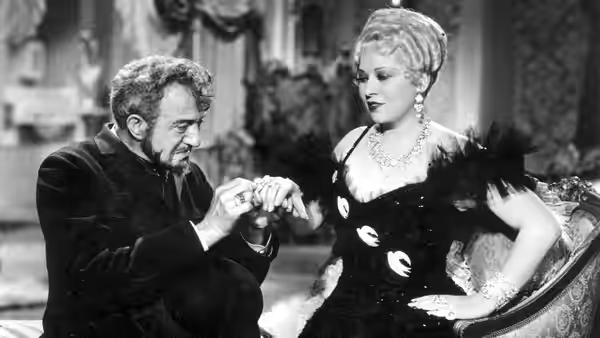
Charles Lang shoots the saloon full of smoke and bodies and gaslight, and he shoots West front-on and softly, so that the light goes to the diamonds and the diamonds do the work. Edith Head’s gowns are the argument of the film: corseted to an hourglass, hung with feathers and stones, built for standing still in, which is what she does in them. John Leipold keeps a saloon band going under everything, and West sings Frankie and Johnny and A Guy What Takes His Time in a voice that is not a singer’s and does not need to be. Alexander Hall cuts fast enough that the plot never has time to be examined, which is a kindness.

Grant plays Captain Cummings, who runs the mission next door and is not impressed by her, or says he is not. He is stiff here, and handsome, and he does almost nothing, which turns out to be exactly what the film needs: someone to be looked at. Noah Beery’s Gus is large and pleased with himself. Gilbert Roland and Rafaela Ottiano, as Serge Stanieff and Russian Rita, arrive with a suitcase of trouble and a great many meaningful glances. Owen Moore glowers from a cell as Chick Clark, the man who went to prison for her. David Landau’s Dan Flynn wants the saloon and wants Lou, in that order or the other.

The flaws are the plot’s. Harvey F. Thew and John Bright’s script has to get a stage act on to the screen, and it leaves the crime story in pieces: things happen in doorways, or offstage, and are reported afterwards. Every scene without West sags, and there are more of them than you remember. Rochelle Hudson’s Sally, a girl Lou pulls back from a bad end in the first ten minutes, exists to be rescued and then to be forgotten. The business Gus is running with his new friends is nastier than the film ever admits, and its shrug at that is the one place where the period shows in a way that is not charming. Lowell Sherman’s direction is mostly a matter of knowing where to stand the camera so that she can walk towards it. The second half takes a turn we will not describe, and it is handled with the same shrug.

The year after this, Hollywood began enforcing its Production Code in earnest, and films like this one are the usual explanation. What is striking, watching it now, is not the smut, of which there is little you could point to. It is that here is a woman who does exactly as she likes for 65 minutes and is not made to pay for it. We found that more startling than any of the jokes. Most later films about women like Lou end with a lesson. This one does not.

Watch it with someone who thinks old films are slow. It is over before they can finish saying so.

Critical consensus AI synthesised

82
Positive
4
Mixed
0
Negative
0
Empire
26 June 2006 · David Parkinson
90*

The critic highlights Mae West at her inimitable best in this risqué tale that launched her to stardom. The film is praised for its success and impact despite censorship pressures.

Read the full review →
The New Yorker
4 December 2020 · Richard Brody
90*

Mae West displays free-spirited delight and cunning power as Lady Lou in this 1933 comedic melodrama set in the Gay Nineties Bowery. West sashays and quips through a web of crime and politics with a tantalizing control of tempo, flaunting a carefree erotic radiance.

Read the full review →
Evening Standard
10 April 2012 · Alexander Walker
80*

The piece presents the 1933 film as one of Mae West's earliest and best, celebrating her comedic take on sex and her screen persona alongside Cary Grant. It notes the film's enduring appeal in a retrospective double bill context.

Read the full review →
Variety
31 December 1932
70*

The film offers an interesting atmospheric trip back to the 1890s Bowery, focusing on highlights in the career of Diamond Lou. Director Lowell Sherman handles the material with a light, tongue-in-cheek touch that keeps things from becoming too serious while restraining Mae West appropriately.

Read the full review →

Straight answers AI written, from our review

Is She Done Him Wrong worth watching?
She Done Him Wrong is worth watching for anyone curious about Mae West, and we scored it 78. It runs 65 minutes, the crime plot around her is in pieces, and every scene without her sags, but she walks, sings and looks at Cary Grant with a confidence that still startles. Start here if you have never seen her.
How long is She Done Him Wrong, and what is it rated?
She Done Him Wrong runs 1h 05m. It is a comedy and crime film.
Where can I watch She Done Him Wrong in Estonia?
She Done Him Wrong is not on any streaming or rental service in Estonia at the moment. It is available in 8 other countries; change your country at the top of the page to see where. Availability is checked daily.
How violent or frightening is She Done Him Wrong, and is it suitable for children?
She Done Him Wrong carries no UK certificate and is not rated in the US, and there is little on screen to alarm anyone. The violence is mostly reported rather than shown, and the sex is all in the lines and the looks; a young woman tries to end her life in the first ten minutes. Teenagers will be fine, and young children will simply be bored.
How does She Done Him Wrong compare to Some Like It Hot?
She Done Him Wrong is a 65-minute vehicle for one performer, where Some Like It Hot is a full farce with three leads and exact, spontaneous-seeming jokes. Wilder's film is the better made and the one we would hand to almost anyone. Choose West's if you want a woman doing exactly as she likes and never paying for it.
What should I watch after She Done Him Wrong?
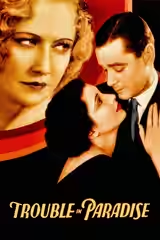
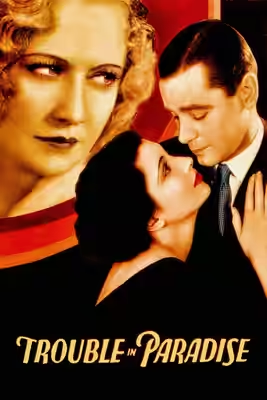
After She Done Him Wrong, try Trouble in Paradise (1932, Fi1m 84): Lubitsch’s thieves flirt in evening dress; the wittiest film of its decade. Then Pandora's Box (1929, Fi1m 88): Louise Brooks as the woman men ruin themselves over, from Weimar Germany, silent; and Some Like It Hot (1959, Fi1m 92): Wilder’s Prohibition farce, where nobody is who they say and everyone is game.

Cast

If you liked this, try…

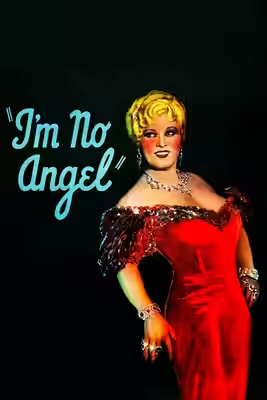
  1. I'm No Angel (1933) · not reviewed yetWest and Grant again, with lions this time, and the plot matters even less.

  2. Baby Face (1933) · not reviewed yetBarbara Stanwyck climbs a bank one man at a time; the same year, no jokes.

  3. Trouble in Paradise (1932, Fi1m 84)Lubitsch’s thieves flirt in evening dress; the wittiest film of its decade.

  4. Pandora's Box (1929, Fi1m 88)Louise Brooks as the woman men ruin themselves over, from Weimar Germany, silent.

  5. Some Like It Hot (1959, Fi1m 92)Wilder’s Prohibition farce, where nobody is who they say and everyone is game.

Free account

Know what to watch tonight

Two lists that know where things are streaming, collections you can share, your own score beside ours, and Discover that remembers what you have seen.

  • Want to see, sorted by what is streaming now
  • Seen, with your score out of ten
  • No adverts, ever