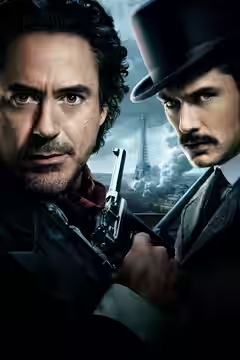
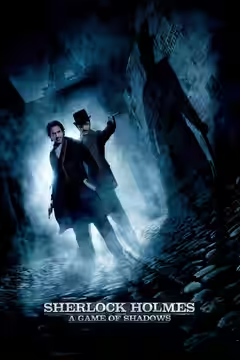
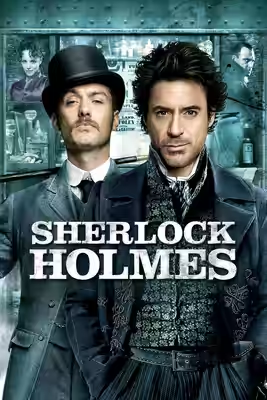
Guy Ritchie’s sequel is louder, faster and a good deal thinner than the first. Jared Harris makes a fine, soft-spoken Moriarty and Sarah Greenwood’s sets are a pleasure, but the action is cut into slow-motion porridge and the mystery has gone missing.
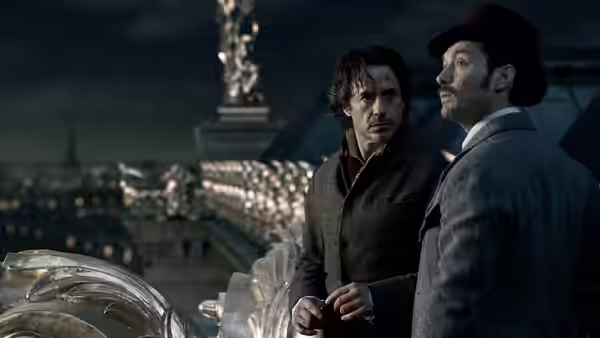
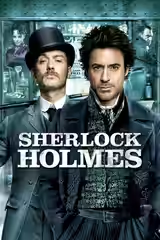
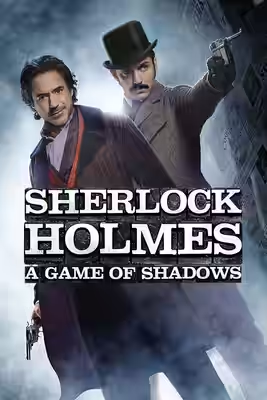
Guy Ritchie’s second Holmes film takes Robert Downey Jr. and Jude Law out of London and sends them across Europe after Professor Moriarty, a voice in the shadows last time and now, in the person of Jared Harris, a man with a face and a university chair. Bigger map, bigger villain, bigger bangs. Two of the three come off. It is faster and louder than Sherlock Holmes (2009), it has the better villain by a distance, and it has less in it to think about, which is an odd thing for a detective story to give away.
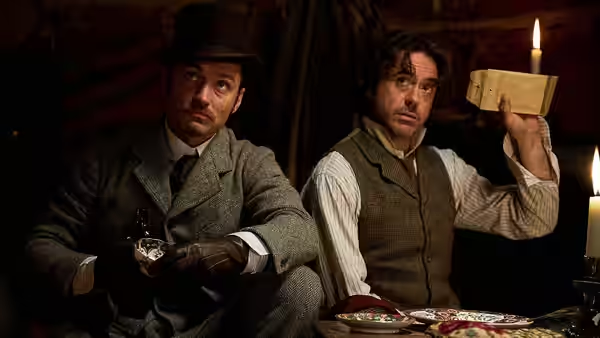
Harris is the reason to go. He plays Moriarty quietly, a tidy man in a tidy coat who never raises his voice, and leaves the twitching to Downey. Their first meeting, in Moriarty’s book-lined rooms over the signing of a book, is the best scene in the film: two men being courteous about the fact that each means to destroy the other. Downey’s Holmes is as it was, a mumbling contraption of tics, and Law is still the one who makes him bearable, rolling his eyes and occasionally hitting him. Watson’s stag night, at a club where Holmes has not got round to inviting anyone, is funny in the way the first film was funny.
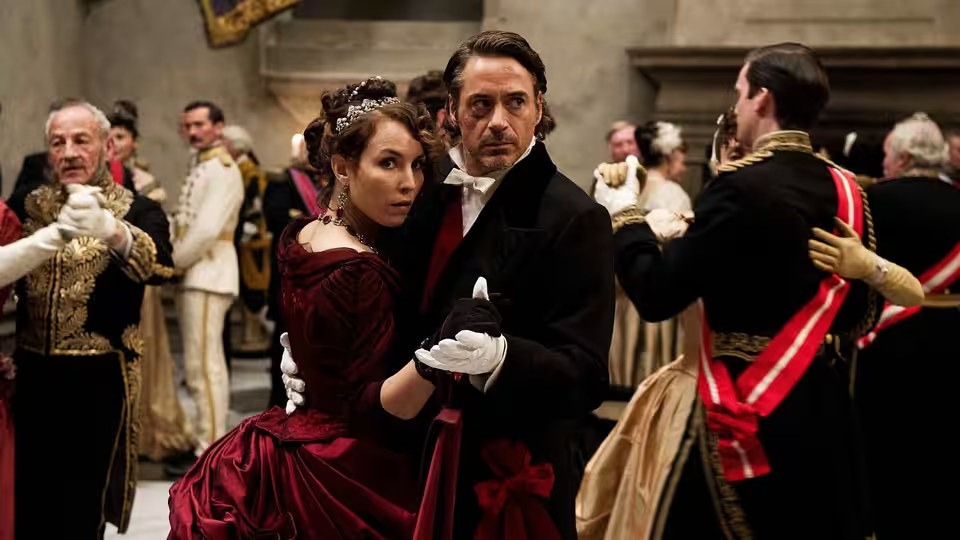
Ritchie’s trick of having Holmes plan a fight in slow motion before throwing a punch is back, and so is the feeling that it was funnier once. The big new set piece is a flight through a pine forest under artillery fire. Philippe Rousselot drains the colour until the trees are grey and the shell bursts are the only warm thing in the frame, and James Herbert cuts by slowing time almost to a stop and then letting it snap forward. Splinters hang in the air. For the first minute we were impressed. By the third we were counting slow-motion shots instead of following who was running where, and when it was over our shoulders were up round our ears from the noise rather than from any fear for the people in it. Hans Zimmer’s score, a hammering thing with gypsy fiddle laid over the top, treats every scene as a chase.
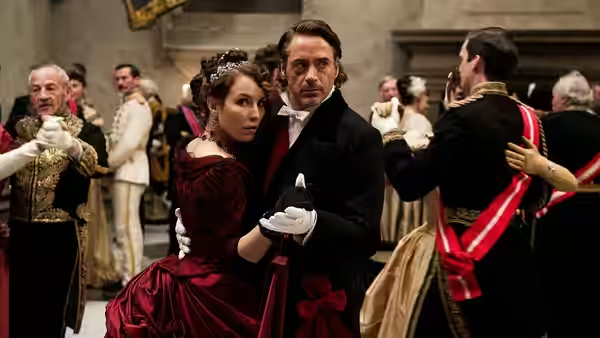
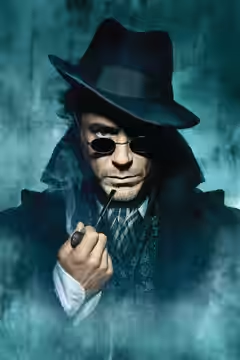
Sarah Greenwood’s sets are the steadiest pleasure. Mycroft’s house is clocks and brass, a munitions works is a cathedral of iron with furnaces where the windows should be, and a castle above a gorge looks like a place built so that people could fall from it. Jenny Beavan enjoys Holmes’s disguises, including a suit printed to match the armchair he is sitting in, a gag that got the loudest laugh of our evening and lasts ten seconds. Stephen Fry’s Mycroft wanders his house without his clothes on, which is the sort of joke the script reaches for when it has run out of lines for him.
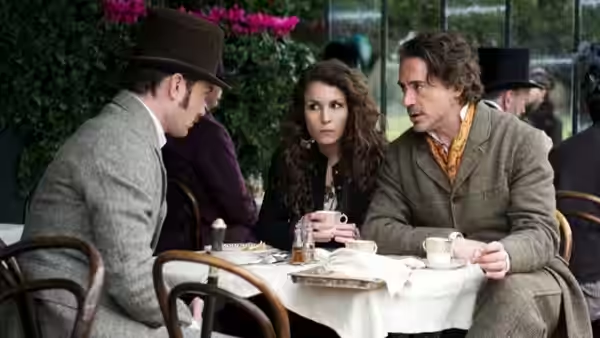
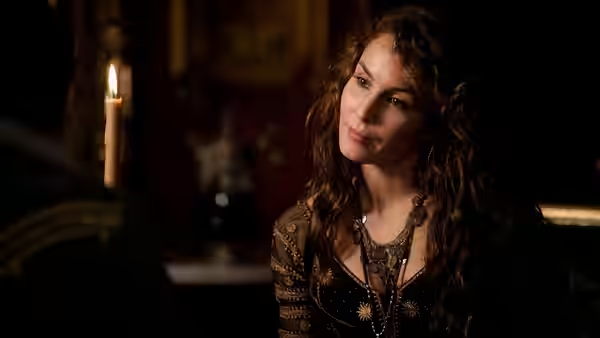
The women fare worst. Noomi Rapace, given a fortune teller with a missing brother and a knife, spends the film being led from place to place while men talk over her head. Rachel McAdams gets a few minutes. Kelly Reilly gets a train. Kieran Mulroney and Michele Mulroney’s screenplay knows roughly what the plot is and tells us in bursts, a bombing here, an assassination there, a summit at the end, with Holmes explaining in flashback how he knew. The deductions no longer arrive as reasoning we might have followed but as replays of things we were not shown. We stopped trying to get ahead of him, because there was nothing to get ahead with.
Conan Doyle’s Holmes noticed things. Ritchie’s hits things and then tells you he noticed them. The first film got away with it because the mystery had a shape and the London had a smell. The quiet scenes between Downey and Harris show what this one might have been: two clever men, one room, no explosions. There are perhaps four of them in 129 minutes.
See it for Harris, and for Downey and Law pulling faces at each other on a train. Watch it at home if you can, where the volume is in your hands and the forest can be taken at a run. It carries a 12A, and nothing in it will frighten anyone over about nine. The noise might.