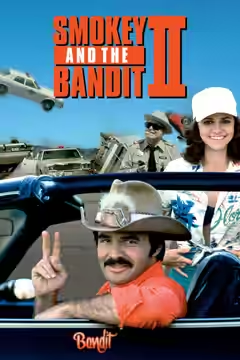
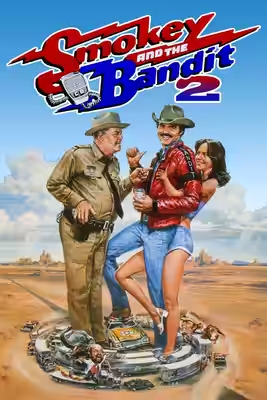
Hal Needham brings everyone back and gives them an elephant, and the result is a chase picture that forgets to chase. Gleason earns his laughs three times over; Reynolds, Field and the rest coast, and the crashes at the end are loud, long and dull.
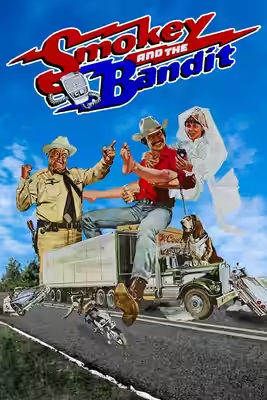
Hal Needham’s Smokey and the Bandit, from 1977, was a chase: a car, a lorry, a case of beer and a sheriff, and not much else got in the way. The sequel has the same people and a new cargo, and the cargo is the problem. Brock Yates and Jerry Belson’s screenplay, from a story by Michael Kane, gives the Bandit an elephant to carry from Miami to Dallas, and an elephant cannot be driven fast. The film is 101 minutes long and a good third of it is spent standing in a lay-by looking at the animal.
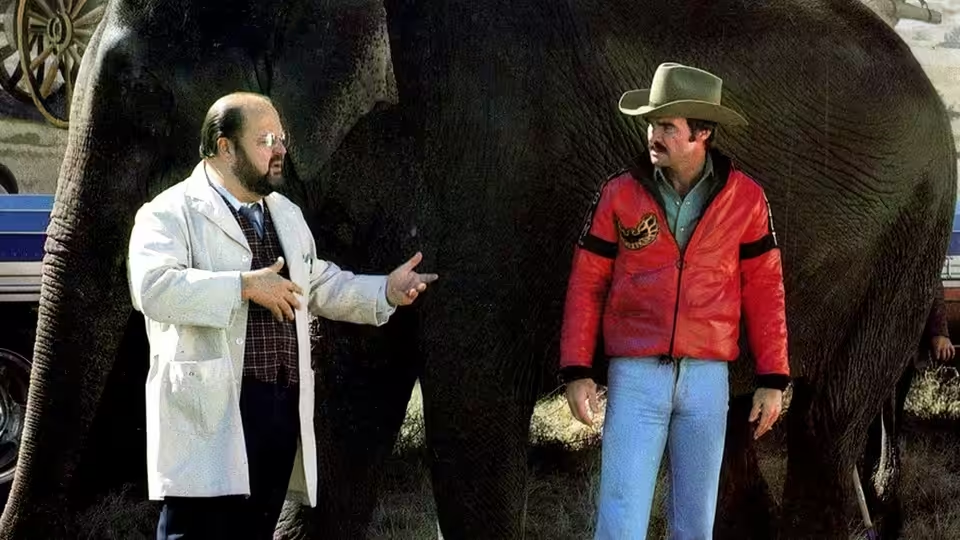
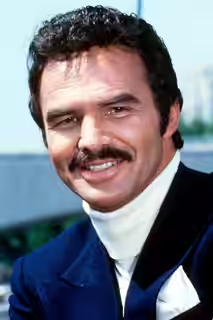
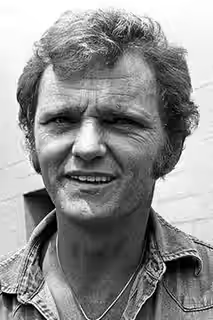
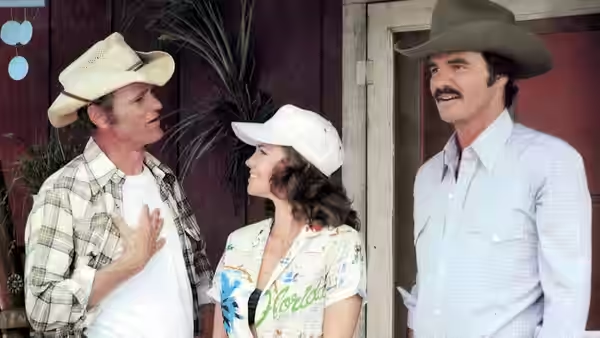
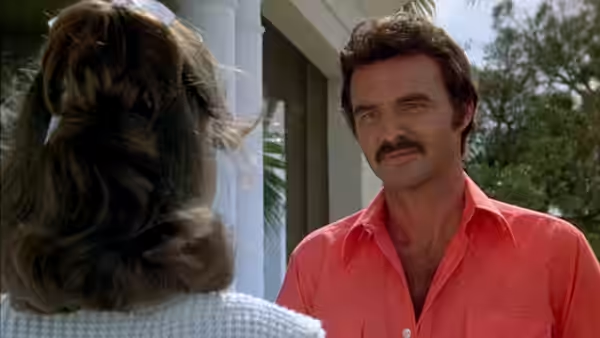
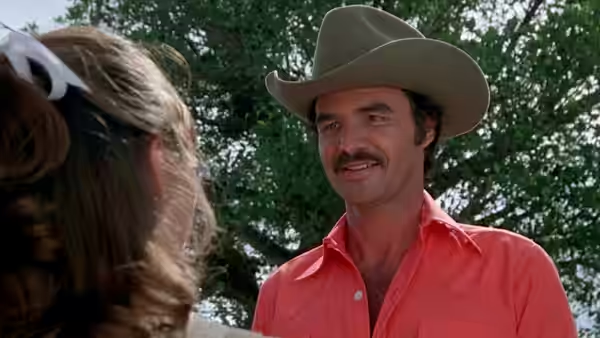
It starts better than that. Cledus (Jerry Reed) finds the Bandit (Burt Reynolds) in a motel room, bearded, bloated and drunk by lunchtime, and for ten minutes this is a more interesting film than the one it turns into: a star playing a man who has read his own notices and taken them to heart. Then Reed hoses him down, the hat goes back on, and Reynolds spends the rest of the picture grinning at the camera as if he had a bet on how little he could do. He is capable of more, and you can see him knowing it.
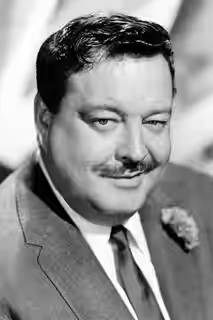
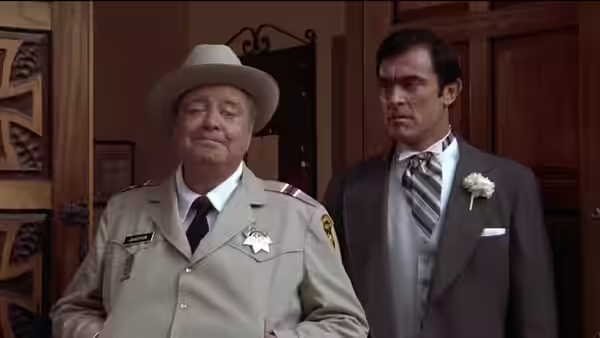
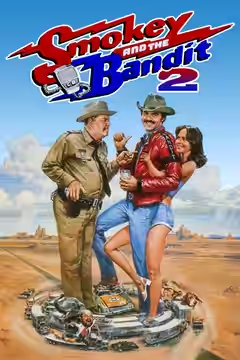
Jackie Gleason is the reason to stay. He plays Buford T. Justice again, red-faced and roaring at his son Junior (Mike Henry), and then he plays two of Buford’s brothers as well. We laughed at Gleason, properly and more than once, which is more than the rest of the cast managed between them. The jokes are not clever, and he does not need them to be; the sight of that face deciding whether to explode is the joke, and Gleason times it every time.
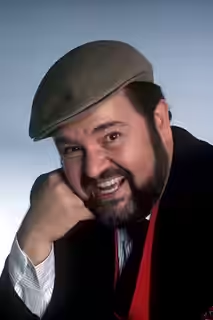
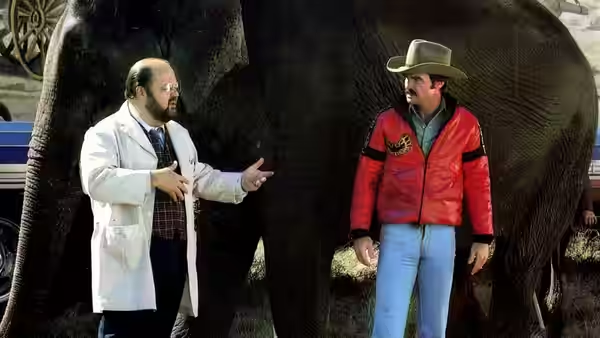
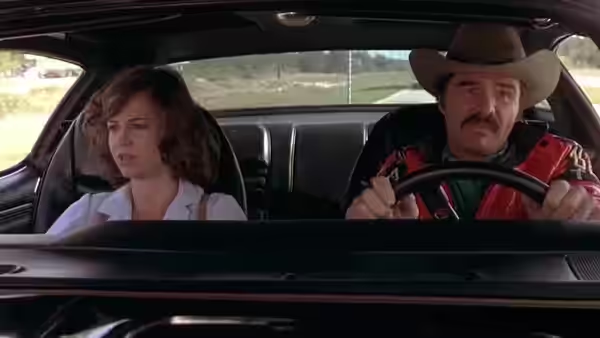
The elephant, meanwhile, is an idea for a comedy rather than a comedy. Dom DeLuise comes aboard as Doc to nurse it, and he and the animal are given a run of set pieces in which one of them is slow and the other shouts about it. We found we felt sorry for the elephant, and that is not a feeling a farce can afford. Sally Field has it worse. Carrie leaves Junior at the altar for the second film running, and once a bride has done that twice the writers have told you they have nothing new for her. Field plays the rest as a woman waiting for a lift.
The craft is serviceable and no more. Michael C. Butler shoots the highways in a flat midday glare that makes every state the convoy passes through look like the same mile of Georgia. William D. Gordean and Donn Cambern cut the gag scenes with a pause after each line for a laugh that mostly does not come. Snuff Garrett’s music is the one department that remembers what the first film sounded like, and Brenda Lee and the Statler Brothers turn up on screen to help. Henry Bumstead is credited with production design, and we would be hard pressed to say what he designed; this is a film of motel rooms, truck cabs and grass verges.
The crashes are the other half of the picture, and there are a great many of them. These are real cars and real stunt drivers, and the metal really folds. We were bored by them, and then annoyed at ourselves for being bored, because the men behind those wheels were doing something dangerous for our benefit and the film gave them nothing to be dangerous for. The first film’s great stunt was one car and one broken bridge, and you knew why the car had to jump. Here the cars pile up because the script has run out of other things to do, and a wreck with no reason is a scrapyard with a camera in it.
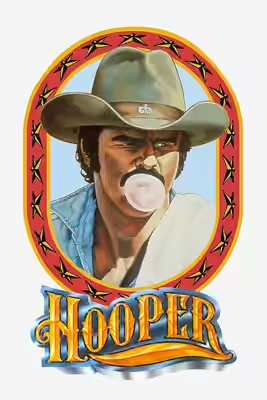
Needham was a stuntman before he was a director, and his first two films, this one’s predecessor and Hooper in 1978, were about men who did things with their bodies and were paid for it. This is about a studio noticing what sold and ordering more of it. The reviews so far have split between mixed and hostile, and we are with them.
If twenty minutes of Gleason bellowing at Mike Henry across the front seat of a patrol car is your idea of an evening, those twenty minutes are here. The other eighty-one are an elephant walking slowly across a car park.