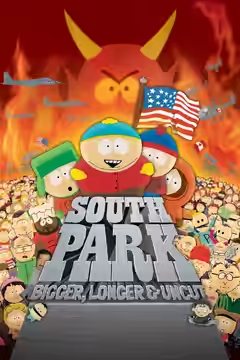
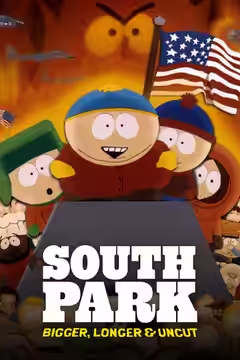
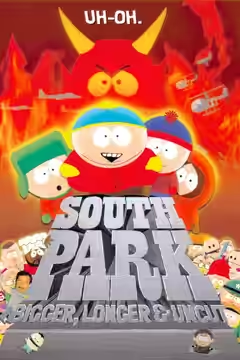
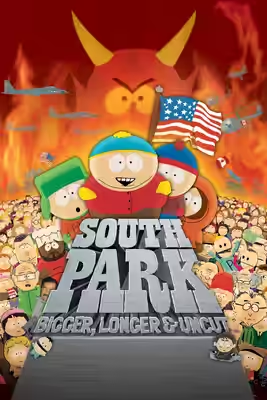
Trey Parker’s animated musical makes sharp comedy from censorship and parental panic, with songs that earn their place. Some jokes keep going after the laughter stops, but we recommend its bad manners with that reservation.
South Park: Bigger, Longer & Uncut is a sharp, funny musical with a few jokes that outstay their welcome. Trey Parker directs it with a useful understanding of how absurd adults become when they appoint themselves guardians of everybody else’s children. Censorship, parental control and political opportunism give the swearing something to do beyond testing how much of it a film can contain. We recommend it warmly, though anybody who finds the first barrage tiresome is unlikely to develop a taste for the next.
Parker, Matt Stone and Pam Brady’s script is strongest on the convenience of blaming entertainment for social failings. The adults’ concern with what children hear becomes a way of avoiding harder questions about their own behaviour. There is a proper satirical target here: the ease with which censorship can pass for responsible parenting, and hostility towards another country can pass for public service. The jokes about ratings hypocrisy land because the supposed protectors are so pleased with themselves.
Marc Shaiman’s music gives the film much of its shape and several tunes worth hearing twice. The songs borrow the earnest delivery and full-throated confidence of respectable musicals, and the obscenity sounds funnier for being sung with such care. We laughed hardest at the inspirational-ballad parodies, because the solemn musical treatment makes the filth seem even more preposterous. The tunes are worth hearing in their own right, which stops the musical jokes from depending entirely on recognition.
The voices keep the quarrelling lively. Parker’s Eric Cartman is funny in his petulance, with no effort wasted on making him lovable, while Stone’s Kyle Broflovski gives the exchanges a less abrasive rhythm. Mary Kay Bergman, voicing Sheila Broflovski, Liane Cartman and Wendy Testaburger, does particularly valuable work across the children and adults: the shifts in authority are audible without needing explanation. Isaac Hayes’s Chef offers a welcome change of vocal pace amid all the competitive indignation.
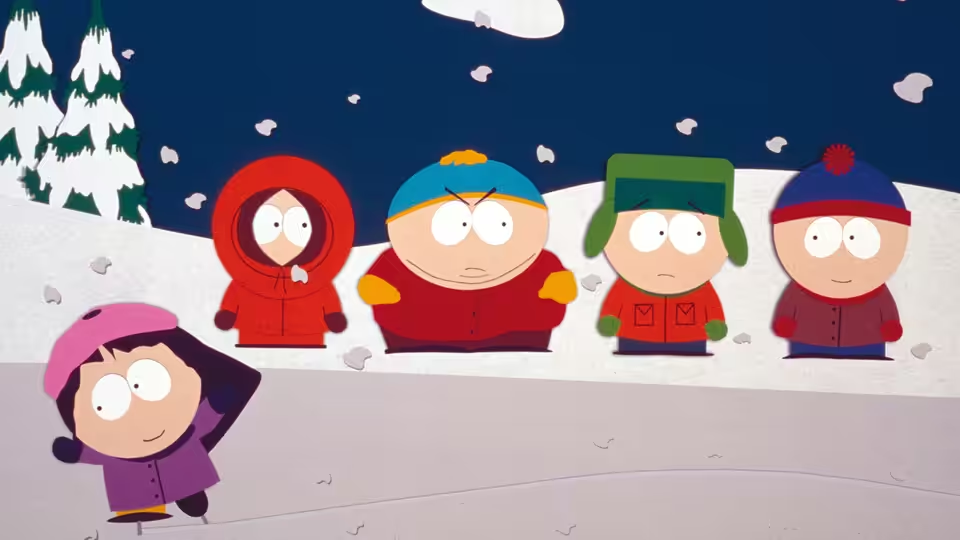
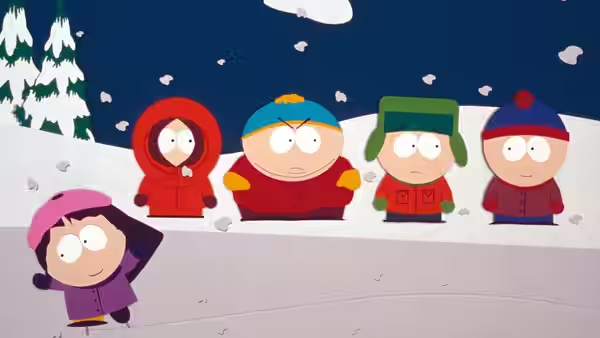
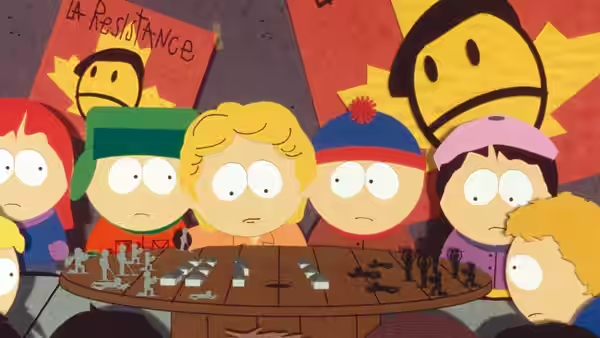
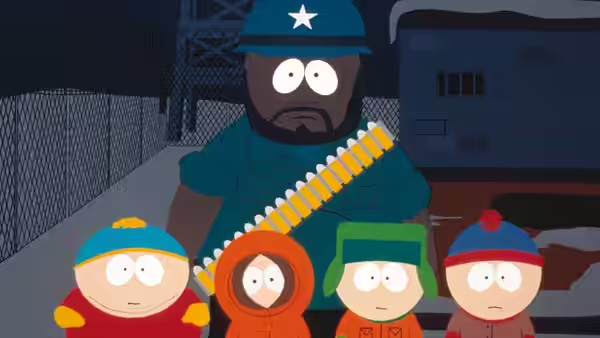
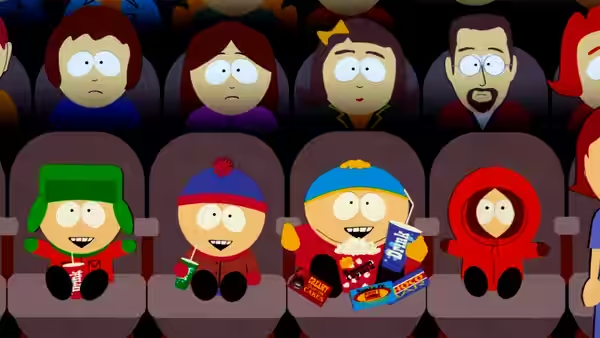
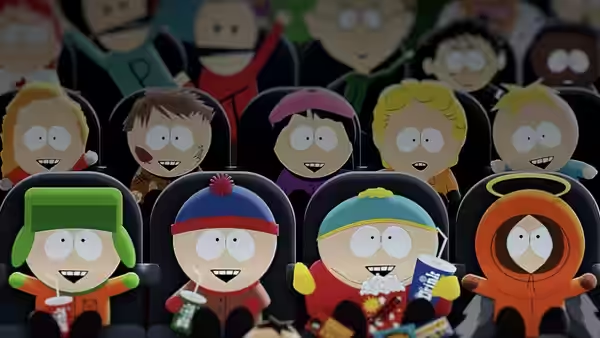
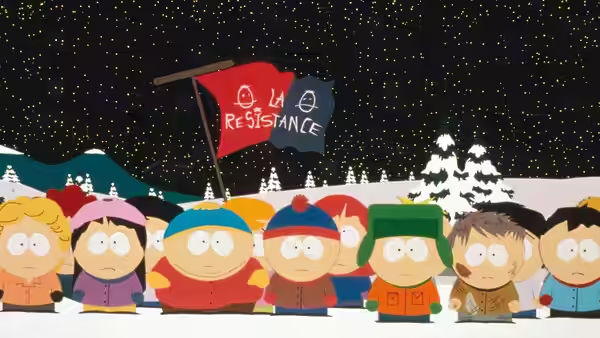
The simple animation also helps the comedy. Elaborate visual detail would be a distraction from the faces, the voices and the increasingly foolish things being said; the blunt figures suit the blunt language. Editor John Venzon keeps most exchanges moving quickly enough that the insults need little preparation or tidying up afterwards. At 81 minutes, the film generally understands how long this kind of attack can remain funny, even if it occasionally ignores its own good sense.
The reservation is repetition. Some subplots continue after their comic purpose is clear, and Parker’s willingness to keep pressing a joke can turn insolence into routine. By then, extra swearing does little to rescue the weaker material, especially once the initial pleasure of hearing the forbidden word has worn off. The pace slackens enough to make the waste noticeable in so short a running time.
As a musical comedy, it clears the important hurdle of making the tunes enjoyable before asking us to laugh at them. Parker’s affection for the form comes through in the earnest delivery, even when the words are doing their utmost to spoil it. That gives the film a pleasure beyond agreeing with its attacks on adult hypocrisy. Choose it for the songs, and be prepared to sit through a few insults that needed another draft.