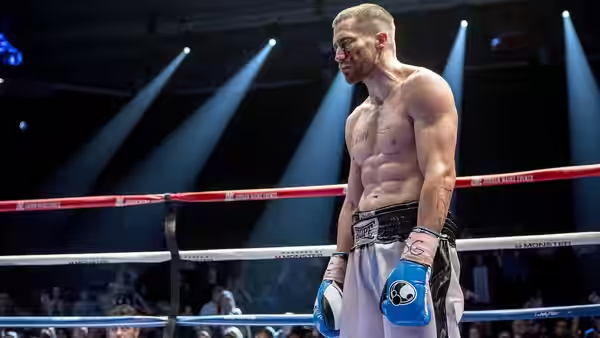
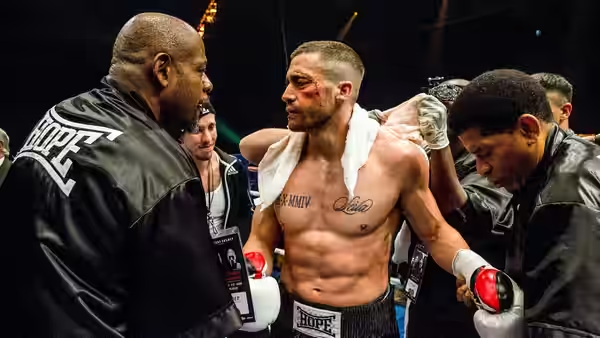
Jake Gyllenhaal makes the boxing convincing and gives the family scenes some warmth. But Antoine Fuqua’s drama keeps piling on hardships when it needs to spend more time getting to know its characters.
Southpaw gives Jake Gyllenhaal a demanding physical role and a disappointingly easy story to predict. Antoine Fuqua wants the boxing to tell us how Billy thinks, and the fights often manage it. Kurt Sutter’s screenplay is less patient with the family drama, adding hardships before the people enduring them have become sufficiently interesting. It is an uneven film with a persuasive leading performance, and too much of its emotional weight rests on that performance alone.
His work deserves more attention than a tally of the muscles he has acquired. He makes Billy’s aggression seem habitual, something the man has learned to depend on and cannot readily put aside. His changing approach to boxing gives us a way of reading his state of mind without another explanation from the script. There are limits to how much anger a performance can sustain, though, and the film keeps returning him to it when we want to discover something else.
Mauro Fiore’s cinematography gives the bouts a force that the scenes outside the ring too often lack. John Refoua cuts them with a clear sense of pressure, maintaining suspense rather than simply hurrying through the exchanges. We flinched at the boxing because Jake Gyllenhaal moves convincingly enough for the punishment to feel ugly. The bouts hold our attention without any need for another calamity outside the ring.
The family scenes have their own advantages, particularly Oona Laurence as Leila Hope. Her connection with Jake Gyllenhaal makes Billy’s responsibilities as a father matter, even when the writing is pushing hard for a response. Rachel McAdams, as Maureen Hope, helps give these relationships some warmth, but Kurt Sutter allows too little room for the family to exist beyond Billy’s troubles. We wanted more time with them as people before being asked to worry quite so much about them.
Forest Whitaker supplies welcome steadiness as Titus ‘Tick’ Wills, the compassionate trainer. His presence makes the familiar business of a boxer accepting guidance watchable, although the character has little chance to surprise us. That is the difficulty throughout: the actors keep suggesting lives that the screenplay does not make time to explore. When another burst of violence arrives, it tends to repeat what we already know about Billy.
Derek R. Hill’s production design gives the boxing a credible setting, without making Billy’s surroundings especially memorable. James Horner’s music is more insistent, pressing for feelings that the actors are already working hard to provide. Neither the score nor the succession of setbacks trusts a small response to be enough. Boxing dramas need time outside the ring to make their people worth caring about, and this one keeps spending that time on another crisis.
At 123 minutes, Southpaw also gives us too much time to anticipate its next demand for sympathy. A leaner film might have made better use of the force in those fights and the tenderness between father and daughter. For anyone chiefly interested in a committed boxing performance, the lead actor provides a reason to stay. If it is the family story that interests you, we would keep looking.