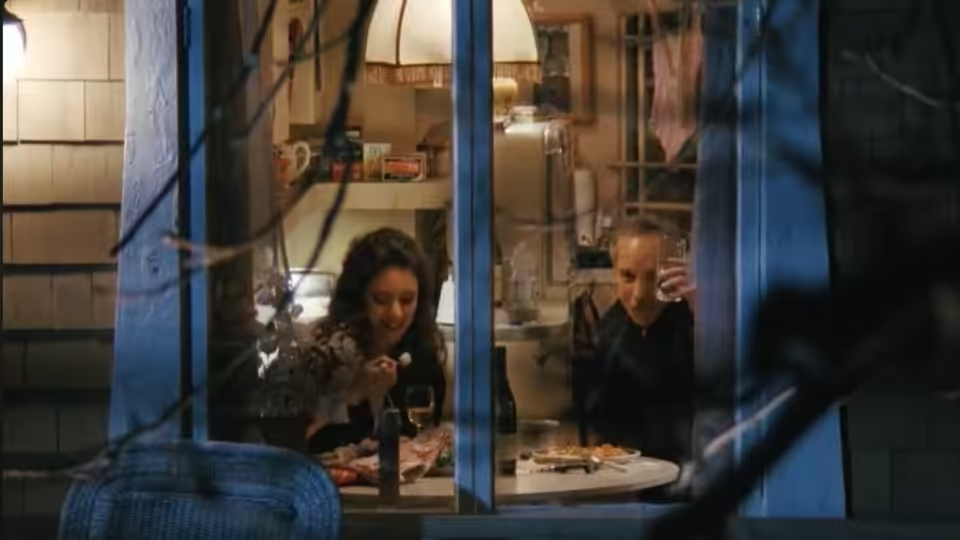
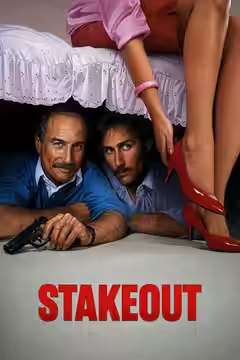
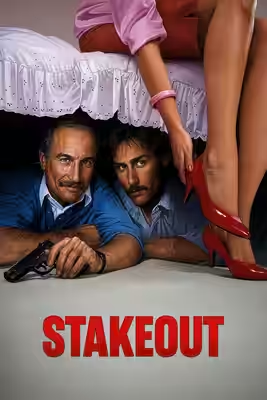
Richard Dreyfuss makes Stakeout worth the evening, especially when police business gives way to romantic embarrassment. John Badham’s comedy thriller is less convincing at joining its jokes to its violence, but the company mostly compensates.
Stakeout is worth an evening for its comic performances, provided a tidy plot is not a condition of entry. John Badham sets himself the awkward job of making police comedy, adult romance and harsh violence fit comfortably within the same film. They do not always fit, and the brutality of the opening makes the subsequent good humour harder to settle into. Still, there is enough pleasure in watching these people together to forgive some fairly loose writing.
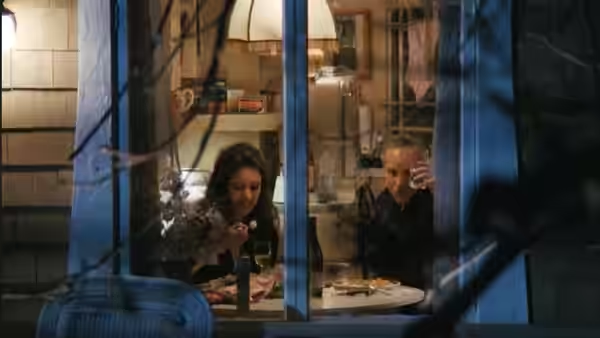
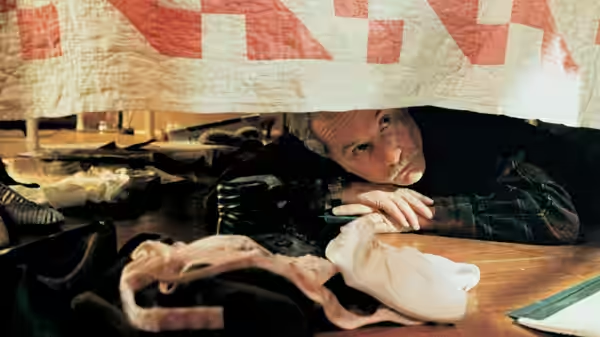
Richard Dreyfuss does most of the persuading as Det. Chris Lecce, whose romantic discomfort gives the film its warmth. We laughed at his lovelorn awkwardness, because he makes the effort to retain a little dignity so plainly visible. The timing is precise without making the character seem to know that he is funny, and that keeps the comedy kind. Madeleine Stowe, as Maria McGuire, gives him someone worth attending to; their scenes are more engaging than the business of establishing and maintaining a threat.
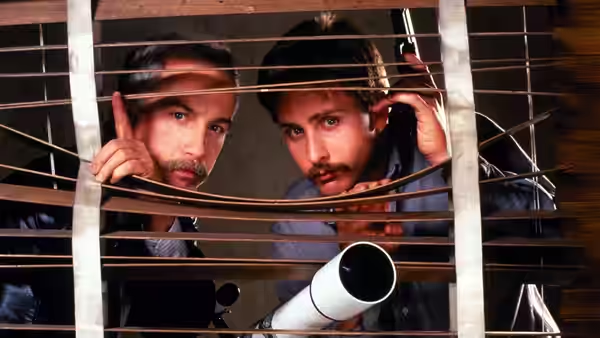
Emilio Estevez has a less rewarding task as Det. Bill Reimers, though the partnership remains likeable. He cannot always match the ease of his colleague’s verbal timing, and a few exchanges feel as though one actor has arrived at the joke before the other. Yet their familiarity is persuasive enough to carry the lighter passages without demanding that every line land. The pleasure lies in the sense that these two enjoy one another’s company, even when the writing is doing little to help.
Aidan Quinn brings a useful nastiness to Richard “Stick” Montgomery, giving the danger some weight when the film needs it. The difficulty is how often that danger seems to belong to a harsher film than the one the detectives are enjoying. Jim Kouf’s screenplay is more convincing about embarrassment and companionship than it is about keeping its thriller business plausible. We can accept a comedy taking shortcuts, but here those shortcuts weaken the tension just when the violence asks to be taken seriously.
John Seale’s cinematography has the clean assurance this sort of entertainment needs, making the action easy to watch without asking us to admire every image. Philip Harrison’s production design is similarly unobtrusive, leaving the performers room to hold our attention. There is a cost to all that efficiency. The surroundings seldom become memorable in their own right, and the film can look more anonymous than its central performances deserve.
Editors Michael Ripps and Tom Rolf keep the comedy moving, though pace cannot solve the awkward changes in tone. The movement between humour and brutality can leave too little room for either to register properly. Arthur B. Rubinstein’s score helps sustain the momentum without making those changes feel much more comfortable. The film remains easy enough to watch, but less satisfying whenever it asks us to worry.
At 116 minutes, there is also a little more of it than the material comfortably supports. By the standards of the buddy-police comedy, its advantage is the attention paid to a grown man’s romantic vulnerability, and its weakness is the familiar assumption that action will take care of itself. The affection survives the unevenness. Choose it for the romantic awkwardness and the companionable comedy, with modest expectations of the detective work.