Dave Filoni’s film is a television pilot that wandered into cinemas, and it looks the part: bold, angular, cheaply lit and cut into episode-sized blocks. Children under ten will enjoy the cliff battle. Everyone else will notice the plot is about a baby.
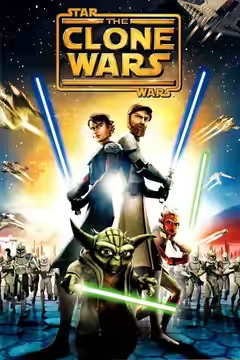
Dave Filoni directs a 98-minute animated feature set between the second and third of George Lucas’s prequels, and when it reached British cinemas on 15 August 2008 most critics called it a television pilot that had got into the wrong building. They were right. Henry Gilroy, Steven Melching and Scott Murphy’s screenplay is built in three or four chunks, each with its own planet, villain and battle, and the joins are visible from the back row. It is a decent afternoon’s cartoon asked to fill a cinema, and it cannot.
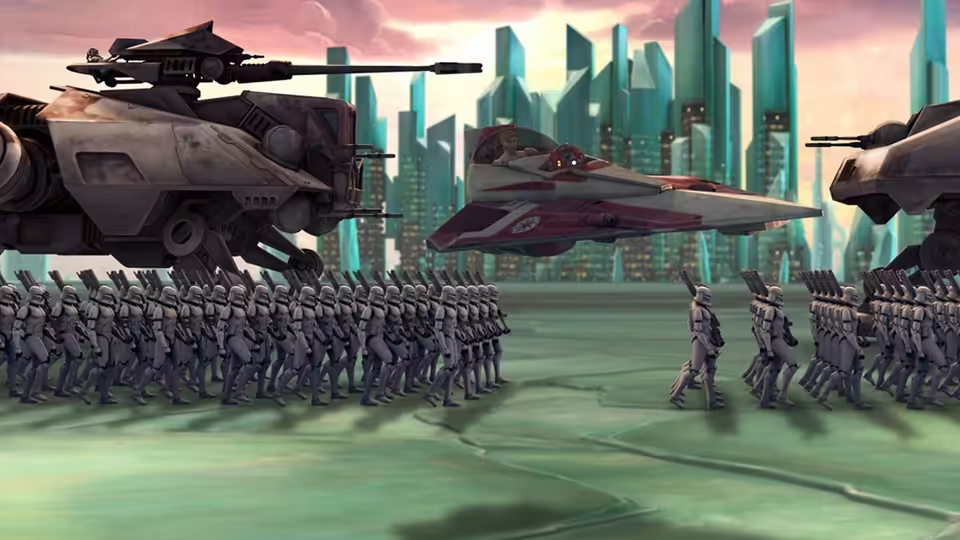
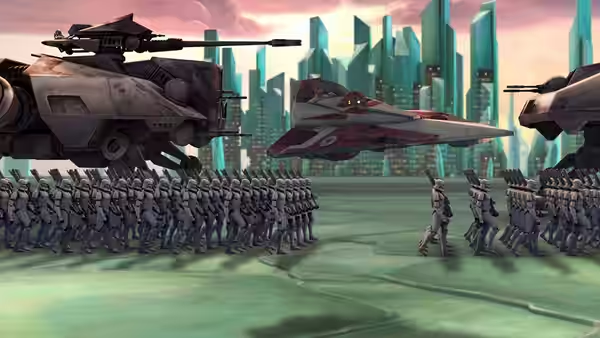
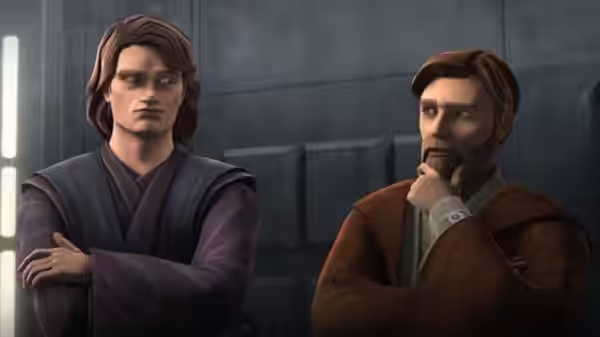
The look is the reason to try it. Filoni gives his people carved, angular faces with the shadows painted on, so that Anakin looks like a marionette and Obi-Wan like a wooden saint with a beard. It takes twenty minutes to stop looking wrong, and then it starts looking like a choice. The backgrounds are handsomer than the people: the blue crystal towers of Christophsis, the ochre cliff on Teth, the greasy neon of Ziro’s club on Coruscant.
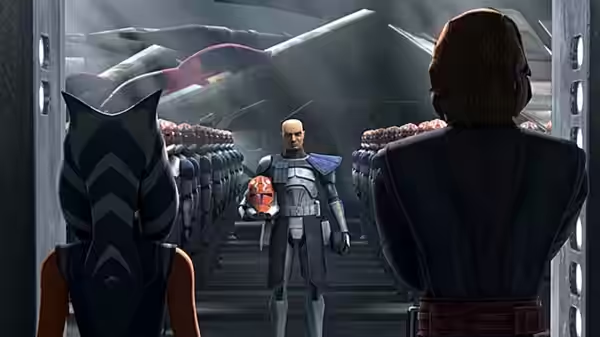
The best sequence is the assault on the Teth monastery, in which Anakin, Ahsoka and Captain Rex’s clones drive their six-legged walkers up a cliff face while droids fire down from the top. Filoni points the camera at the sky, so the thing to fear is the drop rather than the blaster, and Jason Tucker cuts it clean enough that we always know who is above whom. Dee Bradley Baker voices every clone and gives Rex the tone of a sergeant who has done this before. For ten minutes we sat forward.
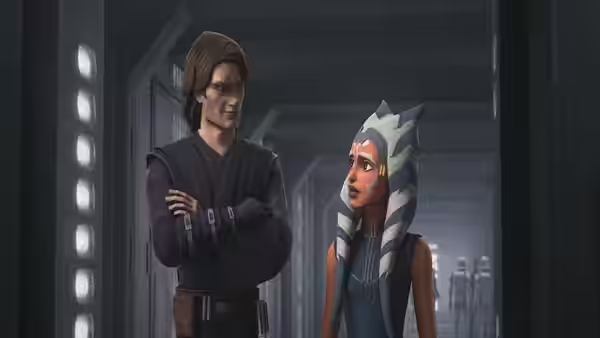
Ahsoka Tano is the film’s one dramatic idea, and Ashley Eckstein plays her as a bright, cocky teenager who has read about Anakin and is not impressed. Matt Lanter gives Anakin a lighter, more likeable voice than Hayden Christensen ever found. The trouble is the writing. She calls him Skyguy, he calls her Snips, and the script returns to the exchange every eight minutes as if checking it is still there; they never have a conversation that is not a quarrel. James Arnold Taylor’s Obi-Wan is a fair impression of Ewan McGregor and gets one good scene, offering General Loathsom a surrender he has no intention of keeping.
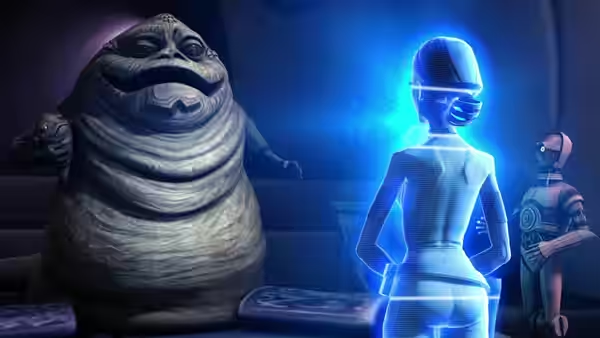
The plot is that Jabba the Hutt’s baby has been stolen and the Jedi must get him back so the Republic can use Jabba’s trade routes. Rotta the Huttlet, voiced by David Acord, is a green, mewling slug who spends most of the film in a backpack, unwell. Corey Burton gives Ziro the Hutt a lisping drawl that one or two critics enjoyed as camp, though he is there to fill a hole in the story rather than to be a character. Christopher Lee’s Count Dooku is the only voice that sounds as if it has read a book, and he has perhaps six minutes.
By the third battle we were bored, and a little cross about it, because the pieces were there: clones with names, a villain with a plan, a child on her first mission. What did it was the score and the cutting. Kevin Kiner has swapped John Williams’s brass for electric guitar and hand drums, and it sounds like the menu music from a game. Tucker’s battles are assembled from the same three shots: droids advance, clones fall, lightsabre deflects. Clones die in numbers and the film does not stop to notice, which is forgivable in a serial and not in a film with ninety-eight minutes to make us care.
It was made to launch a series, and it behaves like a first episode: it introduces everyone and asks nothing of them. Against Lucas’s films, even the weakest of the prequels, it is thinner; against the run of animated adventure in cinemas it is competent, cheap and short. Filoni can stage an action scene. The script does not give him one with anything at stake.
Children of seven or eight who own the toys will be happy for 98 minutes, and their parents happy by proxy. For everyone else this is a pilot, best watched as one, at home, with something else on the go. The PG certificate is right.