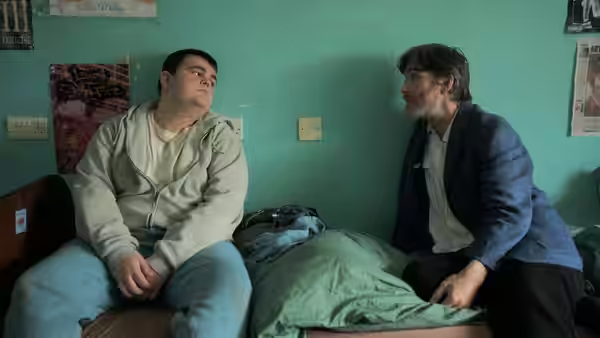
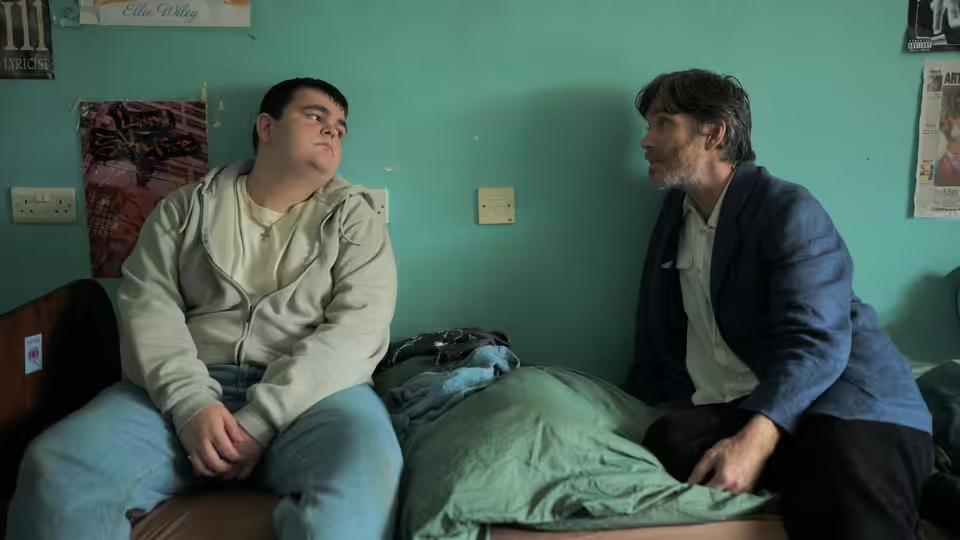
Steve talks with a young man beside a bed in a residential room
Film review

Steve

2025 · Directed by Tim Mielants · 1h 32m · IGAC M/16

In a sentenceCillian Murphy looks exhausted enough to need the evening off, and occasionally so does the film

Steve (Cillian Murphy) is a teacher trying to keep caring for his students while personal strain and institutional neglect make the work harder. At the school, the young ensemble includes Shy (Jay Lycurgo), whose vulnerability shares the film’s attention with Steve’s. Amanda (Tracey Ullman) is among the people around them. Steve wants to remain useful to pupils who need him, but his own exhaustion increasingly competes with that responsibility. The drama follows the pressures on the adults and students, with the school’s difficulties and Steve’s personal struggles becoming hard to separate.

Plays from YouTube when you press play; nothing loads from them until then.

Fi1m review

Cillian Murphy and Jay Lycurgo give Steve enough feeling to make its shortcomings frustrating. This school drama cares about its people, but its restless direction leaves too little time to know them.

Steve is worth considering for its performances, with a substantial reservation about how hurriedly it treats the people surrounding them. Tim Mielants directs a school drama in which caring for students has become exhausting, precarious work. Max Porter’s screenplay gives that pressure a compelling human centre in Steve, played by Cillian Murphy. We believe the exhaustion more readily than we understand the school, and that limits how far the film can take us.

Cillian Murphy makes Steve’s continuing concern for his students matter even when personal strain threatens to overwhelm it. The performance allows frustration into the picture without making care seem fraudulent, or asking for applause simply because a teacher persists. Jay Lycurgo gives Shy a vulnerability that deserves the attention the film gives its adult lead. We were moved by the moments that let Steve and Shy appear vulnerable; for once, the film gives us enough space to worry about someone rather than merely register the pressure on them.

The younger performers also bring humour and an ease with one another that help the school feel inhabited. Their company is welcome because a film this concerned with distress needs some sense of what these people are like when they are not suffering. Tracey Ullman, as Amanda, contributes a similarly valuable warmth and nuance. Yet the supporting characters too often remain people we would like to know better, and a convincing ensemble cannot entirely compensate for the limited attention each person receives.

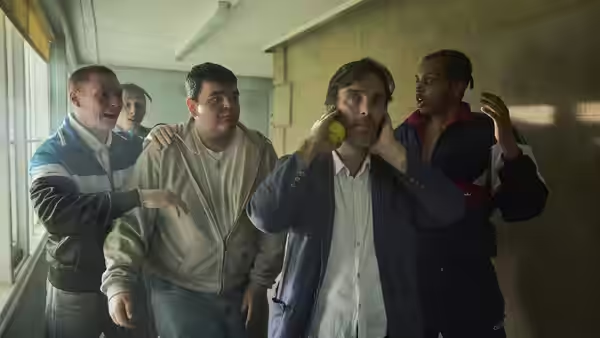
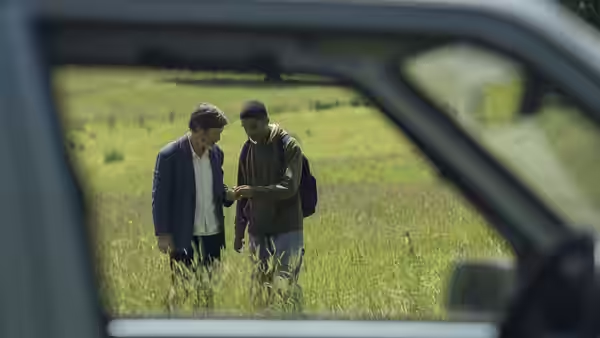
Robrecht Heyvaert’s cinematography makes disorientation an insistent part of the experience, successfully conveying how difficult it is to find a moment’s peace. The aerial views are less persuasive: they enlarge the presentation without deepening our understanding of the people below. Danielle Palmer’s editing has the difficult task of accommodating this divided attention within 92 minutes, and the result feels compressed rather than economical. Neither the score by Ben Salisbury and Geoff Barrow nor Paki Smith’s production design can supply the ordinary detail about school life that the writing leaves underexplored.

That omission matters particularly in a drama about education. We get too little sense of the actual teaching, or of how the school’s work might help these particular students. Max Porter gives us forceful emotion, but the pupils need more individual definition if the film’s concern for them is to carry its full weight. Tim Mielants keeps the distress close enough to feel, yet the restless presentation sometimes makes it harder to distinguish one person’s difficulties from another’s.

The familiar school-drama temptation is to make the institution legible through one exceptional adult, and Cillian Murphy is persuasive enough to make that approach work for stretches. But Steve also asks us to care about a wider group, then struggles to make room for them. Its compassion is welcome, and its actors repeatedly earn feelings that the hurried storytelling cannot sustain. Choose it for the performances, provided an underdeveloped school and several insufficiently explored lives will not outweigh them.

Critical consensus AI synthesised

70
Positive
8
Mixed
8
Negative
1

The reviews lean positive on Steve, though enthusiasm is far from uniform. Praise centres on Cillian Murphy’s strained, committed performance, with Jay Lycurgo and the young ensemble also drawing strong notices. Several critics find the drama deeply affecting and compassionate in its treatment of care under institutional pressure. The restless cinematography earns praise for conveying that strain, although even some favourable reviews find individual flourishes excessive.

The divide is over whether that intensity gives the characters depth or crowds it out. More cautious reviews describe a scattered, cluttered film whose emotional force is weakened by divided attention. The AV Club argues that the abbreviated storytelling leaves characters underdeveloped, while IndieWire objects to the lack of detail about teaching and the students’ lives. The spread is wide: admirers find the film’s urgency moving, while detractors see frantic technique trying to compensate for too little substance.

The Observer
19 September 2025 · Wendy Ide
90*

Ide delivers a strongly positive verdict, calling the film gripping and exhausting and Murphy’s performance devastating. She especially praises the frazzled tension created by the cinematography and the standout performances from Murphy and Jay Lycurgo.

Read the full review →
Empire
18 September 2025 · Miriam Balanescu
88*

The critic calls the film an emotionally powerful, rallying portrayal of a broken education system. They praise its forceful emotion and disorienting cinematography, while noting that some aerial shots overreach.

Read the full review →
Variety
6 September 2025 · Critics Pick · Peter Debruge
85*

Debruge calls the film profoundly moving and superbly acted. He praises Murphy’s committed performance alongside the convincing young ensemble.

Read the full review →
Radio Times
17 September 2025 · Terry Staunton
80*

The review presents the film as powerful and stylish, with Cillian Murphy in awards-worthy form. It particularly praises the drama’s responsible and intelligent approach.

Read the full review →
The Guardian
6 September 2025 · Peter Bradshaw
80*

Bradshaw finds the drama fiercely affecting and ultimately hopeful, while noting that its ending softens some of its earlier ferocity. He praises Cillian Murphy and Jay Lycurgo’s performances, which lead an outstanding cast.

Read the full review →
The Hollywood Reporter
11 September 2025 · festival review · David Rooney
75*

Rooney finds the film harrowing but deeply moving, and ultimately compassionate rather than despairing. He especially praises Cillian Murphy’s riveting performance as a teacher whose care for his students persists through personal strain and institutional neglect.

Read the full review →

Straight answers AI written, from our review

Is Steve worth watching?
Steve is worth considering for Cillian Murphy and Jay Lycurgo’s performances, and we score it 68 out of 100. We are moved when the film lets its exhausted teacher and vulnerable pupil breathe, but the restless direction and underdeveloped supporting characters make this one for viewers particularly drawn to performance-led school dramas.
How long is Steve, and what is it rated?
Steve runs 1h 32m and is rated M/16 by the IGAC in Portugal. It is a drama film.
Where can I watch Steve in Portugal?
Steve is streaming on Netflix in Portugal. Availability is checked daily; the links above go straight to each service.
How violent or frightening is Steve, and is it suitable for children?
Steve carries a UK 15 certificate, so it is not suitable for children under 15. The drama centres on exhaustion, personal strain and distress among adults and pupils, making it a choice for older teenagers and adults comfortable with emotionally troubled material. We cannot establish specific levels of violence or frightening content from the certificate alone.
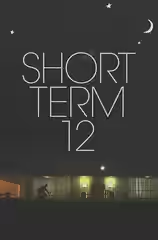
How does Steve compare to Short Term 12?
Steve is the more qualified recommendation beside Short Term 12, which we recommend more warmly for its performances and humour. Both find feeling in the pressures of caring for young people, but Steve gives its supporting characters too little attention. Short Term 12 allows care workers and young residents room for humour alongside distress, though its script sometimes arranges suffering too neatly.
What should I watch after Steve?
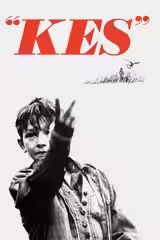
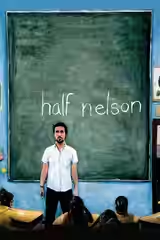
After Steve, try Short Term 12 (2013, Fi1m 86): Care workers and young residents get room for humour alongside distress. Then Kes (1969, Fi1m 88): A neglected boy receives the close attention his school struggles to provide; and Half Nelson (2006, Fi1m 81): Another troubled teacher, with careful attention to the limits of helping.

Cast

If you liked this, try…

  1. The Class (2008) · not reviewed yetClassroom disagreements receive the patient attention that makes institutional pressures feel specific.

  2. Short Term 12 (2013, Fi1m 86)Care workers and young residents get room for humour alongside distress.

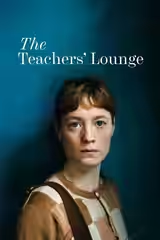
  3. The Teachers’ Lounge (2023) · not reviewed yetA school becomes painfully difficult to navigate despite a teacher’s good intentions.

  4. Kes (1969, Fi1m 88)A neglected boy receives the close attention his school struggles to provide.

  5. Half Nelson (2006, Fi1m 81)Another troubled teacher, with careful attention to the limits of helping.