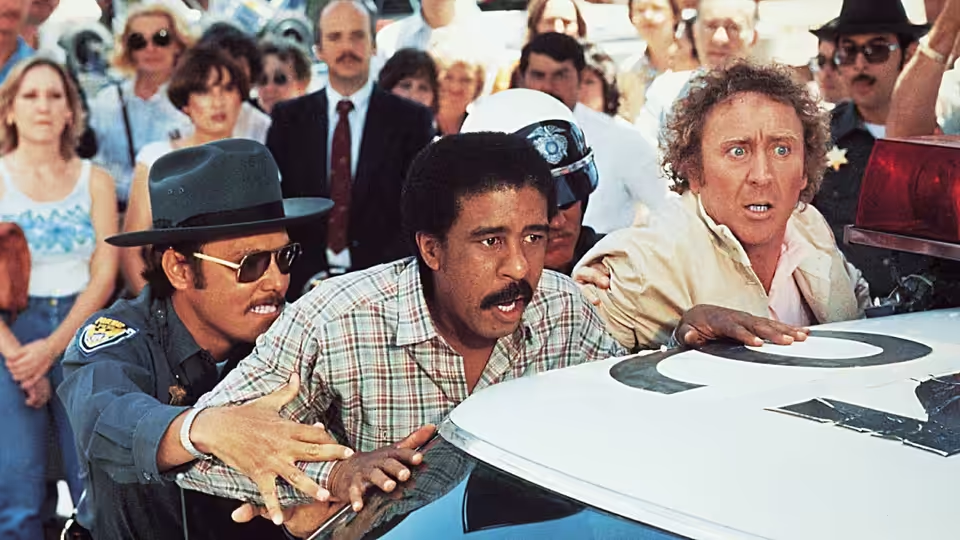
Gene Wilder and Richard Pryor are the whole show, and for an hour that is enough. Then Sidney Poitier’s prison comedy finds one gag it likes and repeats it until we had stopped laughing and started checking our watches.
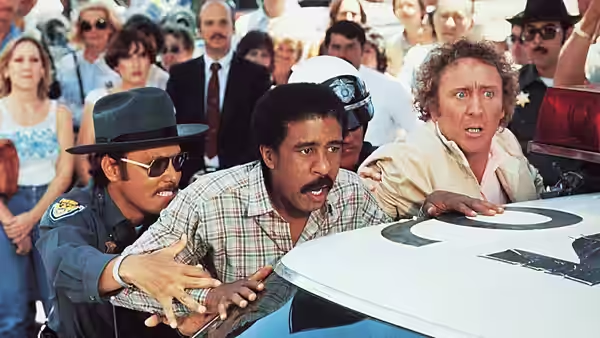
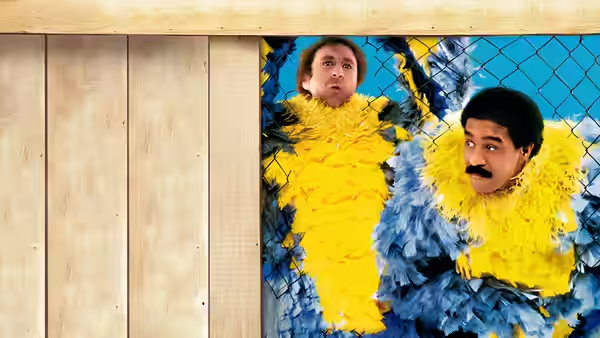
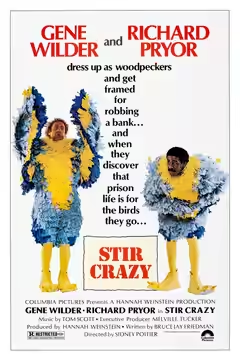
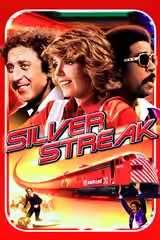
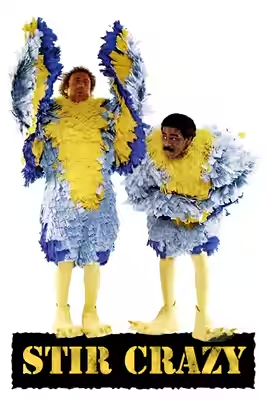
Sidney Poitier directs Gene Wilder and Richard Pryor in their second film together, four years after Silver Streak, and Bruce Jay Friedman’s script knows exactly what it has. Two New Yorkers lose their jobs, drive west, take a day’s work as dancing woodpeckers outside an Arizona bank, and are in prison for 125 years before they have got the feathers off. The verdict is simple. When Wilder and Pryor are in a frame together, Stir Crazy is funny. When the film has to do anything else, it stands around waiting for them to come back.
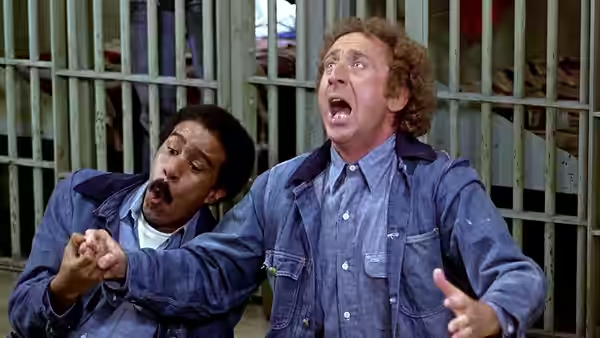
The pairing works because they panic in opposite directions. Wilder’s Skip meets every disaster with a wide, trusting smile and the belief that it will all be sorted out by lunchtime. Pryor’s Harry sees the disaster coming three scenes early and talks faster the closer it gets. The moment everyone remembers is the walk into the cell block, Harry coaching Skip to strut and scowl and announce how bad they are, while Skip does it like a man trying on a coat in a shop. We laughed out loud, properly and more than once, and it was all in the two bodies: Pryor’s loose, nervous bounce and Wilder’s stiff attempt to copy it.
The prisoners around them are better than the usual furniture. Georg Stanford Brown gives Rory a swishing confidence that the film, to its credit, lets him keep rather than mocking. Miguel Ángel Suárez’s Jesus Ramirez is the quiet one who can actually get things done. Erland van Lidth’s Grossberger, the enormous murderer nobody will sit near, is a very good joke with a soft centre. Barry Corbin’s warden and Craig T. Nelson’s deputy are stock, but Corbin plays his as a man who has found the one thing in life he cares about, and it is not justice.
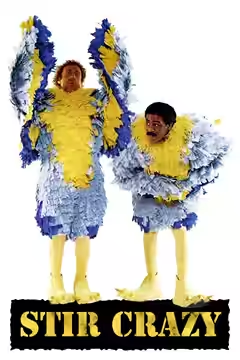
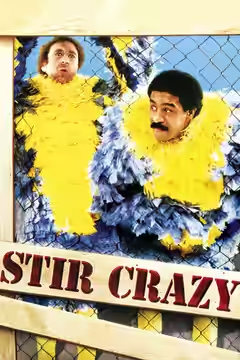
Fred Schuler shoots it bright and flat, the cells a hard grey, the Arizona exteriors bleached nearly white, and he keeps the camera back far enough to let the two men use their whole bodies, which is the right decision for these two performers. Alfred Sweeney’s prison is all painted bars and open yard, a place for running about rather than a place anyone fears. Patricia Edwards’s costumes earn their keep with the woodpecker suits alone. Tom Scott’s score is cheerful saxophone and electric piano, laid over everything whether or not a scene needs lifting. Harry Keller cuts the comedy loosely, holding on reactions long after the laugh has landed, and in the second half that looseness becomes the problem.
The second half leaves the cell block for a competition we will not describe, and the film stays with it far too long. We watched the same gag, Wilder in physical peril with his face serene, four or five times, and by the third we were no longer laughing but waiting for the next one, and then slightly annoyed with ourselves for waiting. Wilder’s innocence, which is sweet for an hour, has by this point become a single note held too long. JoBeth Williams’s Meredith, the lawyer’s cousin who takes up their case, arrives to give the film a romance and is handed almost nothing to do with it.
Poitier’s direction gives his two stars room and very little shape. That is a choice, and with these two it is not a bad one, but Silver Streak had a plot that kept moving under the jokes, and this has a sequence of sketches, each good for a scene and none of them going anywhere in particular. The prison clichés are sent up with affection, the gang, the hard-faced deputy, the escape plan, but sending them up is not the same as doing something with them. Most critics have been lukewarm about this film and we find ourselves in the same place, if a little warmer about the first hour.
See it for Wilder and Pryor, and for Georg Stanford Brown, and be prepared to have the kettle on once they leave the cell block. It runs 111 minutes and carries a 15.