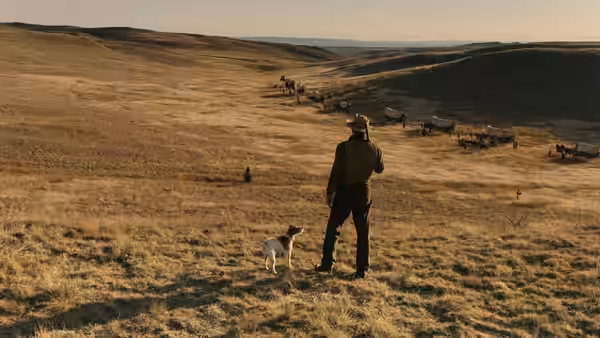
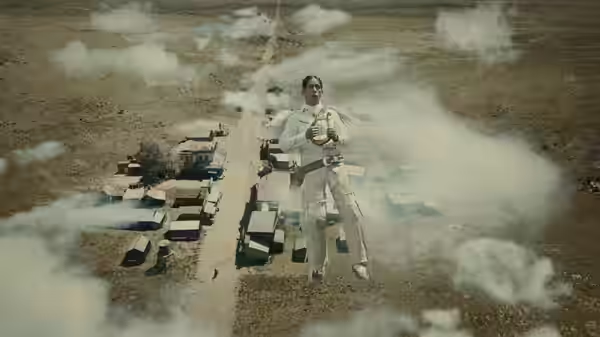
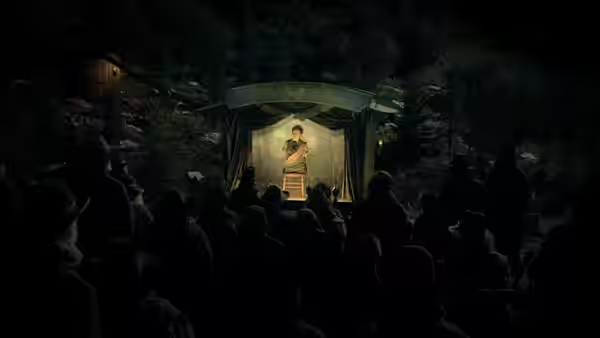
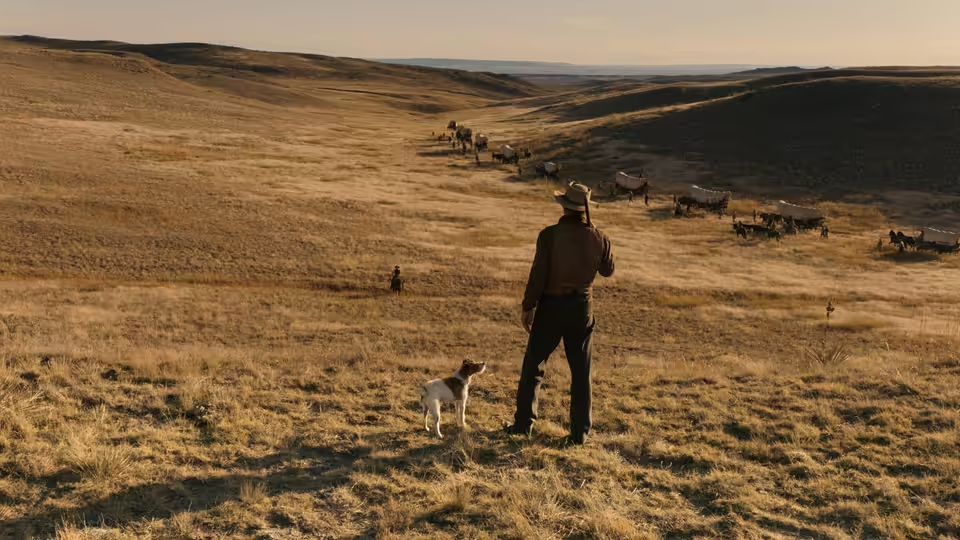
a man and dog overlooking a wagon train on the prairie
Film review

The Ballad of Buster Scruggs

2018 · Directed by Joel Coen, Ethan Coen · 2h 12m

In a sentenceThe singing cowboy is charming enough to make us briefly forget how badly he behaves

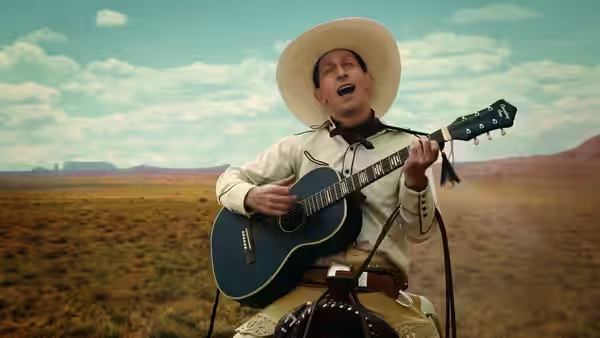
In the Old West, singing cowboy Buster Scruggs (Tim Blake Nelson) encounters cantina drinkers, card players and men who are not pleased to see him. Curly Joe (Clancy Brown) and the Frenchman (David Krumholtz) are among the company. Buster has songs to sing and hostile company to contend with; his response brings music and violence into the same encounters. His tale opens a collection of six Western stories, presented as chapters in an illustrated book, which moves from musical comedy towards more sombre accounts of human behaviour, cruelty and death.

Plays from YouTube when you press play; nothing loads from them until then.

Fi1m review

Joel Coen and Ethan Coen make the Old West funny, cruel and unexpectedly sad. The stories vary in strength, but Tim Blake Nelson’s singing cowboy and the patient attention to detail make the unevenness worth accepting.

Joel Coen and Ethan Coen’s The Ballad of Buster Scruggs is a good Western anthology with an exceptional opening and some stretches that cannot sustain our interest. Its six stories appear as chapters in an illustrated book, giving each a fresh start without pretending they belong to one continuous adventure. The brothers use that freedom to move from broad comedy into cruelty and sadness. At 132 minutes, the collection asks for more patience than every chapter earns, though enough of it works to justify the evening.

Tim Blake Nelson makes Buster Scruggs such agreeable company that the opening’s musical violence is harder to resist than it should be. His performance treats singing and aggression as equally reasonable ways of passing the time, without pausing to acknowledge how outrageous this is. We laughed, then felt slightly ashamed of ourselves, because the musical timing makes the brutality so easy to enjoy. The performance sets a level of comic assurance the other stories cannot consistently match.

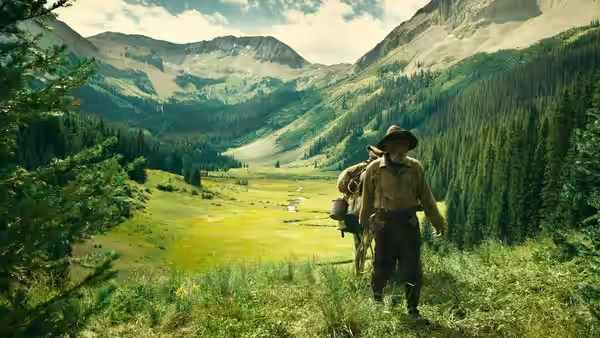
Bruno Delbonnel’s cinematography makes the Western scenery feel expansive even when a story is over almost before we have settled into it. Those broad views deserve the attention they receive. Jess Gonchor’s production design gives the drinking and card-playing spaces the carefully arranged look of illustrations, fitting the book that introduces the tales. The artificiality is a pleasure, although the polish sometimes keeps the harsher material at a comfortable distance.

As editors, Joel Coen and Ethan Coen are especially good at letting a change of tone arrive before we have prepared for it. A comic passage can become unpleasant without an announcement, and the chapter breaks let them begin again without forcing a connection between stories. Carter Burwell’s score gives the sadder passages enough weight to stand alongside the comedy. It helps us accept the changes without making every sombre moment feel like an instruction to stop enjoying ourselves.

The trouble is that we begin to anticipate the cruelty. Once the collection has taught us to distrust a pleasant situation, waiting for it to sour can become less interesting than the brothers seem to think. Some chapters feel stretched around a grim joke whose direction is already clear, and the handsome settings cannot entirely disguise the wait. Slowness itself is not the problem; the problem is having time to lose interest in what happens to the people.

For all that, the film understands how much a Western can contain. Songs, bad manners, suspicion and sentiment belong here without every tale having to handle them in the same way. The performances are most persuasive when they make the people worth caring about before the film asks us to fear for them. There is enough tenderness to complicate the humour, and enough humour to keep the persistent attention to mortality from becoming a lecture.

Do not mistake the singing cowboy for a promise of a cheerful evening. The changeable pace is part of the appeal, provided a less compelling chapter does not send us reaching for a distraction before the next one starts. Choose it when a laugh turning uncomfortable sounds like an acceptable way to spend the night.

Critical consensus AI synthesised

75
Positive
21
Mixed
6
Negative
1

Most critics respond warmly to the Coens’ six-part Western anthology, praising its shifts between broad comedy, cruelty and sadness. The performances draw consistent approval, particularly Tim Blake Nelson’s singing cowboy, while the photography, production design and Carter Burwell’s score earn praise even in less enthusiastic reviews. Many find that the storybook structure and recurring concern with death give the separate tales enough coherence, with the opening chapter frequently singled out for its comic invention.

The reservations centre on uneven pacing and whether the later stories sustain that opening promise. Opinion ranges widely: admirers find economical storytelling and feeling beneath the grim jokes, while others see minor sketches stretched beyond their worth. Slant Magazine offers the clearest dissent, finding the cruelty predictable and the ideas underdeveloped. Polygon is more positive but raises a separate concern about the retrograde portrayal of Native Americans, a reservation distinct from the broader debate about consistency.

The Telegraph
16 November 2018 · ★★★★★
100

The Coens are in inspired form with this macabre, gonzo Western that is half-fish, half-fowl and altogether inspired, with formal ingenuity and surgical control of tone. The critic singles out the dazzling mosey through the Coenesque, including the gonzo send-up of the singing cowboy genre and the formal presentation as chapters of a book.

Read the full review →
RogerEbert.com
9 November 2018 · ★★★½/4 · Glenn Kenny
88

The critic finds the anthology a marvelous and disquieting work full of exquisite detail and a bewitching sense of the Coens' multi-level playfulness. He singles out the vivid performances, Carter Burwell's score, and the way the stories circle around the inevitability of death.

Read the full review →
Sight and Sound
3 September 2018 · festival review · Michael Leader
85*

The critic sees the anthology as an eclectic tribute to the flexible storytelling modes of the Old West, with the Coens delighting in comic vignettes, grim irony, gallows humour and Gothic tales. It showcases the brothers in all their guises, from playful to profound, while celebrating American foundation myths.

Read the full review →
The New Yorker
14 November 2018 · Richard Brody
85*

The critic describes it as an exemplary political film built from giddy Western revisionism that exposes cruelty and unchecked power through clever twists. He singles out the philosophical bent and the way the episodes expand the genre into the absolute, especially the final metaphysical coach journey.

Read the full review →
Empire
5 November 2018 · Dan Jolin
82*

The critic calls the Coens' anthology a six-part love letter to the Hollywood Western, visualized as a cloth-bound storybook with vivid illustrations, full of subversion, parody and offbeat humour across its segments. There isn't really a weak link, though 'Meal Ticket' may test patience; the film spans the mythic West's visual flavours with warmth and humanity amid the playfulness, reminding viewers the genre still has life in it.

Read the full review →
The Guardian
31 August 2018 · festival review
82*

The Coens deliver a hilarious, beautifully made, very enjoyable and rather disturbing anthology of old-west stories that switch from picturesque sentimentality to grisly violence. The critic singles out the polished performances, especially Tim Blake Nelson as the roistering Buster and the handsomely made picture with Carter Burwell’s score.

Read the full review →

Straight answers AI written, from our review

Is The Ballad of Buster Scruggs worth watching?
The Ballad of Buster Scruggs is worth watching for its dark Western humour, carefully composed settings and Tim Blake Nelson’s singing cowboy; we score it 79 out of 100. The six stories vary in strength, and some stretch their grim jokes too far, but we recommend it if laughter turning uncomfortable sounds appealing.
How long is The Ballad of Buster Scruggs, and what is it rated?
The Ballad of Buster Scruggs runs 2h 12m. It is a western and comedy film.
Where can I watch The Ballad of Buster Scruggs in Bulgaria?
The Ballad of Buster Scruggs is streaming on Netflix in Bulgaria. Availability is checked daily; the links above go straight to each service.
How violent or frightening is The Ballad of Buster Scruggs, and is it suitable for children?
The Ballad of Buster Scruggs carries a UK 15 certificate and is not suitable for children, despite its singing cowboy and illustrated-book presentation. Its violence mixes brutality with comic musical timing, while the stories repeatedly turn towards cruelty and death. We would steer squeamish viewers away: the humour makes the violence easier to enjoy, not necessarily easier to stomach.
How does The Ballad of Buster Scruggs compare to Dead Man Walking?
The Ballad of Buster Scruggs earns a more qualified recommendation from us than Dead Man Walking: its Western anthology is uneven, while the capital-punishment drama earns its emotion through difficult encounters. Choose the Coens’ film for songs, dark comedy and abrupt shifts into cruelty; choose Dead Man Walking for Susan Sarandon and Sean Penn’s performances, accepting that its debate sometimes feels too carefully arranged.
What should I watch after The Ballad of Buster Scruggs?
After The Ballad of Buster Scruggs, try Dead Man (1995, Fi1m 84): Another peculiar journey west, with deadpan humour and death never far away. Then Wild Tales (2014, Fi1m 83): Another anthology where ordinary human failings lead to disproportionate trouble.

Cast

Awards

Academy Awards, 2019

Nominated
Best Costume Design

If you liked this, try…

  1. The Sisters Brothers (2018) · not on Fi1m yetMore squabbling Western professionals, with a little extra warmth beneath the gunplay.

  2. Dead Man (1995, Fi1m 84)Another peculiar journey west, with deadpan humour and death never far away.

  3. Wild Tales (2014, Fi1m 83)Another anthology where ordinary human failings lead to disproportionate trouble.

  4. The Great Silence (1968) · not on Fi1m yetA harsher Western for those drawn to the cruelty beneath the scenery.

  5. Kwaidan (1964) · not on Fi1m yetFor carefully built storybook worlds with a more patient, unsettling rhythm.