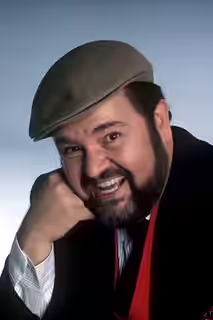
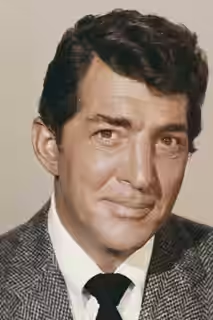
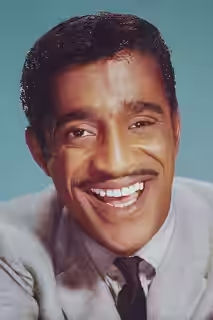
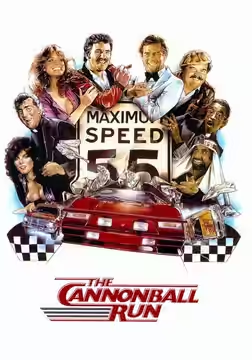
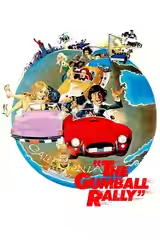
Hal Needham puts Burt Reynolds and Dom DeLuise in an ambulance and lets the rest of the cast turn up as themselves. Reynolds and DeLuise are good company; the race around them barely exists, and the stunts are thinner than the guest list.
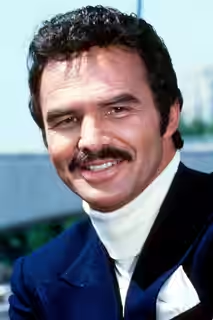
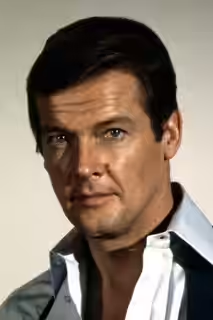
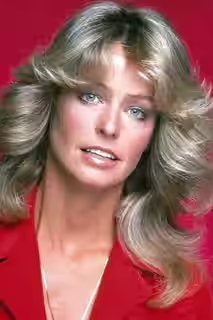
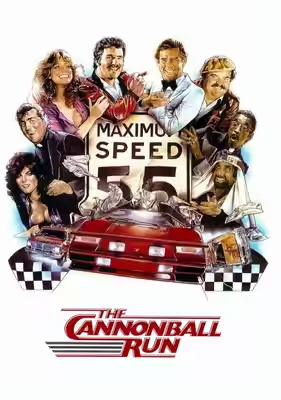
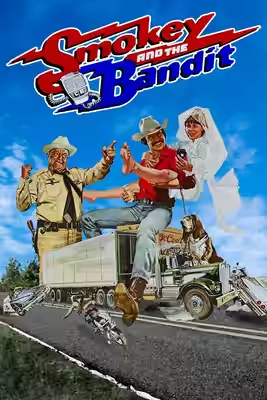
Hal Needham made Smokey and the Bandit (1977), and the thing that film knew how to do was keep a car going fast at something. The Cannonball Run is built on a guest list instead. Brock Yates’s script takes a cross-country road race and fills the grid with people who were famous in 1981: Burt Reynolds, Roger Moore, Dean Martin, Sammy Davis Jr., Farrah Fawcett. Then it points the cameras at them and more or less waits. Whether the race is still happening in any given scene is a question the film does not always trouble to answer.
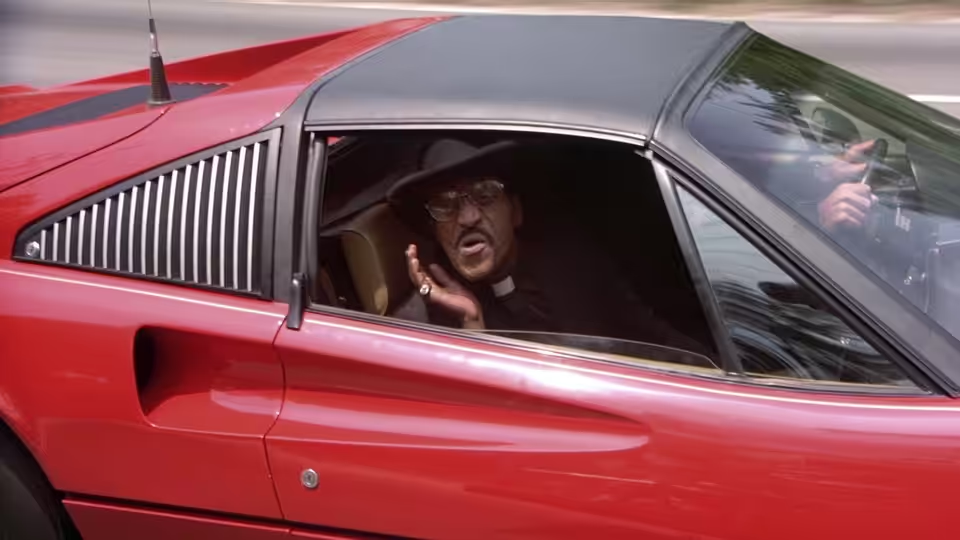
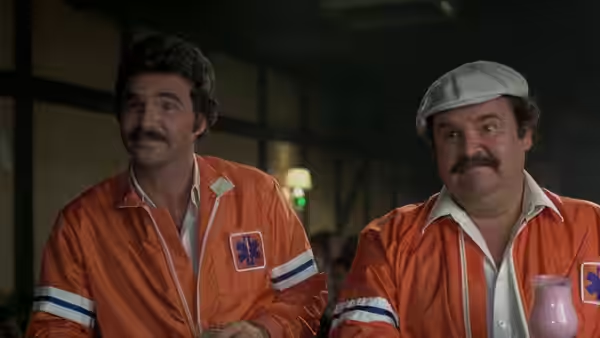
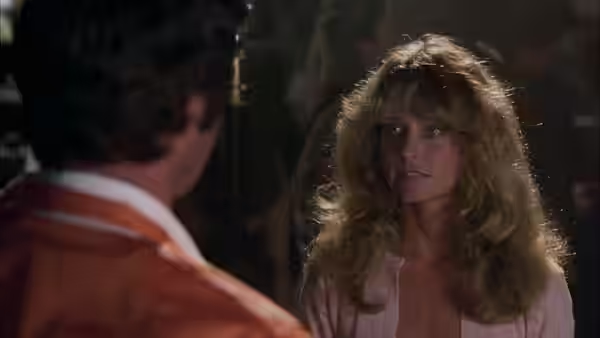
The ambulance is the best idea in it and the only one that gets developed. J.J. McClure (Reynolds) and his mechanic Victor (Dom DeLuise) reason that nobody pulls over an ambulance, so they get hold of one, hire a doctor (Jack Elam) who is drunk before the engine turns over, and acquire a patient, Pamela (Fawcett), who did not volunteer. Reynolds does the thing he did better than anyone: he lets the other person be funny and smiles at the result. DeLuise is the other person. His Victor is a soft, anxious man who, under pressure, turns into somebody louder and braver, and we laughed, properly, every time it happened, because DeLuise plays both men as if neither knows about the other. It is a small routine, the film leans on it hard, and it holds.
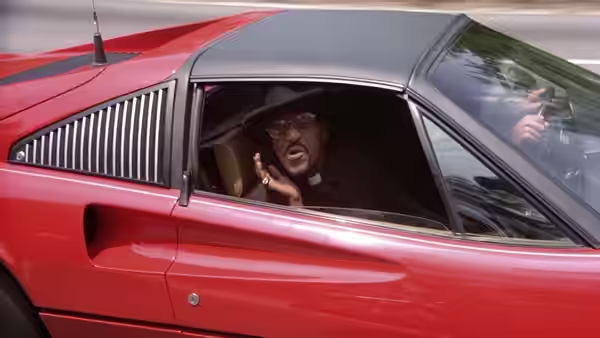
Roger Moore turns up as Seymour, a rich man’s son who believes he is Roger Moore, and drives accordingly. It is one joke, but Moore plays it with such grave politeness that it keeps paying out for twenty minutes. Dean Martin and Sammy Davis Jr. spend the race bickering as if they had been caught between sets. Jamie Farr’s sheik, Adrienne Barbeau’s Marcie, Terry Bradshaw, Jackie Chan in a Subaru: each gets an introduction, a costume and a car, and then the film goes back to the ambulance. Chan is given almost nothing to do with his hands, which even in 1981 was a waste.
The trouble is the race. Between them Yates and Needham produce perhaps three sequences in which a car does anything a car should not. Michael C. Butler shoots the roads flat and wide in midday light, so that a car at 120 and a car at 40 look much the same, and Donn Cambern and William D. Gordean cut between the entrants with no sense of who is where. We never once knew who was winning. Al Capps’s score, country guitar and brass, does the job of telling us things are exciting, and they mostly are not. The pile-ups, when they come, are brief and far apart.
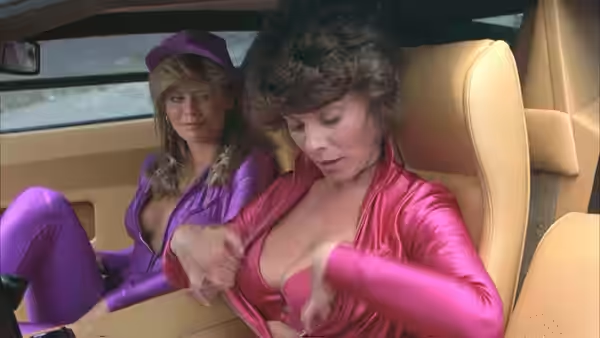
Then there is Pamela. Fawcett is kidnapped in the first act, strapped to a stretcher, sedated by the doctor and courted by Reynolds, and the film plays all of it as charming. Barbeau and her co-driver are in the film to unzip their overalls at policemen. We are not going to pretend we did not laugh at some of this, but we felt grubby afterwards, and the sense that the women are there as scenery is harder to wave through than the thin stunt work.
Against Needham’s own standard it comes up short. Smokey and the Bandit had one car, one truck and one sheriff, and it never stopped moving. This has a dozen cars and barely moves at all; the most energetic thing in it is DeLuise. The reviews so far have complained about the shortage of pile-ups, and we count the same way. The effort went into the casting, and the casting is where it stayed.
Most critics have been cooler on it than we are, and we understand why: it is lazy, it knows it is lazy, and it expects to be forgiven. We half forgave it. For 95 minutes it is good company, provided you can watch a lot of famous people enjoy themselves and not mind that you were not asked along. Watch it with a drink and low expectations; it will meet the second.