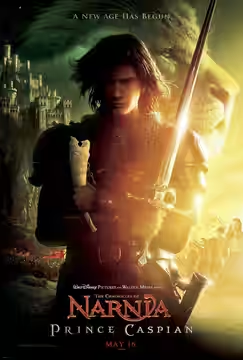
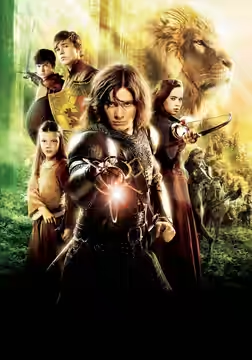
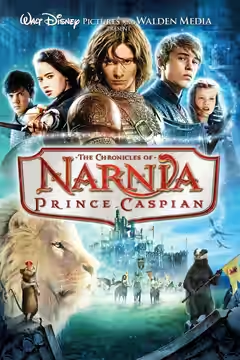
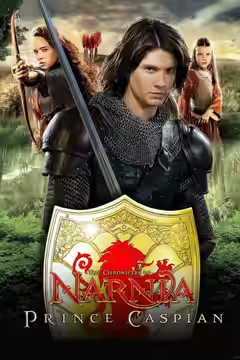
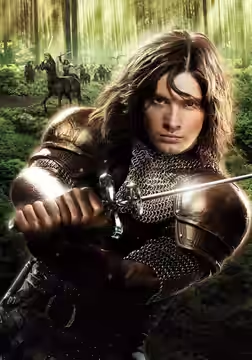
Andrew Adamson stages the fighting with confidence, and Peter Dinklage supplies welcome impatience. But The Chronicles of Narnia: Prince Caspian spends too much of its length on battles and too little on people worth worrying about.
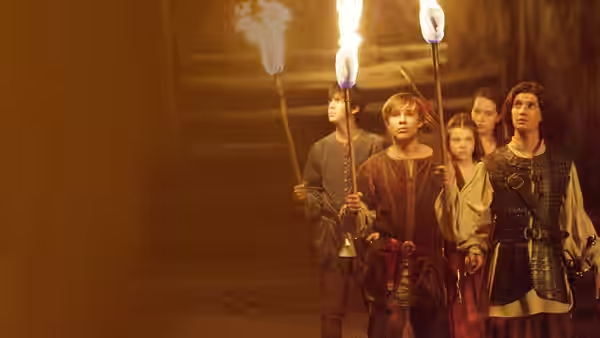
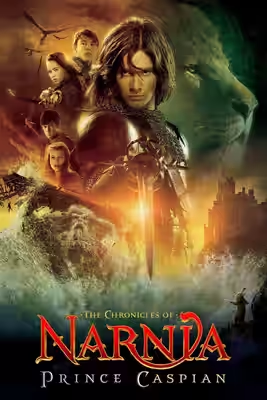
Andrew Adamson’s The Chronicles of Narnia: Prince Caspian is a capable fantasy adventure whose battles gradually wear away our interest. The creatures are convincing, the human performances are uneven, and the court intrigue offers occasional relief from the fighting. There is enough skill here to make the thinness of the drama frustrating, particularly when the film asks us to take its characters so seriously. It runs 150 minutes.
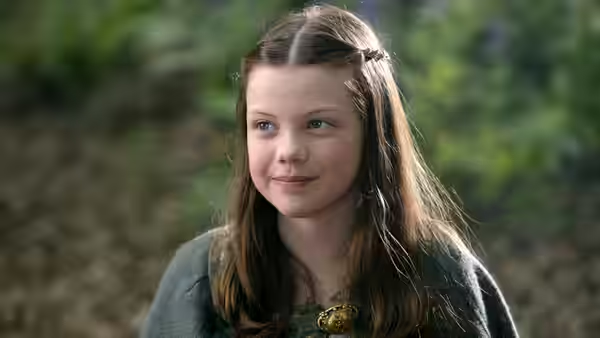
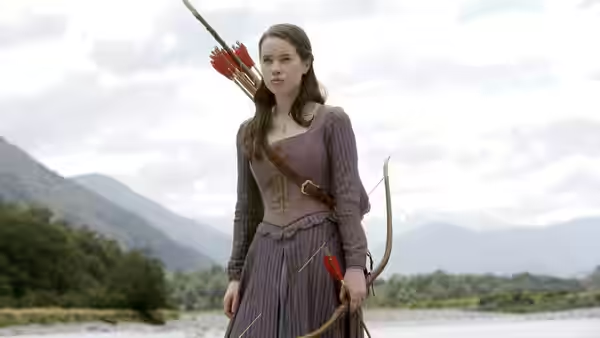
Ben Barnes, as Prince Caspian, is the central difficulty. His stiffness makes the royal formality tedious when the film needs some urgency, and the writing gives him too little help. The screenplay by Stephen McFeely, Christopher Markus and Andrew Adamson moves readily towards confrontation without making Caspian sufficiently interesting between the battles. The other human performances vary, but too many exchanges have the same earnest weight, leaving us waiting for someone to speak with a little less ceremony.
Peter Dinklage’s Trumpkin supplies exactly that. We laughed at his dry delivery, and felt grateful for the impatience he brings to a film so willing to take itself seriously. Suzy Eddie Izzard’s voice work as Reepicheep provides a different sort of lift, giving the talking mouse a liveliness missing from too many of the human exchanges. Both performances make it easier to spend time in a story otherwise crowded with earnest people.
Karl Walter Lindenlaub’s cinematography makes the scale of the action legible, so the spectacle remains easy enough to follow. Roger Ford’s production design gives the court intrigue some substance, even when the characters seem underwritten. The creatures are particularly persuasive, with enough individual character to make us wish the film would spend longer attending to them. Andrew Adamson can stage a battle with confidence, and there is pleasure in watching so many different creatures share the action without the whole thing becoming a blur.
Josh Campbell and Sim Evan-Jones keep the individual action sequences moving, but the editing cannot disguise how often the film returns to fighting. Over this length, even brisk action becomes tiring without enough variation. Harry Gregson-Williams’s score adds weight to the conflict, though the music’s insistence can make already solemn passages feel heavier still. A quieter conversation, allowed to develop without the pressure of another confrontation, would do more for our interest than another increase in scale.
For a family fantasy, the darker tone is not in itself a fault. Children do not need every danger softened, and a story involving royalty and war has room for difficult decisions. The disappointment is how little the writing does with those possibilities, despite all the time available. The gentler moments suggest that the film might have trusted its audience to care about something beyond who prevails in a fight.
Enthusiasts for fantasy warfare may find enough in the creature work and the clear staging. We would hesitate to offer it as an easy choice for a family evening, given how much patience the human drama requires. Allow two and a half hours, and a generous tolerance for royal solemnity.