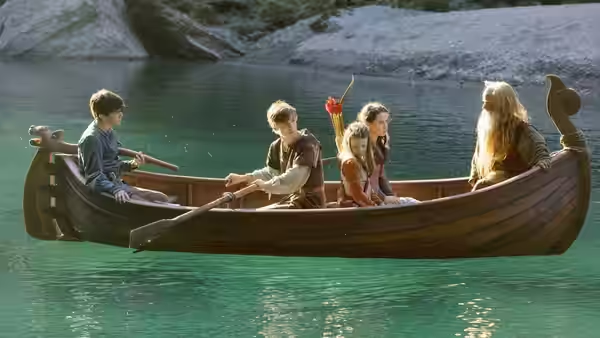
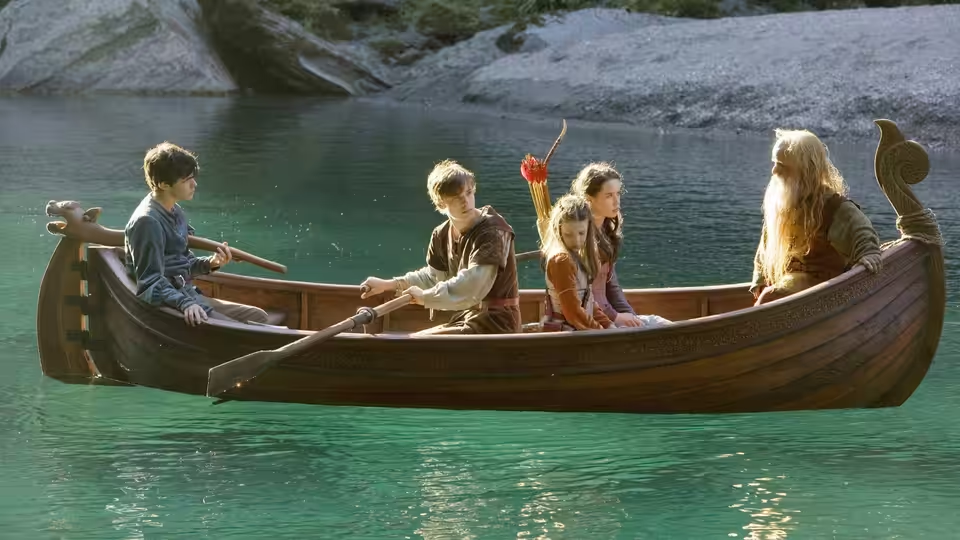
Four companions sit in a wooden boat crossing a clear mountain lake
Film review

The Chronicles of Narnia: Prince Caspian

2008 · Directed by Andrew Adamson · 2h 30m · IGAC M/6

In a sentenceWe would have settled for fewer soldiers and considerably more Peter Dinklage

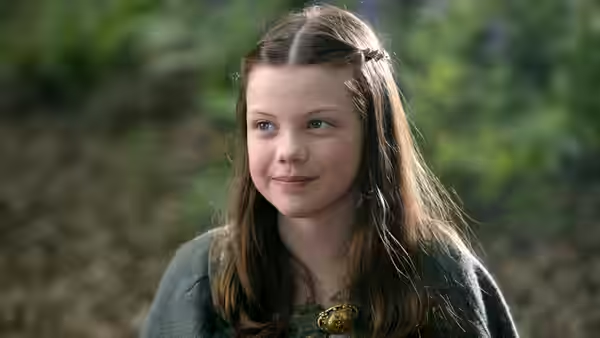
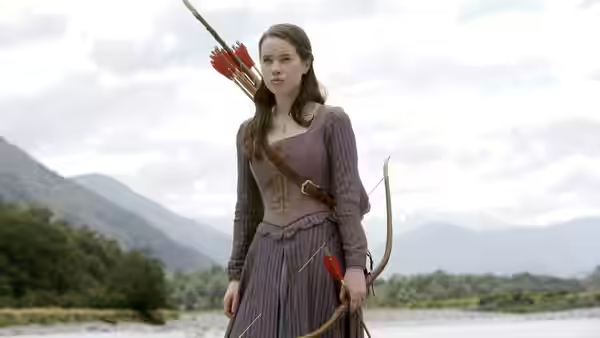
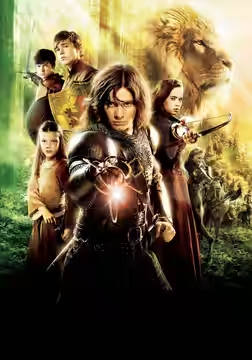
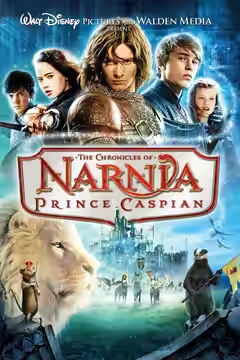
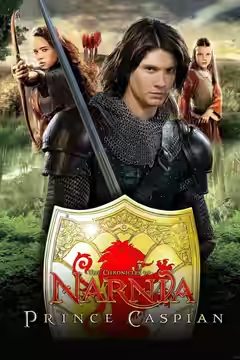
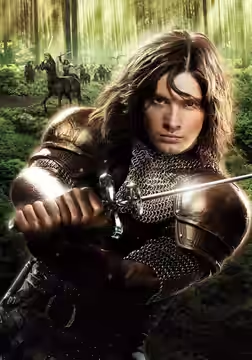
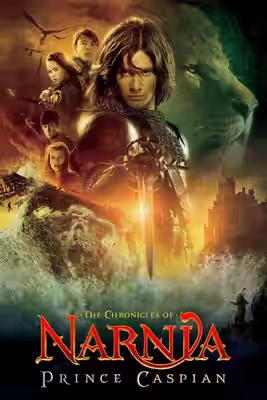
Prince Caspian (Ben Barnes) and King Miraz (Sergio Castellitto) feature in a story of court intrigue and battles. Lucy Pevensie (Georgie Henley), Edmund Pevensie (Skandar Keynes), Peter Pevensie (William Moseley) and Susan Pevensie (Anna Popplewell) take part in the adventure, alongside Trumpkin (Peter Dinklage). Among the fantastical creatures is Reepicheep (Suzy Eddie Izzard), a talking mouse. Human characters and creatures share a family fantasy that centres on armed conflict, with humour and gentler encounters between the battles. The story draws on a novel by C. S. Lewis.

Plays from YouTube when you press play; nothing loads from them until then.

Fi1m review

Andrew Adamson stages the fighting with confidence, and Peter Dinklage supplies welcome impatience. But The Chronicles of Narnia: Prince Caspian spends too much of its length on battles and too little on people worth worrying about.

Andrew Adamson’s The Chronicles of Narnia: Prince Caspian is a capable fantasy adventure whose battles gradually wear away our interest. The creatures are convincing, the human performances are uneven, and the court intrigue offers occasional relief from the fighting. There is enough skill here to make the thinness of the drama frustrating, particularly when the film asks us to take its characters so seriously. It runs 150 minutes.

Ben Barnes, as Prince Caspian, is the central difficulty. His stiffness makes the royal formality tedious when the film needs some urgency, and the writing gives him too little help. The screenplay by Stephen McFeely, Christopher Markus and Andrew Adamson moves readily towards confrontation without making Caspian sufficiently interesting between the battles. The other human performances vary, but too many exchanges have the same earnest weight, leaving us waiting for someone to speak with a little less ceremony.

Peter Dinklage’s Trumpkin supplies exactly that. We laughed at his dry delivery, and felt grateful for the impatience he brings to a film so willing to take itself seriously. Suzy Eddie Izzard’s voice work as Reepicheep provides a different sort of lift, giving the talking mouse a liveliness missing from too many of the human exchanges. Both performances make it easier to spend time in a story otherwise crowded with earnest people.

Karl Walter Lindenlaub’s cinematography makes the scale of the action legible, so the spectacle remains easy enough to follow. Roger Ford’s production design gives the court intrigue some substance, even when the characters seem underwritten. The creatures are particularly persuasive, with enough individual character to make us wish the film would spend longer attending to them. Andrew Adamson can stage a battle with confidence, and there is pleasure in watching so many different creatures share the action without the whole thing becoming a blur.

Josh Campbell and Sim Evan-Jones keep the individual action sequences moving, but the editing cannot disguise how often the film returns to fighting. Over this length, even brisk action becomes tiring without enough variation. Harry Gregson-Williams’s score adds weight to the conflict, though the music’s insistence can make already solemn passages feel heavier still. A quieter conversation, allowed to develop without the pressure of another confrontation, would do more for our interest than another increase in scale.

For a family fantasy, the darker tone is not in itself a fault. Children do not need every danger softened, and a story involving royalty and war has room for difficult decisions. The disappointment is how little the writing does with those possibilities, despite all the time available. The gentler moments suggest that the film might have trusted its audience to care about something beyond who prevails in a fight.

Enthusiasts for fantasy warfare may find enough in the creature work and the clear staging. We would hesitate to offer it as an easy choice for a family evening, given how much patience the human drama requires. Allow two and a half hours, and a generous tolerance for royal solemnity.

Critical consensus AI synthesised

60
Positive
4
Mixed
8
Negative
2

The reviews lean towards a mixed response, with praise clustering around the creatures, visual effects and scale of the battles. Several critics find Prince Caspian more polished and confidently staged than its predecessor, though that improvement does not consistently make it more involving. Peter Dinklage’s performance earns praise even from reviewers who find little else to enjoy. The darker tone is generally less contentious than the question of whether the spectacle sustains the adventure.

Reservations centre on predictable plotting, uneven performances and battles that some find exciting and others bloodless. Length and weak character development also temper the praise, leaving most critics somewhere between qualified approval and disappointment. The spread is wide at the extremes: The Skinny regards the sequel as thoroughly satisfying and a substantial improvement, while Paste finds it dull and shallow, with Dinklage and Eddie Izzard providing rare bright spots.

Empire
1 June 2006 · Helen O'Hara
70*

O’Hara finds the sequel significantly improved but still less affecting than the books. She praises its vividly realised creatures and thrilling battle scenes, while faulting its showy effects and uneven performances.

Read the full review →
The Hollywood Reporter
12 May 2008 · The Associated Press
70*

The critic calls the sequel worthy, though less wondrous than its predecessor. They praise the grand-scale battle sequences, gorgeous effects and Peter Dinklage’s performance.

Read the full review →
Variety
9 May 2008 · Todd McCarthy
70*

McCarthy finds the sequel darker, more conventional, and more crisply made than its predecessor, with a straightforward war-film structure. He praises the action staging, visual effects, and production values, while noting that the battle-heavy story is predictable.

Read the full review →
Evening Standard
10 April 2012 · Jackie Annesley
65*

The critic finds the film entertaining but overlong. She praises its humour and visual pace, while noting that its 2-hour-20-minute running time is excessive.

Read the full review →
Los Angeles Times
16 May 2008 · Kenneth Turan
65*

Turan finds the sequel more polished than its predecessor, though its mix of battle spectacle and gentler moments does not always find its balance. He praises Andrew Adamson’s surer direction and the film’s kid-friendly adventure style.

Read the full review →
Screen Daily
13 May 2008 · David D'Arcy
64*

The available page shell does not reveal the critic’s verdict. It provides no readable praise or complaint to identify.

Read the full review →

Straight answers AI written, from our review

Is The Chronicles of Narnia: Prince Caspian worth watching?
The Chronicles of Narnia: Prince Caspian is a mixed prospect we score 58/100, with most to offer enthusiasts for fantasy warfare. We enjoy the convincing creatures, clearly staged battles and Peter Dinklage’s dry humour, but the thin human drama makes its 150 minutes tiring rather than an easy choice for a family evening.
How long is The Chronicles of Narnia: Prince Caspian, and what is it rated?
The Chronicles of Narnia: Prince Caspian runs 2h 30m and is rated M/6 by the IGAC in Portugal. It is an adventure and family film.
Where can I watch The Chronicles of Narnia: Prince Caspian in Portugal?
The Chronicles of Narnia: Prince Caspian is streaming on Disney+ in Portugal, and it is also available to rent from Amazon Prime Video and Apple TV from €3.99. Availability is checked daily; the links above go straight to each service.
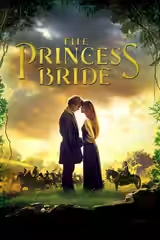
How does The Chronicles of Narnia: Prince Caspian compare to The Princess Bride?
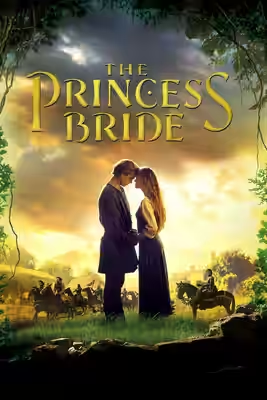
The Chronicles of Narnia: Prince Caspian is the more solemn, battle-heavy choice; we recommend The Princess Bride for its wit, warmth and more enjoyable company. Both offer royal quarrels, swordplay and creatures, but Caspian suits viewers chiefly interested in fantasy warfare, while The Princess Bride gives us more reason to care between the fights.
Is The Chronicles of Narnia: Prince Caspian based on a true story or a book?
The Chronicles of Narnia: Prince Caspian is adapted from a novel by C. S. Lewis, not based on a true story. We judge the film as a family fantasy in its own right; our review does not assess its faithfulness to the novel or establish whether reading the book beforehand helps.
What should I watch after The Chronicles of Narnia: Prince Caspian?
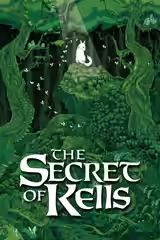
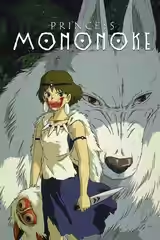
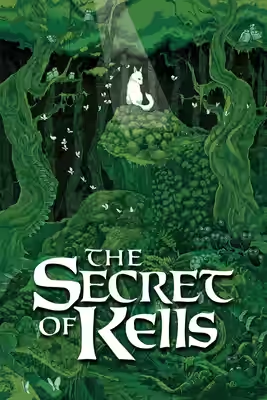
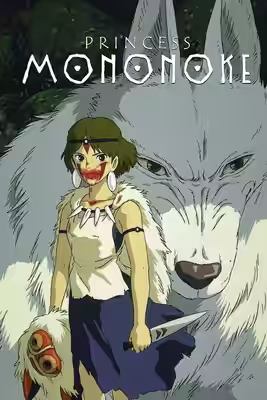
After The Chronicles of Narnia: Prince Caspian, try The Princess Bride (1987, Fi1m 86): Royal quarrels, swordplay and creatures, with considerably more wit between the battles. Then The Secret of Kells (2009, Fi1m 76): A smaller adventure whose forests feel strange, dangerous and worth protecting; and Princess Mononoke (1997, Fi1m 88): For older viewers, a forest conflict with difficult loyalties and consequences.

Cast

If you liked this, try…

  1. The Princess Bride (1987, Fi1m 86)Royal quarrels, swordplay and creatures, with considerably more wit between the battles.

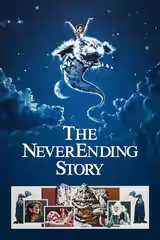
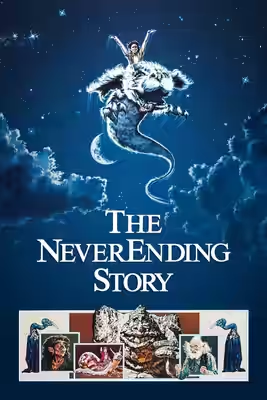
  2. The NeverEnding Story (1984) · not reviewed yetA child enters a fantasy landscape where the creatures carry real feeling.

  3. The Secret of Kells (2009, Fi1m 76)A smaller adventure whose forests feel strange, dangerous and worth protecting.

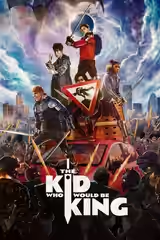
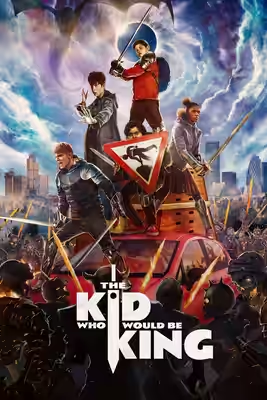
  4. The Kid Who Would Be King (2019) · not reviewed yetYoung heroes discover that leadership requires more than holding a sword.

  5. Princess Mononoke (1997, Fi1m 88)For older viewers, a forest conflict with difficult loyalties and consequences.

Free account

Know what to watch tonight

Two lists that know where things are streaming, collections you can share, your own score beside ours, and Discover that remembers what you have seen.

  • Want to see, sorted by what is streaming now
  • Seen, with your score out of ten
  • No adverts, ever