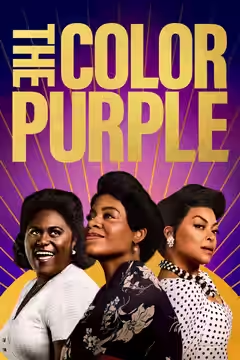
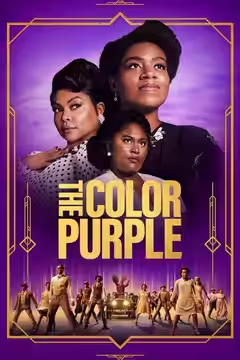
Fantasia Barrino and Danielle Brooks give this uneven musical its feeling and force. Their performances are worth the evening, though the hurried storytelling and determination to cheer us up sometimes leave Celie’s suffering too neatly tidied away.
The Color Purple is worth seeing for the women who sing it, with a substantial caveat about the way their story is told. Director Blitz the Ambassador sets pleasure alongside an account of abuse, trusting music to give Celie more freedom than her circumstances allow. The songs let her express feelings that the dialogue leaves unspoken, and the cast makes that freedom count. The difficulty comes when celebration arrives before we have had time to take in the hurt.
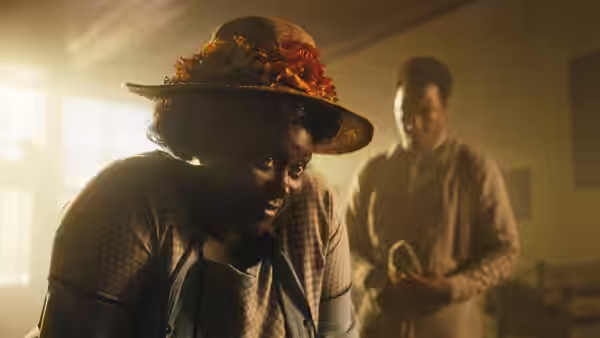
Fantasia Barrino gives Celie’s songs the urgency that Marcus Gardley’s screenplay sometimes lacks. Her singing has force, but she does not make Celie’s ability to express herself seem easy or automatic. We were moved by that effort: the songs sound like things she needs to say and has struggled to say aloud. The musical form earns its place whenever she is allowed to carry a number without the surrounding spectacle insisting on equal attention.
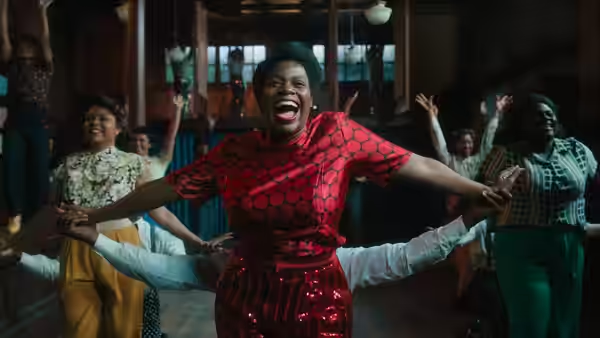
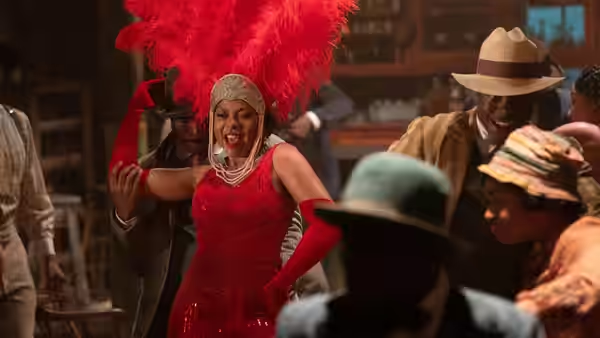
Danielle Brooks is just as important as Sofia, bringing an energy that makes the surrounding drama feel less dutiful. There is humour in her forcefulness, and a sense that maintaining it takes work. She never settles for being the lively supporting character who arrives to improve everyone else’s afternoon. Taraji P. Henson gives Shug Avery a different assurance, and the scenes between Shug and Celie have an intimacy the larger numbers sometimes struggle to find.
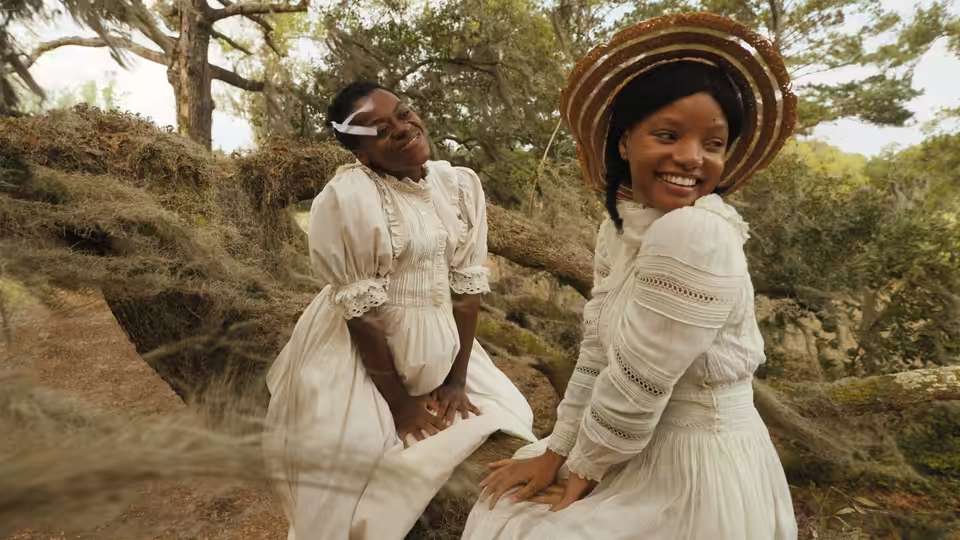
Dan Laustsen’s cinematography is most persuasive when Celie’s imagination is allowed to change how the film looks. A fantasy styled as silent cinema gives that polish a reason, letting private desire occupy the whole screen. Paul Denham Austerberry’s production design helps the musical passages feel removed from everyday life, but its attractive finish also makes the crueller drama seem too comfortably staged. The larger numbers can leave us attending to the arrangements around Celie when we ought to be attending to her.
Marcus Gardley’s screenplay has a great deal to carry, and its compression is felt most sharply between the musical numbers. Celie’s suffering receives attention that her relationship with Shug does not, leaving an important connection less fully developed than the performances suggest it could be. Jon Poll’s editing keeps the years moving briskly, but the quick changes of mood can make emotional progress seem too easy. We needed a few more unhurried scenes with these women, and fewer occasions on which the film seemed anxious to reassure us.
Kris Bowers’s music contributes to the emotional swell, though the film can be too eager to tell us when to feel uplifted. The voices are often sufficient; the extra insistence makes us conscious of being encouraged. Musical drama can accommodate terrible things without abandoning pleasure, and Blitz the Ambassador is right to attempt both. The problem is the speed at which one mood replaces the other, especially when the singing has persuaded us to take Celie’s feelings seriously.
At 141 minutes, this hardly needs to be longer; it needs to spend more of its time on the relationships its cast makes compelling. The performances kept drawing us back whenever the storytelling hurried ahead. For those who enjoy a musical carried by strong voices and forceful personalities, there is plenty here to reward the evening. Go for the women, with some patience for the film’s determination to cheer us up.