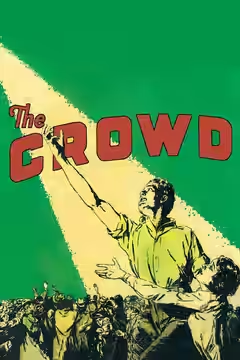
King Vidor’s silent about an ordinary clerk, his wife and their small flat is as honest a film about an unremarkable life as the American studios have made. It drags a little at Coney Island, and then it does not let go.
King Vidor’s The Crowd follows one man from the day he is born to about his thirtieth year and, at every point where a studio picture would normally arrange something remarkable, arranges nothing. John Sims is born on 4 July 1900 and his father promises the neighbours the boy will be somebody. He is not. He grows up, goes to New York, takes a desk and a wife, and the city goes on around him without looking up. It runs 98 minutes and we came out of it shaken.
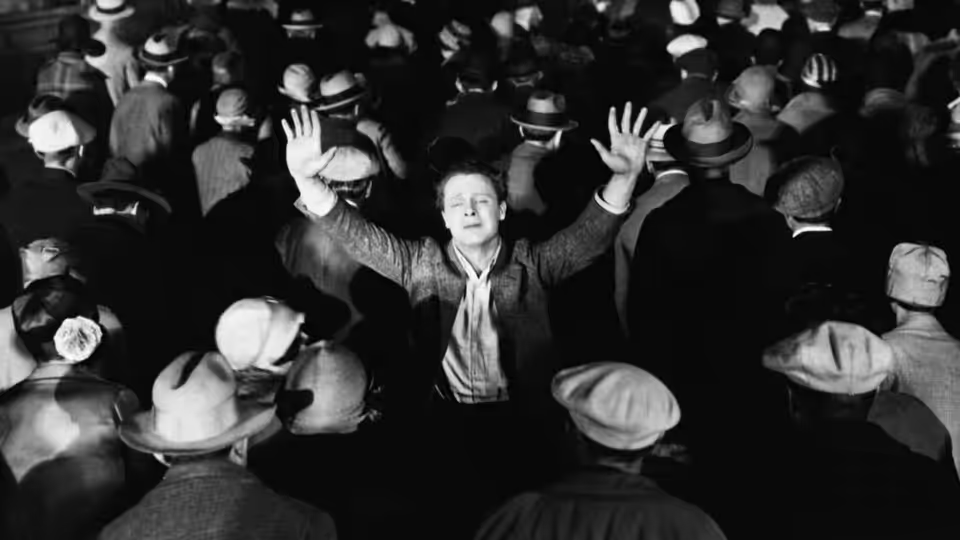
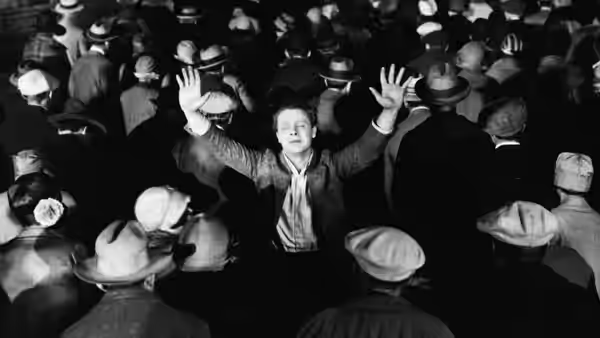
Vidor and his co-writer John V.A. Weaver build the story out of things that happen to everybody: a job, a courtship, a wedding, a flat too small for the in-laws, a boss who does not know your name. What makes it a film rather than a list is how Vidor and cinematographer Henry Sharp look at them. The best known shot climbs the face of an office block, goes in through a window and travels along a floor of identical desks until it finds Johnny, one clerk among hundreds, sitting under a number. Sharp also took the camera into real New York streets, where passers-by behave like people rather than extras because nobody told them a film was being made. In the Sims flat he shoots tight and deep, so the folding bed, the sink and the bathroom door that will not shut are in nearly every frame.
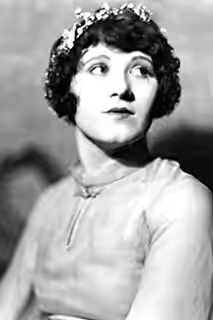
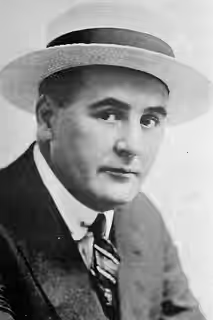
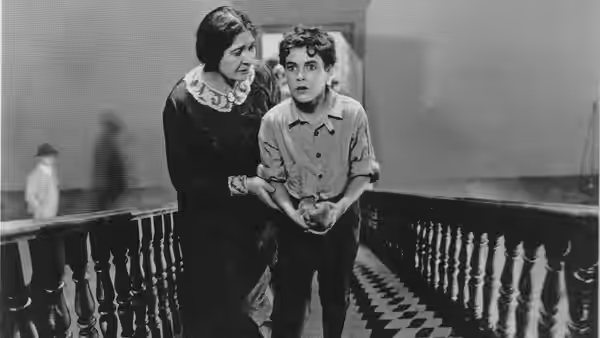
James Murray was an extra when Vidor picked him out, and he plays Johnny as pleasant, funny and a little too pleased with himself, whistling and joking and telling Mary that things will change once his break comes. He is easy to like, and the film lets you like him for a long while before you notice you have stopped trusting him. Eleanor Boardman has the harder part and is quietly superb in it. She plays patience as work that costs something, so that when it runs out you can see how long she has been holding on. Bert Roach’s Bert, the friend who introduced them, is broad and cheerful and does rather well for himself, which Johnny never quite notices.
Hugh Wynn cuts the Coney Island courtship as a rush of rides and lights and faces, and it is the one stretch where we felt the film’s age. The Niagara honeymoon and a running joke about the bathroom door go on longer than they should. Variety’s 1927 notice called the picture dull and long; it was watching those minutes.
Then comes Christmas dinner. Mary’s mother (Lucy Beaumont) and her brothers Jim (Daniel G. Tomlinson) and Dick (Dell Henderson) sit in the little flat and say almost nothing while Johnny performs for them, and Vidor holds on their faces. We felt our own shoulders go up. Nothing happens in the scene except four people deciding what a fifth is worth, and Sharp gives them most of the frame.
The second half turns on something we will not describe. Vidor is more interested in the weeks after it than in the event itself, and the film’s finest stretch is about getting up, getting dressed and being told there are no vacancies. The final shot, which we will also not describe, moved us more than we thought a film this old could. It says with one camera movement what the whole picture has been saying.
Variety also complained that the leads never get a big scene. They do not, and that is on purpose: Vidor refuses Johnny the moment audiences had been trained to expect because life refused him one. The two other reviews we have read agree with us, and the consensus figure is dragged down by that single notice. After The Big Parade (1925) Vidor could have made anything, and he made this, with Irving Thalberg producing, about a clerk nobody would have cast as a hero.
It is a silent with no composer credited, so the music is whatever comes with the print you see, and a poor score can make Coney Island feel twice as long. If there is a chance to see it with live accompaniment, take it, and take someone with you. You will spend the walk home wondering what your own father told the neighbours.