The Dark Crystal is worth seeing for the personalities of its handmade creatures. Jim Henson and Frank Oz give them a richly imagined home, though the adventure sometimes struggles to hold our attention.
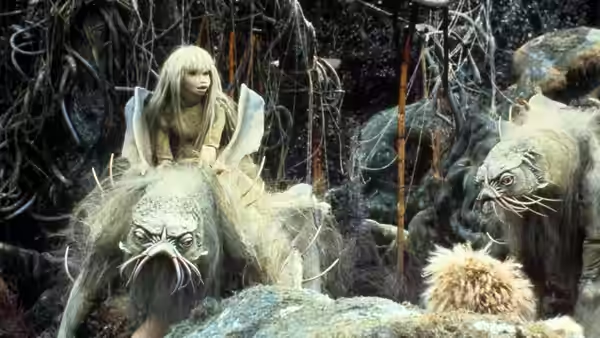
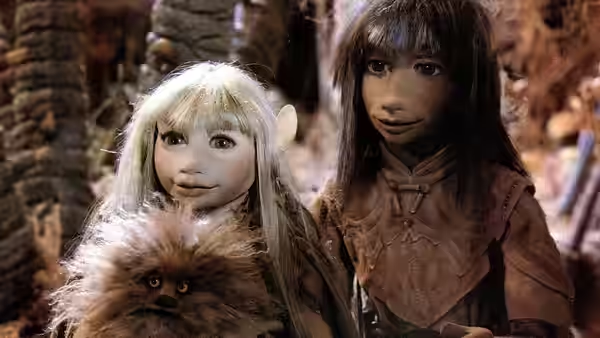
Jim Henson and Frank Oz ask us to take a puppet fantasy seriously, and for much of The Dark Crystal we do. The creatures have enough personality to make their world worth spending time in, even when the adventure is short of momentum. This is a good film for anyone who enjoys looking closely at how an imagined place has been made. Those hoping for an equally absorbing story have a little more work to do.
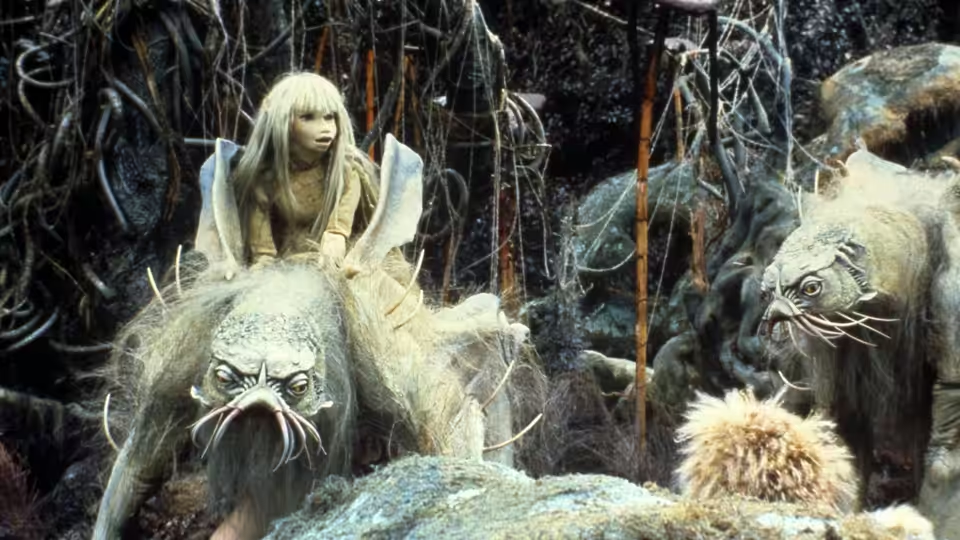
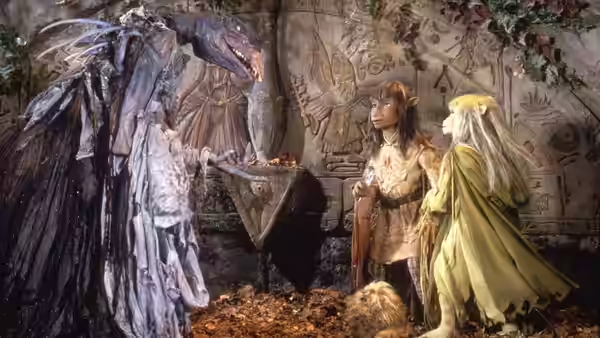
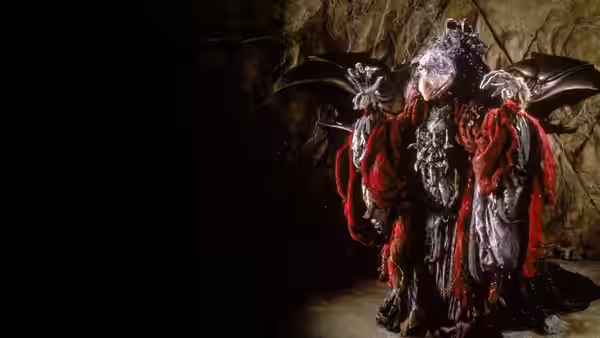
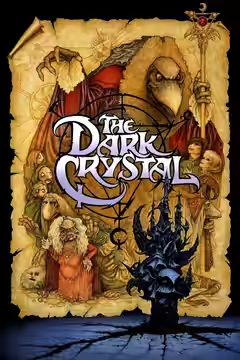
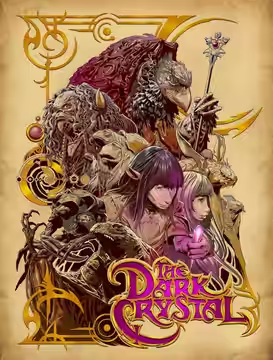
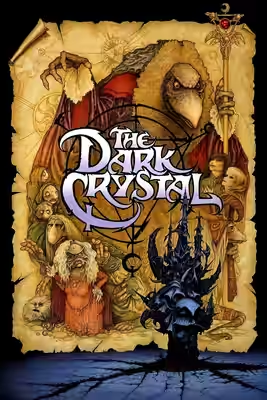
Harry Lange’s production design gives that curiosity plenty to occupy it. The setting feels worked out beyond the immediate needs of the adventure, with room for creatures whose chief purpose seems to be making the place less familiar. Brian Froud’s costumes make the High Priest and the Gourmand interesting to look at before we have much reason to care about them. We kept wanting longer to look, which is an unusual response to a film whose pacing can also be a problem.
Oswald Morris’s cinematography helps the puppets belong to those surroundings. Their physical presence matters: we accept them as things occupying a place, and the film seldom feels like a demonstration of how clever its makers have been. Some of the video effects are less convincing, especially beside the handmade creatures. It is a small weakness, though it occasionally makes the care elsewhere easier to notice.
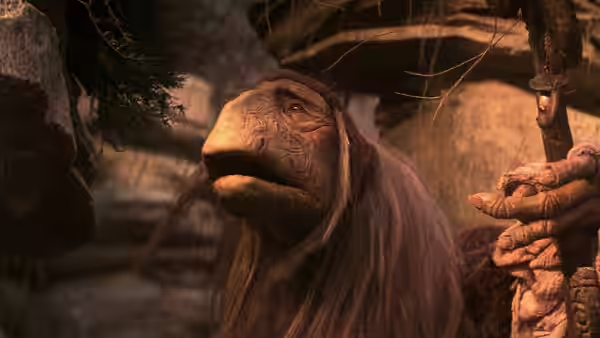
Aughra, the Keeper of Secrets, is the character we most enjoyed watching. Frank Oz performs her, with Billie Whitelaw providing the voice, and the character has a welcome comic personality. We warmed to her more than we expected. Her humour makes the less urgent stretches easier to sit through. Jen, performed by Jim Henson and voiced by Stephen Garlick, is a less arresting centre for all this invention.
David Odell’s screenplay never quite gives the adventure the same individuality as its inhabitants. The concern with healing and balance is welcome, and it gives the fantasy some feeling beyond the business of moving its characters along. Yet the storytelling can seem dutiful, as though the existence of an elaborate world should be enough to keep us interested in what happens there. It is not always enough, and a stronger sense of urgency would help.
Ralph Kemplen’s editing leaves some stretches feeling awkwardly paced, although simply making everything faster would not solve the problem. Part of the pleasure lies in having time to register the creatures, and the film needs that patience. Trevor Jones’s music adds emotional force, sometimes supplying an involvement the storytelling has not earned. At 93 minutes, the film is compact enough on paper, but we still notice occasions when our attention shifts from the adventure to the work that has gone into it.
As a family fantasy, it deserves credit for believing its audience will respond to something unfamiliar. The humour helps, and the film’s tenderness survives its clumsier passages. We recommend it most readily to those who can be won over by a creature before they have been persuaded by a plot. Give it an evening when nobody is in a hurry.