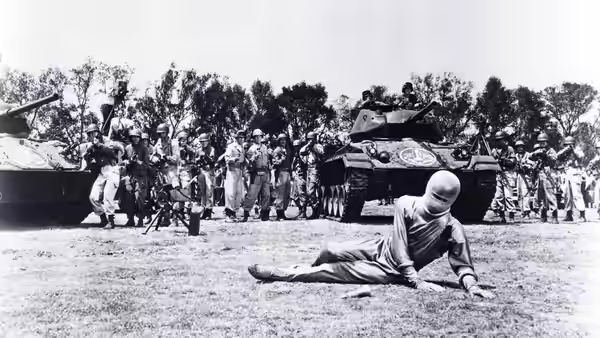
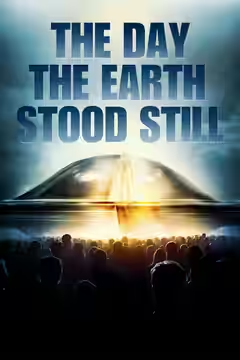
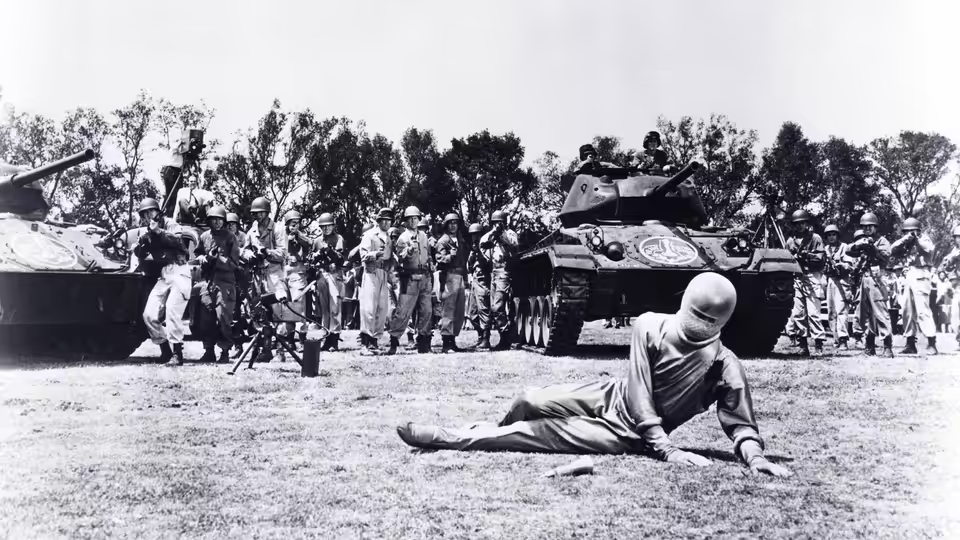
A figure in a silver suit lies on the ground before tanks and a crowd
Film review

The Day the Earth Stood Still

1951 · Directed by Robert Wise · 1h 32m

In a sentenceAn alien asks Earth to behave itself, and somehow manages to keep his voice down

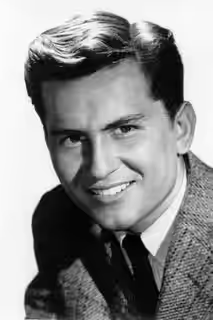
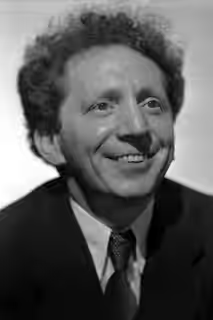
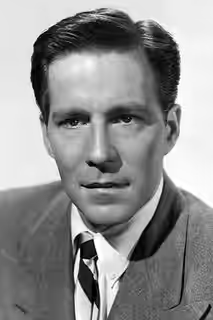
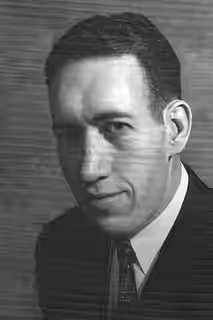
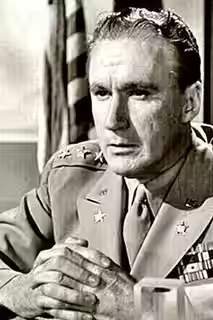
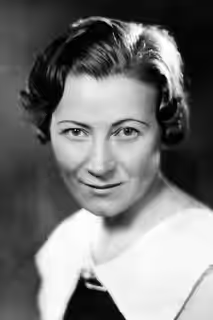
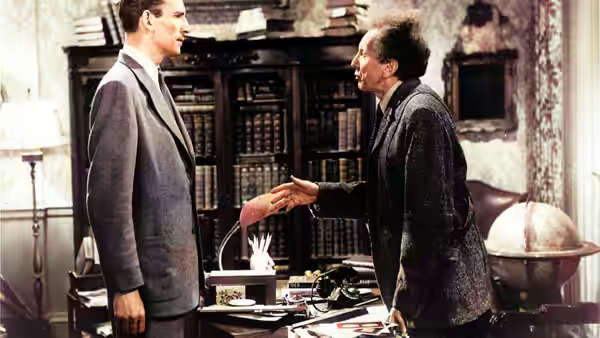
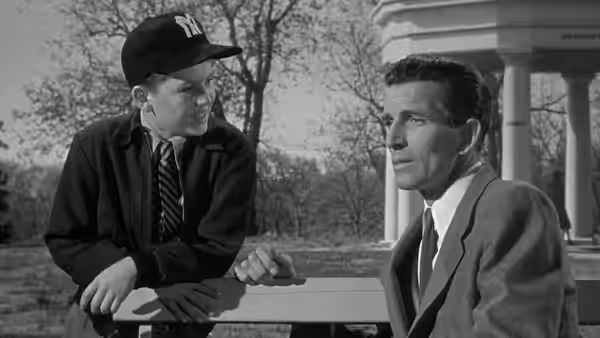
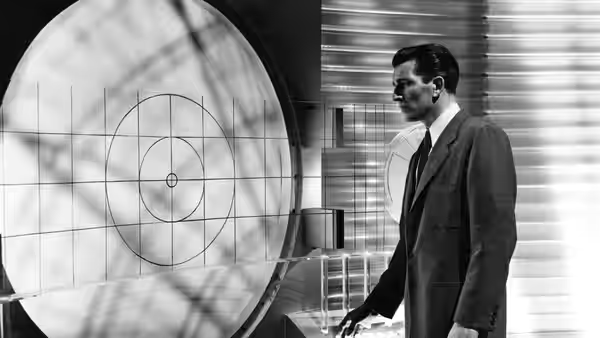
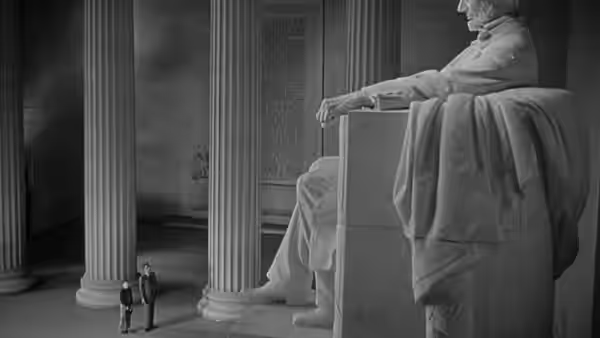
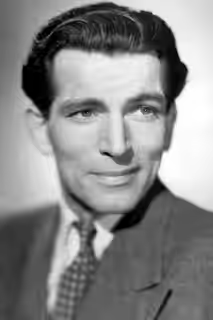
Klaatu / Mr. Carpenter (Michael Rennie), a visitor from space, brings Earth a warning and an ultimatum. The encounter involves Helen Benson (Patricia Neal), Bobby Benson (Billy Gray), Prof. Jacob Barnhardt (Sam Jaffe) and General Cutler (Freeman Lusk), with Gort (Lock Martin) another presence alongside the visitor. Klaatu wants his message heard: the question of peace now comes with pressure from beyond Earth. The humans have to consider what they are being asked to accept, and what it means to receive an ultimatum from someone outside their own world.

Fi1m review

Robert Wise’s science-fiction warning remains tense and persuasive. Michael Rennie’s restraint and Bernard Herrmann’s unsettling music carry it through the passages where the supporting characters have to work too hard to explain the message.

Robert Wise’s The Day the Earth Stood Still remains a thoughtful, tense science-fiction film, with a warning worth hearing. It gives its visitor enough authority to make the prospect of a peaceful conversation feel uncomfortable. Its weakness is a tendency to make people explain things when we would rather watch them respond. At 92 minutes, though, it makes room for serious talk without asking us to settle in for a lecture.

Edmund H. North’s screenplay treats the arrival from space as an occasion to consider whether Earth can live peacefully. A warning comes with an ultimatum, which makes the visitor’s position more uncomfortable than a simple appeal to goodwill. We can accept the need for peace and still be troubled by the confidence of someone telling an entire planet how to behave. The dialogue sometimes presses the point too firmly, leaving little for a performance to suggest.

Michael Rennie gives Klaatu / Mr. Carpenter the measured manner the film needs. He sounds as though he expects to be understood, and the lack of fuss makes him persuasive without making him entirely reassuring. Patricia Neal gives Helen Benson a directness that helps when the screenplay threatens to turn everyone into a spokesperson. Even so, the supporting characters are often less interesting than the visitor, and the cast has to supply the ordinary human interest that the writing sometimes passes over.

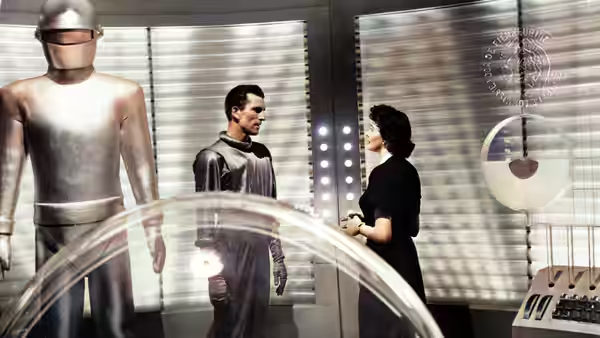
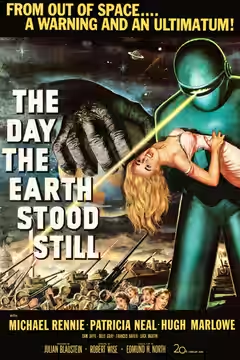
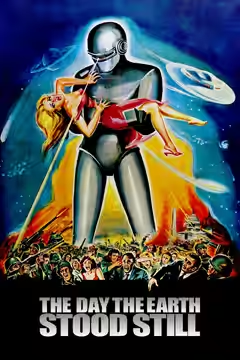
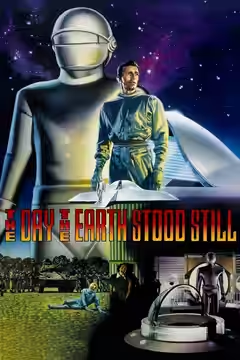
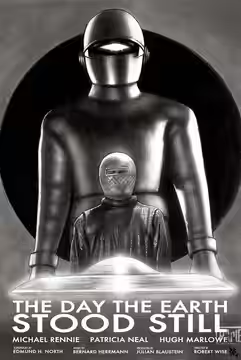
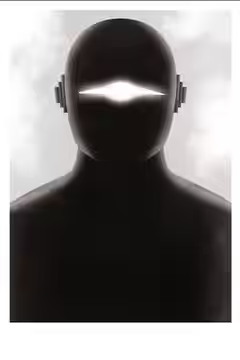
Leo Tover’s black-and-white photography gives Robert Wise’s realistic staging a firmness that helps the stranger details register. The image of light beneath Gort’s visor holds our attention with remarkably little information. We were unsettled by it: there is no expression to read, and nothing that invites reassurance. That narrow patch of light makes us examine the image closely, waiting for something that will tell us more. The effects can show their age without spoiling the tension of looking at Gort.

Bernard Herrmann’s score does a considerable share of the frightening work. Its unfamiliar sound keeps the visitor strange even when Michael Rennie’s delivery is at its most composed; the music prevents his calm from settling the whole film. It also disturbs the sober presentation enough to keep the picture from becoming merely an earnest discussion of good behaviour. There are passages where the music supplies more unease than the dialogue, and the film benefits from letting us hear something its speakers cannot explain away.

William H. Reynolds’s editing keeps the discussions moving, although it cannot give every supporting character an independent life. We can sometimes hear the screenplay arranging its next explanation before the conversation has finished. The measured pace nevertheless gives us time to study the visitor and remain uncertain about him. Hurrying would risk losing the sustained attention that Michael Rennie’s performance earns, particularly when his composure is itself a reason to feel nervous.

For a science-fiction thriller, this is unusually willing to ask for patient attention to what people say. The effects have dated, and anyone wanting constant action will need to adjust to the weight placed on speech and stillness. We recommend it with that reservation, especially for the unease beneath the visitor’s courtesy. Give it an evening when there is room for an uncomfortable conversation afterwards.
Critical consensus AI synthesised

77
Positive
7
Mixed
2
Negative
0

Most critics respond warmly to The Day the Earth Stood Still, praising its serious approach to science fiction and the force of its warning. The screenplay’s intelligence and pacifist message draw repeated approval, alongside an atmosphere that makes the visitor’s arrival feel both credible and unsettling. Praise for the craft centres on Robert Wise’s realistic staging and Bernard Herrmann’s otherworldly score. Michael Rennie’s measured performance is another point of agreement, even where the story takes precedence over the cast.

The spread is broad in enthusiasm rather than divided by outright opposition. Eye for Film finds the effects dated but argues that the fable retains its power. Den of Geek gives a more moderate rating while still praising the effects and the warning’s relevance. The reservations available are limited: the less enthusiastic reviews do not amount to a sustained case against the film.

Radio Times
★★★★★ · David Parkinson
100

Parkinson presents the film as a hopeful science-fiction classic and a bold effort to give the genre greater credibility. He singles out Bernard Herrmann’s otherworldly score as part of its distinctive appeal.

Read the full review →
Empire
1 January 2000 · Angie Errigo
95*

Errigo regards the film as an intelligent, enduring landmark that gives science fiction unusual dignity. She particularly praises its thoughtful screenplay, atmospheric presentation, and memorable worldwide power-cut sequence.

Read the full review →
The New Yorker
75*

The review presents the film as a tense, influential science-fiction drama with a compellingly serious message. It especially praises Robert Wise’s realistic staging and the transfixing image of light beneath Gort’s visor.

Read the full review →
Time Out
· NF
75*

The review presents the film as a classic science-fiction fable with a compelling pacifist message. It singles out the ambition of the storyline as a strength.

Read the full review →
Slant Magazine
2 December 2008 · ★★★½ · Bill Weber
70

Weber regards the film as an enduring, entertaining classic, and finds the new DVD package satisfyingly comprehensive. He especially praises its crisp black-and-white presentation and the surround mix showcasing Bernard Herrmann’s score.

Read the full review →
Variety
31 December 1950 · Variety Staff
70*

The review is mildly positive, saying the cast works well despite being secondary to the story. It singles out Michael Rennie as fine in the role of the visitor from space.

Read the full review →

Straight answers AI written, from our review

Is The Day the Earth Stood Still worth watching?
The Day the Earth Stood Still is worth watching for patient science-fiction viewers who enjoy unsettling ideas more than constant action; we score it 82/100. Michael Rennie’s restrained visitor and Bernard Herrmann’s disturbing music sustain the tension, though the dialogue sometimes overexplains the message and the supporting characters are less interesting than the alien.
How long is The Day the Earth Stood Still, and what is it rated?
The Day the Earth Stood Still runs 1h 32m. It is a science fiction and thriller film.
Where can I watch The Day the Earth Stood Still in South Africa?
The Day the Earth Stood Still is available to buy from Apple TV from R99.99. Availability is checked daily; the links above go straight to each service.
How violent or frightening is The Day the Earth Stood Still, and is it suitable for children?
The Day the Earth Stood Still has a UK U certificate, indicating general suitability for children, but its tension can still unsettle sensitive younger viewers. We found the light beneath Gort’s expressionless visor disturbing, and Bernard Herrmann’s music adds unease even to calm exchanges; the certificate is a better guide to suitability than a promise that nobody will be frightened.
How does The Day the Earth Stood Still compare to Arrival?
The Day the Earth Stood Still offers a more speech-led warning about humanity’s behaviour than Arrival, which builds its first-contact suspense around language. We recommend both for patient viewers, but Arrival is stronger on recognisable human feeling through Amy Adams, while Michael Rennie’s composed, faintly troubling authority is the chief reason to choose The Day the Earth Stood Still.

Cast

Awards

Golden Globes, 1952

Won
Best Film Promoting International Understanding

If you liked this, try…

  1. Arrival (2016, Fi1m 86)Another visitor asks humanity to listen, with language itself creating the suspense.

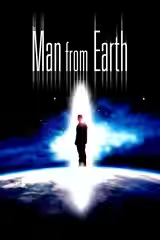
  2. The Man from Earth (2007) · not on Fi1m yetA roomful of talk becomes absorbing science fiction through one unsettling proposition.

  3. The Day the Earth Caught Fire (1961) · not on Fi1m yetA British newsroom gives planetary danger the urgency of an approaching deadline.

  4. The Brother from Another Planet (1984) · not on Fi1m yetAn outsider’s arrival exposes everyday prejudice, with more humour and less official ceremony.

  5. The Quiet Earth (1985) · not on Fi1m yetNew Zealand science fiction that makes an emptied world feel intimate and alarming.