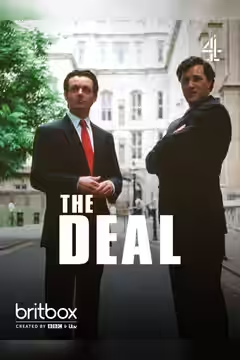
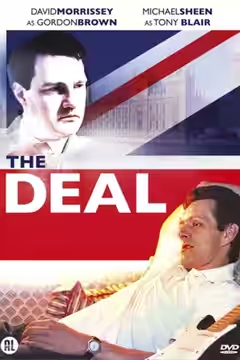
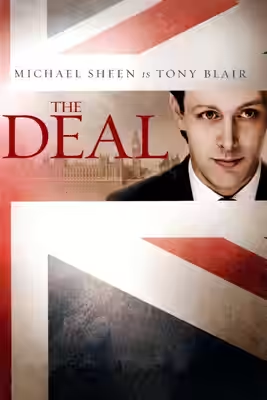
Peter Morgan and Stephen Frears compress eleven years of the Blair and Brown friendship into 75 minutes, and the result is sharper than most political drama at twice the length. Morrissey’s Brown is the heart of it. Sheen’s Blair is the warning.
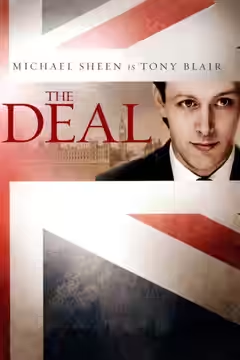
Peter Morgan’s script and Stephen Frears’s direction take a piece of recent British political history, the friendship and falling-out of Tony Blair and Gordon Brown, and treat it as a two-hander about who gets to go first. It was made for television, it runs 75 minutes and it carries a 12 certificate, and it is one of the better things either man has done. The subject is small, two men and an office, and the film is wise enough to keep it small.
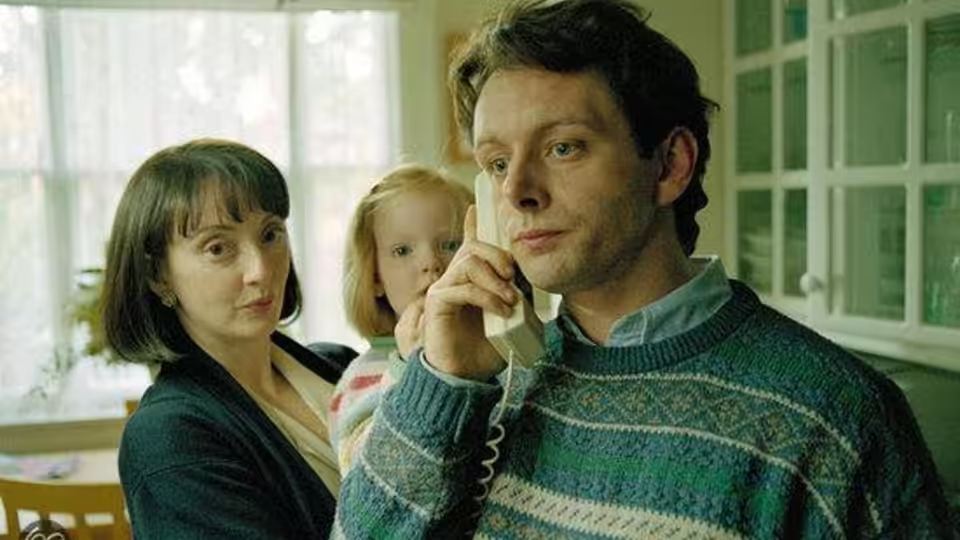
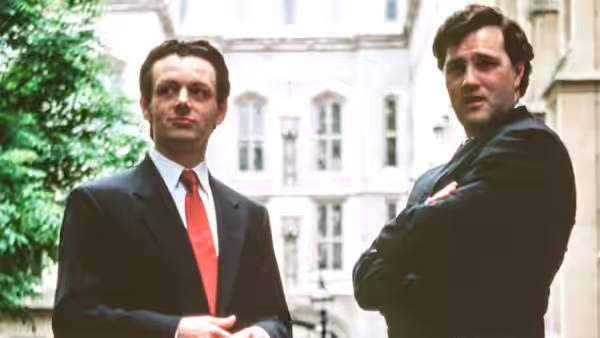
David Morrissey’s Brown is the reason to watch. He plays him big and hunched, a man forever shrugging himself deeper into a long dark coat, who reads while other people talk and is baffled when they do not notice he was right. It is not an impersonation; there is no voice-work to admire, only a temperament. Michael Sheen’s Blair is a different kind of achievement, all grin and open hands and that way of agreeing with whoever spoke last, so that we never once catch him wanting anything and know he wants everything. The two men in a room together are the film.
The supporting cast is cast for exactness. Paul Rhys plays Peter Mandelson as a soft voice in a doorway, a man who has already gone by the time you work out what he said, and his few scenes are the coldest in the film. Dexter Fletcher’s Charlie Whelan is all elbows and tabloid instinct. Frank Kelly gives John Smith a warmth that makes his absence felt later, and Elizabeth Berrington’s Cherie Blair gets one or two scenes and uses them to make a decision for her husband that he will pretend was his own. Gordon Kennedy, as Brown’s brother John, supplies the only person Gordon seems to relax with.
Alwin H. Küchler shoots Westminster in browns and institutional greys, mostly handheld in corridors, so that the place looks like a school nobody has left. Lucia Zucchetti cuts archive news footage straight into the drama, Thatcher at the despatch box, election nights, and it is a cheap trick that works: it makes the private scenes feel like the only unrecorded part of history. Michael Pickwoad’s shared office is a box of files and a window onto a wall, and Odile Dicks-Mireaux puts Brown in suits that look slept in and Blair in suits that fit. Nathan Larson’s score is spare, a little piano, and it stays out of the way.
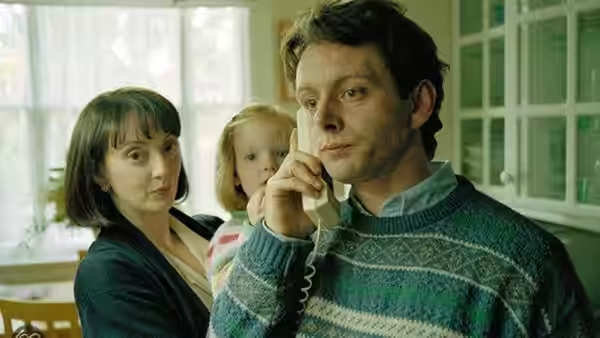
What moved us, and we had not expected to be moved by anything involving a future Chancellor, was the morning the phones start ringing. Smith’s death is announced, and the camera stays with Brown in his office while the calls go, audibly, to the office next door. Morrissey does nothing. He reads a paper. We felt a pity for him that the real man has rarely been offered, and the film earned it with a single sound mix.
The weaknesses are the ones of length. Seventy-five minutes is enough for a friendship and not quite enough for eleven years, so some scenes play as briefings, with dates on the screen and a line of exposition each. The film’s sympathies are so plainly with Brown that Blair never gets an inner life, which makes him an easy villain and a less interesting one. And the restaurant scene the whole thing is built towards is quieter than its build-up. What is said over the main course we will leave to the film, but it is over fast, and we wanted another five minutes at the table.
Frears and Morgan and Sheen would return to Blair in The Queen (2006), with more money and more room, and that is the better film. This is the sketch for it, and sketches have their own virtues: it is quick, it is unsentimental about politics, and it knows that the most consequential conversation in a decade of Labour history took place somewhere with a wine list. Watch it with someone who remembers 1994 and let them argue with the screen.