Sam Raimi’s first film is crude, badly acted and made on almost nothing, and it is still one of the most frightening 85 minutes horror has produced. The camera does things no camera had done before. Not for anyone who dislikes fluids.
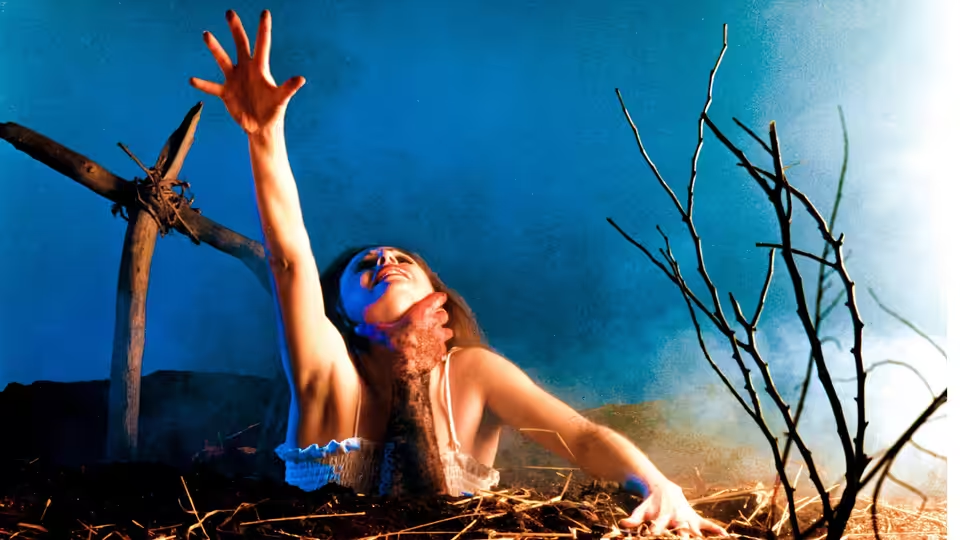
Five students, a cabin, a cellar and a book you should not read aloud. Sam Raimi, who wrote and directed The Evil Dead, did not invent one part of that, and he knew it. What he did was take the oldest set-up in the genre and run at it with a camera as if he were trying to knock it over. The result is rough, relentless and 85 minutes long, and it frightened us far more than a film this cheap has any right to.
The camera is the reason. Tim Philo’s cinematography does not observe the woods; it hunts through them, low and fast, ferns whipping past the lens, some unseen thing closing on the cabin. Inside, it swings up through the trapdoor, crawls along the floor and sits under a bed when a face appears above it. Nobody in horror had moved a camera like this before, and a great many people have tried since. The porch swing knocking against the wall on its own, then stopping the moment Cheryl looks at it, is the first small proof that the house has been given a point of view.
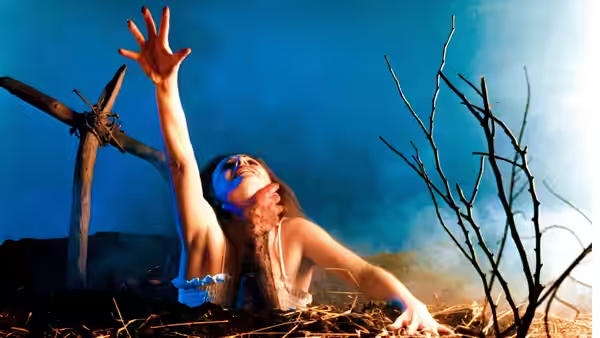
The scene that decides whether you stay comes early, when Cheryl (Ellen Sandweiss) follows a voice into the trees and the trees take hold of her. We were horrified, and then uneasy about the film for having done it. It is the one passage where Raimi’s glee curdles into something meaner, and it is over quickly, but it sits in the memory longer than anything that follows. We would not argue with anyone who switched off at that point. We would argue with anyone who thought the rest of the film was in the same spirit.
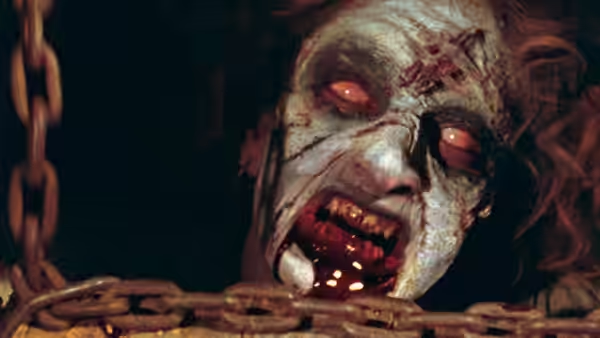
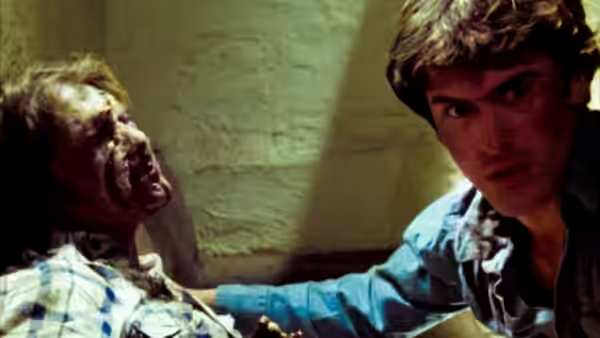
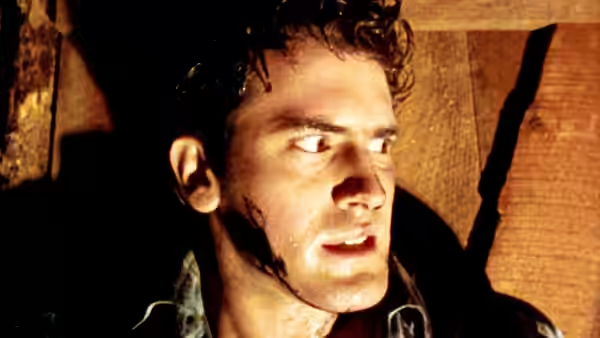
The acting is weak, and there is no point pretending otherwise. Bruce Campbell’s Ash is the hero because he is the last one standing, not because he does anything heroic; Campbell has not yet found the swagger he would later make a career of, and mostly he takes punishment, which he does well. Richard DeManincor’s Scott shouts. Betsy Baker’s Linda has a lovely, blank smile that pays off horribly once she starts giggling. Sandweiss gets the best of it: after Cheryl comes back from the woods her eyes go milk-white and her voice drops into a sing-song that we have not quite shaken.
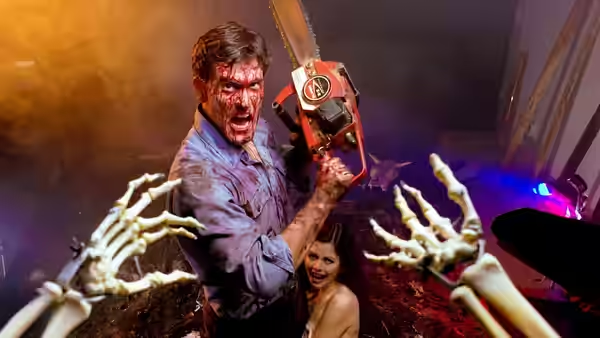
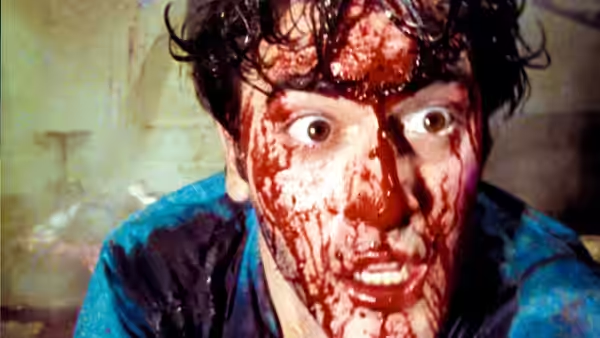
Joseph LoDuca’s score is scraped strings, a thin tinkling melody and long held notes that stop a half-second before something jumps. Edna Ruth Paul’s editing is fast and unkind, cutting off screams mid-breath and jumping straight to the next face. The effects are latex, porridge and a great deal of liquid in colours blood does not come in. Some of it is laughable and the film knows, because Raimi has already worked out that a laugh and a flinch can arrive in the same breath. The second half is one long siege inside the cabin, and we will describe none of it.
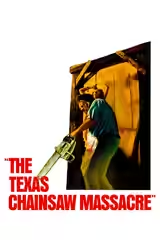
Set against its ancestors, this owes plenty to Night of the Living Dead and The Texas Chain Saw Massacre: ordinary young people, one building, no help coming. What Raimi adds is speed and a camera with a temper. What he lacks is any interest in his characters as people; nobody here wants anything except to live until morning, and the film does not pretend otherwise. The 18 certificate is fully earned, and the tagline about gruelling terror is, for once, accurate advertising.
Watch it late, with the lights off, and with someone who will laugh at the wrong moments. You will find yourself laughing too, and then checking the cellar door.