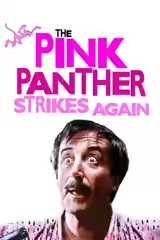
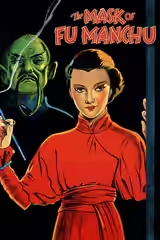
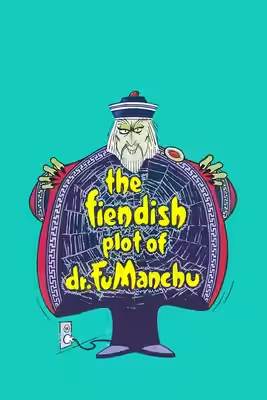
Peter Sellers plays both the villain and the detective in a Fu Manchu spoof that was dated on arrival and is thin in every other way. There are a few real laughs, mostly from Helen Mirren, and a great deal of sadness around them.
Peter Sellers died in 1980, and this was his last film. It is a hard one to watch for that reason and for others. The idea is sound enough on paper: a comedy that takes Sax Rohmer’s old pulp villain, the Devil Doctor with the drooping moustache, and plays him as a fussy old man worried about his supply of youth serum, with Sellers on both sides of the chase as Fu Manchu and his pursuer Nayland Smith. On screen the idea sits there for 108 minutes and waits for a script to arrive.
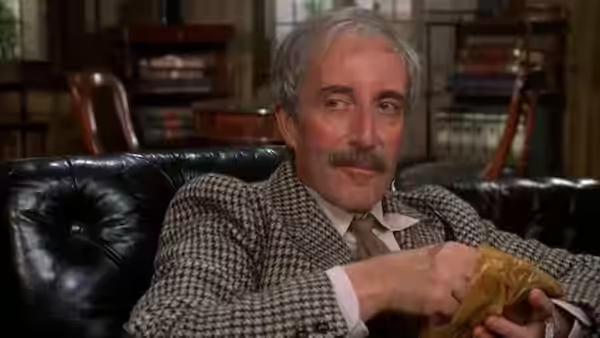
The script, by Jim Moloney and Rudy Dochtermann, is a chain of sketches about a theft, a chase and a retired policeman, and few of them have a second beat. The best running joke is given away in the first act: Nayland Smith, driven slightly mad by his years against Fu Manchu, mows his living room carpet with a push mower and talks to it. Sellers plays him mild and distracted, and the first time we saw him at it we laughed out loud. The film then returns to the mower four or five times with nothing added, which is this film’s method in miniature.
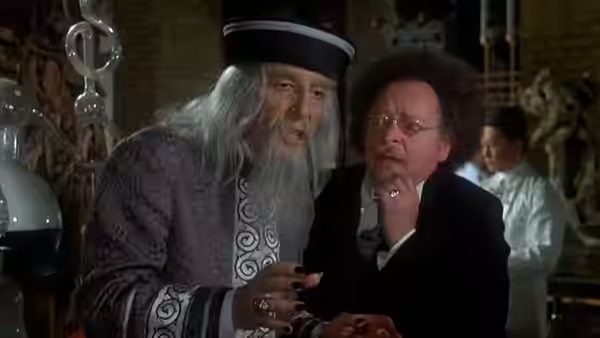
As Fu Manchu, Sellers is under heavy make-up of a kind that cinema had mostly stopped asking white actors to wear by 1980, and the film knows it is a joke about old films without ever finding the joke. He speaks slowly, nods, blinks, and waits. Some of that is a choice; some of it is plainly a tired man working. We felt, more than once, that we were watching someone husband his energy between takes, and the feeling got in the way of the laughing. Burt Kwouk, as the servant who drops the elixir, gets the one physical gag that works and is then barely seen.
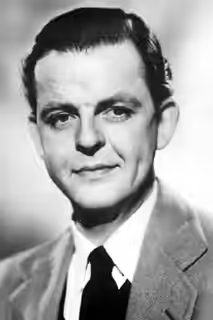
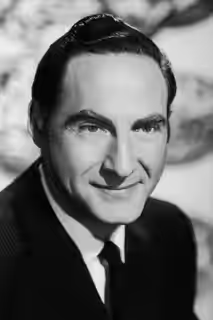
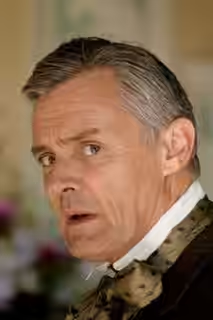
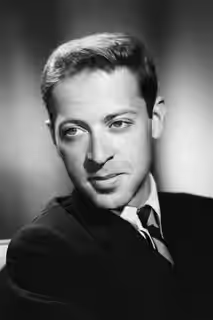
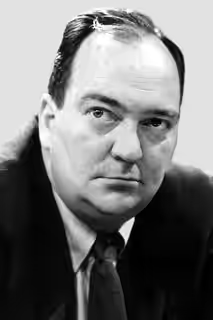
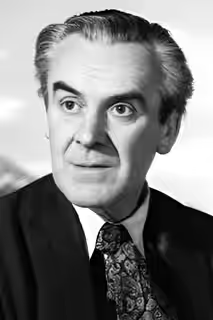
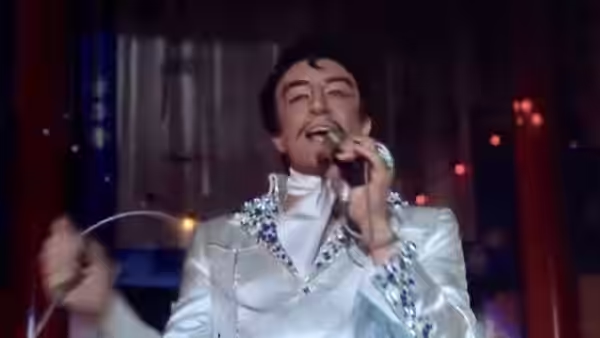
Helen Mirren is the reason to stay. Alice Rage is a Scotland Yard sergeant with a parade-ground voice and no visible sense of humour, and Mirren plays her completely straight, which is the only way the lines land. She also sings “Daddy Wouldn’t Buy Me a Bow-Wow” in full music-hall style, and it is the single stretch of the film where we forgot everything else and simply enjoyed ourselves. David Tomlinson flaps agreeably as Sir Roger Avery. Sid Caesar, as FBI man Joe Capone, is handed a gag about being an American confused by England and asked to repeat it. John Le Mesurier, as the butler Perkins, does his familiar gentle bewilderment in about three scenes, and we wanted more of him.
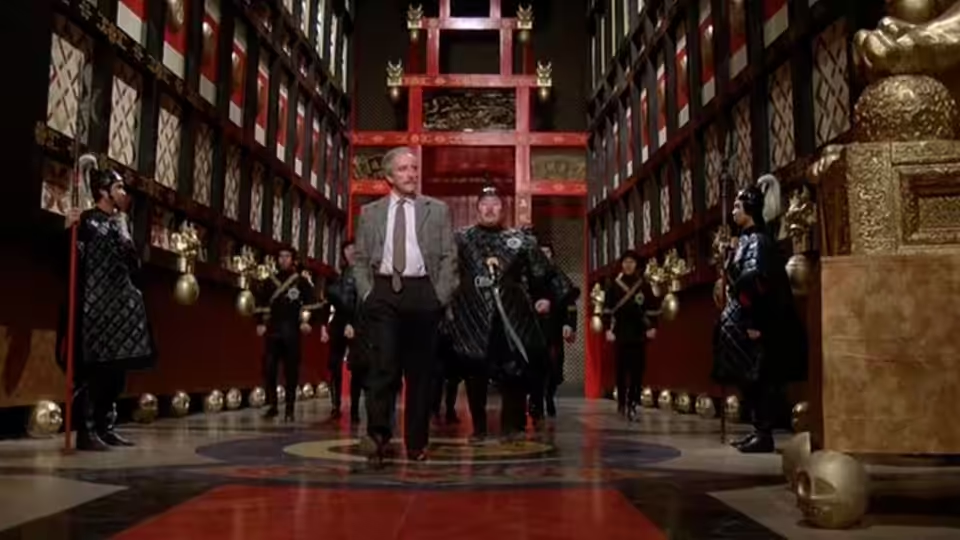
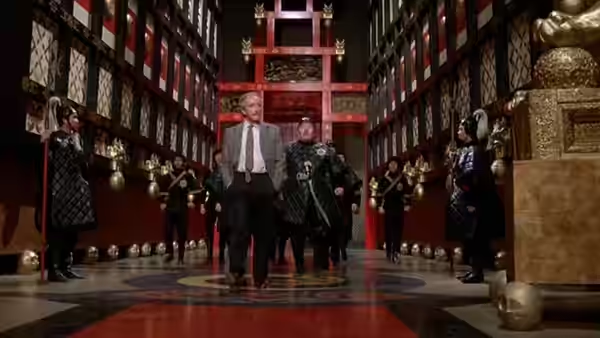
The oddity is how distinguished the people behind the camera are. Alexandre Trauner, who designed The Apartment, builds Fu Manchu a lair of red lacquer, carved screens and gold dragons that is far more handsome than anything said in it, and Scotland Yard as a warren of brown offices and frosted glass. Jean Tournier lights all of it evenly and warmly, so the lair glows and London looks like a well-funded television play; there is no shadow anywhere for a villain to come out of. John Bloomfield’s costumes are the best joke in the film that nobody wrote: Fu’s embroidered robes grow grander as his health declines. Marc Wilkinson’s score hits a gong whenever Fu enters and leaves it at that.
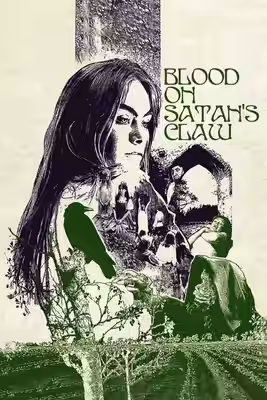
Piers Haggard made Blood on Satan’s Claw, which is a properly frightening film, and he gets no fear and not much pace here. Scenes begin a line too early and end two lines too late, and the robberies that should be the set pieces are staged flatly and over before they build. The few reviews we have seen settle in the middle; we are a good deal lower, because middling suggests a film that half works, and this one mostly does not.
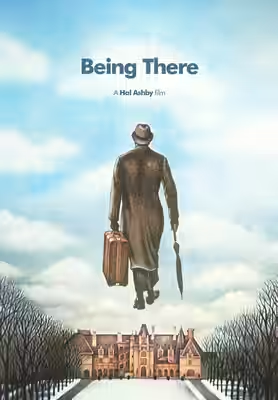
Sellers’s best films, Being There among them, let him be still and found the comedy in what he was thinking. Here he is still because the film gives him nothing to think about. Watch it, if you must, for Mirren’s song and for one good minute with a lawnmower, and not as a way of remembering him.