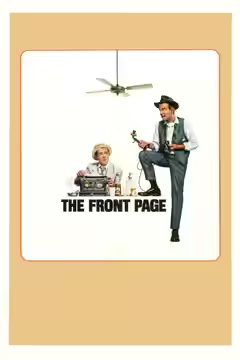
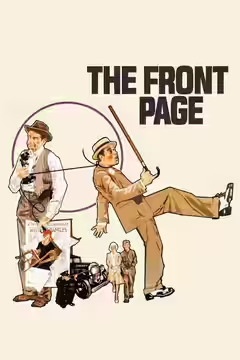
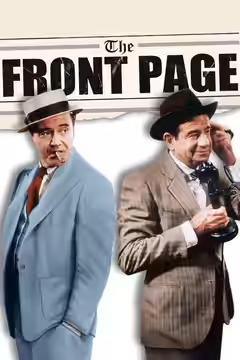
The third screen version of the Hecht and MacArthur newsroom play gives Walter Matthau the film’s one great part and shouts most of the rest. Funny in bursts, coarse in between, and slower than a farce can afford to be.
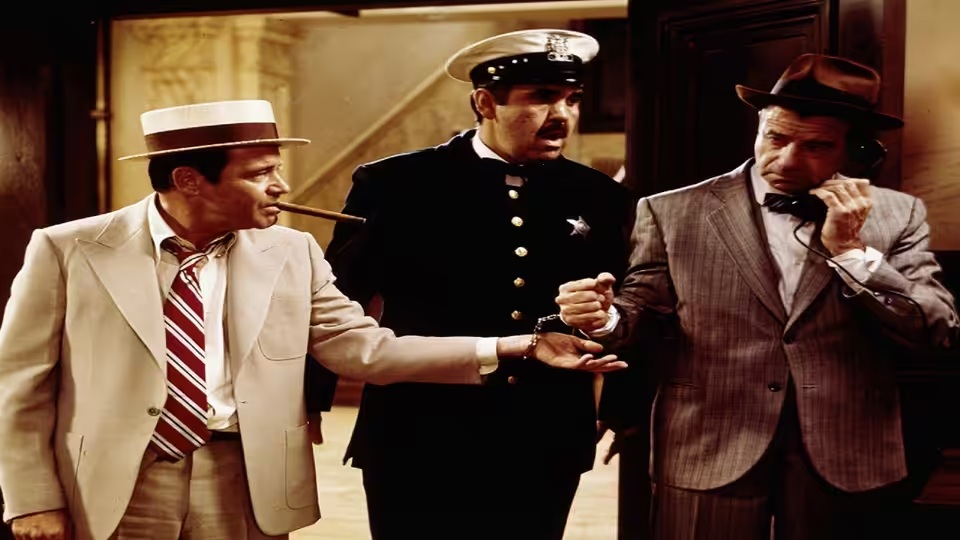
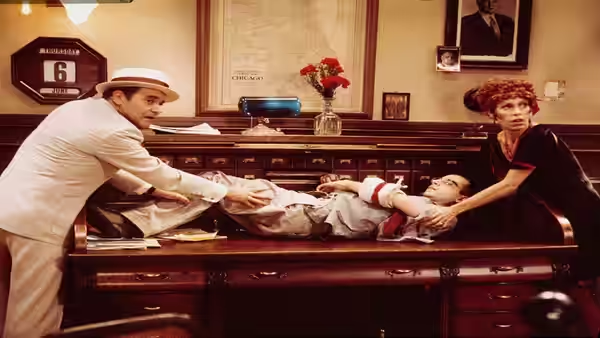
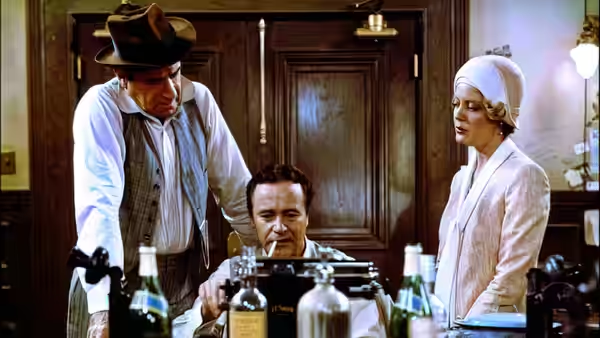
Billy Wilder and his long-time writing partner Diamond have taken the Hecht and MacArthur play about Chicago newspapermen, the one Howard Hawks turned into His Girl Friday in 1940, and filmed it more or less as written: two men, one press room, one night. Hildebrand Johnson (Jack Lemmon), the star reporter, has handed in his notice so he can marry Peggy Grant (Susan Sarandon) and move to Philadelphia; Walter Burns (Walter Matthau), his editor, intends to stop him. Earl Williams (Austin Pendleton), a frightened little man convicted of shooting a policeman, is due to hang in the morning, and the Sheriff (Vincent Gardenia) and the Mayor (Harold Gould) need him hanged on time because there is an election coming. It runs 105 minutes, and Wilder plays it as farce with the volume up.
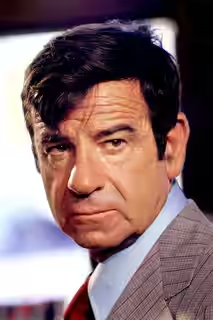
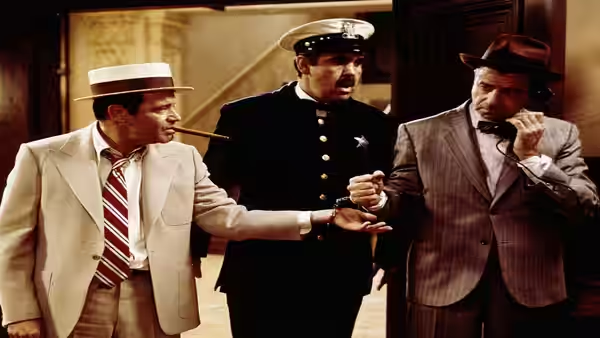
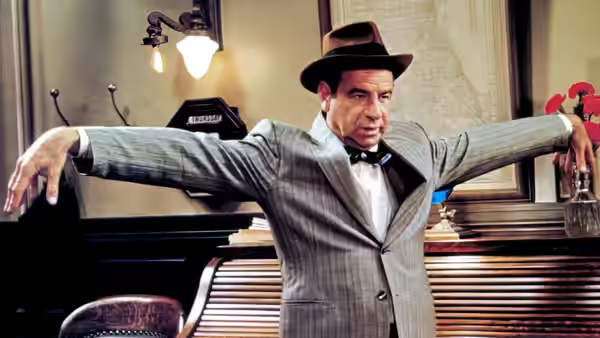
Matthau is the reason to watch. His Burns lies to Johnson, lies to Peggy, lies to the police and to a psychiatrist, and does it with the patience of a man who has never been caught and does not expect to start now. He has one long telephone scene, running a newspaper from a filthy press room while pretending to be somebody else, and we laughed harder there than anywhere else in the film, because Matthau never raises his voice while everyone round him is screaming. Wilder has the sense to leave the camera on him.
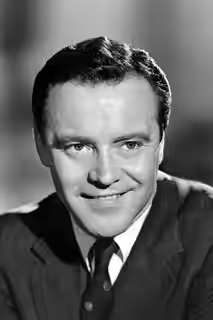
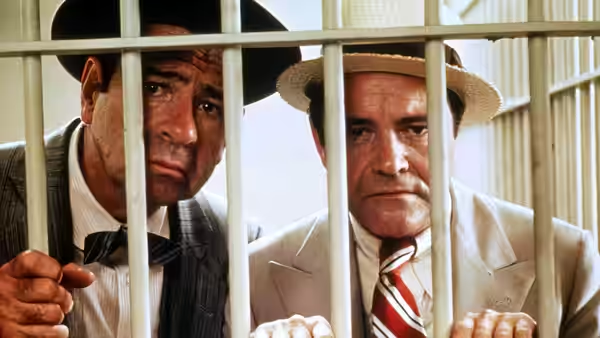
Lemmon has the harder job and does less with it. Johnson is meant to be the best reporter in the city, a man who cannot walk past a story, and Lemmon plays him as a man who cannot walk past a doorway without hitting it. He looks too old for the character’s problem, which is whether to grow up and leave the trade. He and Matthau still work well together; the rhythm of their rows is the rhythm of two actors who have done this before and like each other. But we never once believed Johnson would get on that train to Philadelphia, and a farce needs the threat.
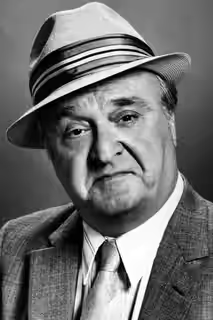
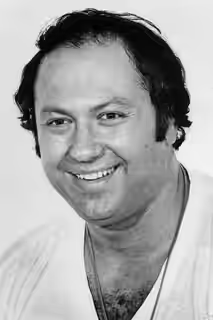
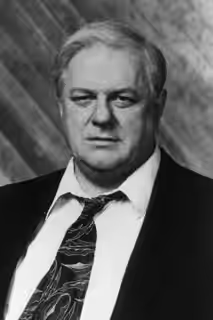
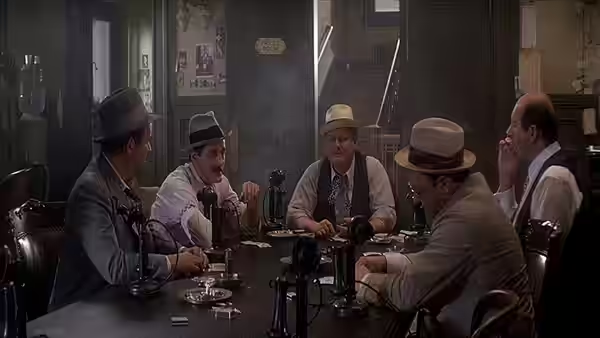
The rest of the press room is filled with faces worth having. Charles Durning, Herb Edelman and Allen Garfield play cards, telephone in lies and treat a man’s death as a filing deadline, and the film is at its best when it simply watches them. David Wayne’s Roy Bensinger is the one member of the pack with any manners and is punished for them. Pendleton’s Williams is a small, blinking man who cannot understand how he got here; when he explains his politics to a doctor who is not listening, we felt a pity the rest of the picture has no room for. Sarandon has almost nothing to play and plays it with grace.
What has gone wrong is tone. Wilder and Diamond have kept the play’s bones and roughened the dialogue, so the reporters swear where they used to insult, and they sound cruder for it, not funnier. Jordan Cronenweth lights the press room in a flat brown cigar-smoke glow that suits the period, and Burton Miller’s suits and hats sit right, but what happens inside those frames is loud: doors slam, men trip, the telephone rings over the punchline. Ralph E. Winters cuts briskly, yet there are stretches where five people are shouting at once and we could not hear the joke. We were tired by the hour mark, and a farce should not tire you.
Wilder made Ace in the Hole in 1951, a cold, clear film about a reporter, and next to it this looks like a man returning to a subject he had finished with. Next to His Girl Friday, the comparison nobody can avoid, it is slower and meaner and less in love with its own talk. Most critics have found it wanting on both counts, and we do not think they are wrong; we simply had a better time than they did, nearly all of it when Matthau is alone with a telephone.
Watch it for Matthau, for Pendleton, and for a room full of good character actors given cigars and a deadline. Watch it at home, where you can turn the sound down to a level at which the lines come through. The 12 certificate is mostly for the language, which is the least funny thing in it.