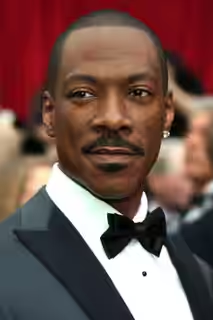
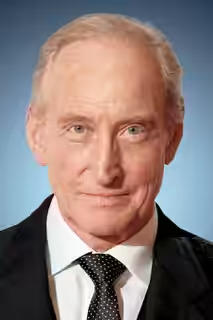
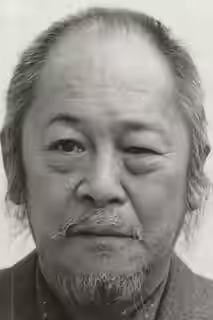
Eddie Murphy and Victor Wong briefly get the comedy working, while Charles Dance takes the villain seriously. Their efforts cannot rescue an adventure with too few laughs and too little excitement.
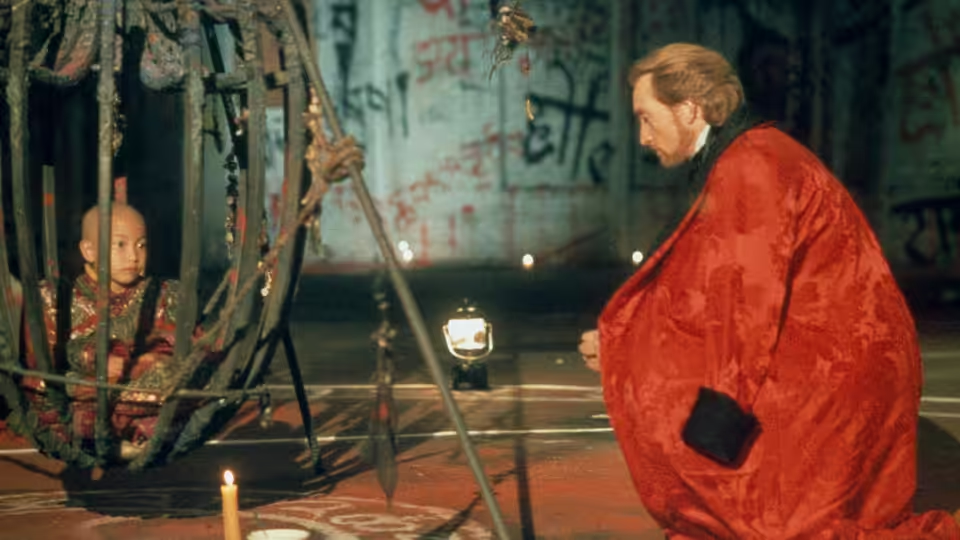
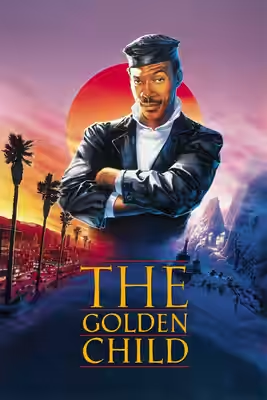
The Golden Child is a poor fit for Eddie Murphy’s comic gifts, despite a handful of exchanges that briefly make it enjoyable. Michael Ritchie directs as though adding a funny man will be enough to make a fantasy adventure funny. Dennis Feldman’s screenplay struggles to make the jokes fit the danger, and neither becomes particularly involving. The film runs for 94 minutes.
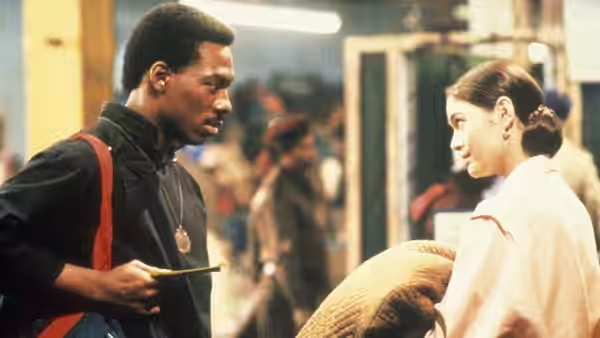
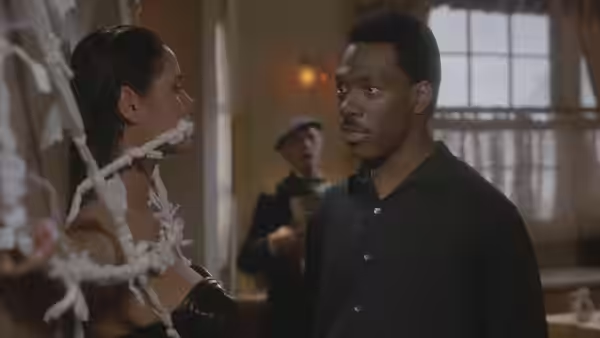
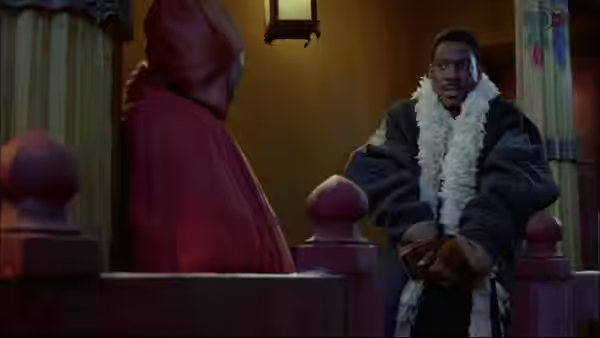
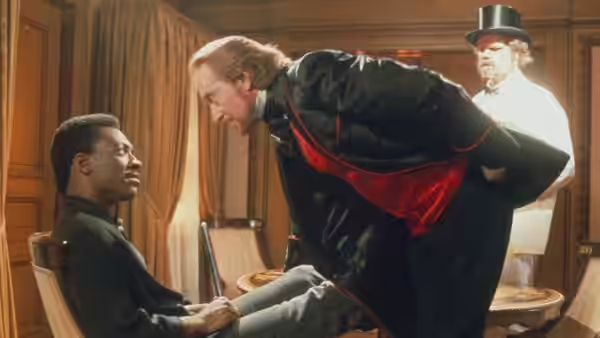
As Chandler Jarrell, Murphy is asked to keep the comedy going while the adventure supplies mysticism and martial arts. His quick-fire delivery is still a pleasure in itself, but speed does not help when the lines have so little behind them. We laughed during the brief scenes with Victor Wong, because the exchanges give Murphy someone to play against and a reason to listen. Elsewhere, too many remarks interrupt the action without being funny enough to justify the delay.
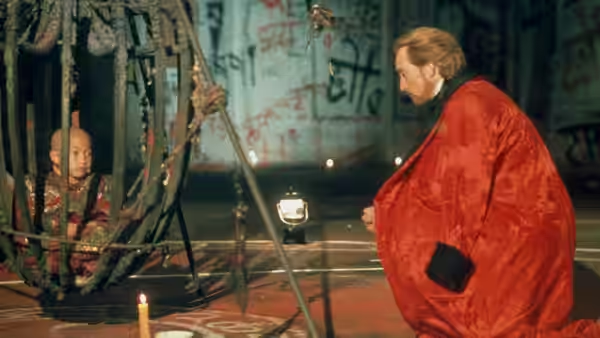
Charles Dance is useful as Sardo Numspa because he commits to being a villain even when the film seems uncertain how much menace it wants. He gives the opposition a seriousness that the rest of the adventure badly needs. His performance also makes us wish the story would allow its dangers to matter for longer. It is frustrating to watch him establish a threat that the comedy promptly weakens.
The fantasy looks serviceable, but neither Donald E. Thorin’s photography nor J. Michael Riva’s production design makes it especially inviting. We seldom wanted to spend more time looking around once a joke had finished. The effects add spectacle without making the danger more immediate. They feel like another attraction added to a film already struggling to connect its comic thriller with its mysticism.
Richard A. Harris’s editing does little to make the action feel less sluggish. Comedy needs pauses, but the film struggles to distinguish a useful pause from a passage that is simply taking too long. Michel Colombier’s music cannot supply the excitement missing from the staging, however much the adventure needs it. Ritchie has performers capable of holding our attention, yet the stretches between their better moments remain stubbornly flat.
A wisecracking hero ought to be good company in a supernatural adventure. We can enjoy a hero’s scepticism and still want him to take the trouble seriously when it reaches him. Here, the script leans so heavily on its star’s ability to amuse that it neglects the reasons for staying interested when a joke misses. Those jokes consequently have to do more work than they should, with little help from the action.
Murphy’s ease, Wong’s brief contribution and Dance’s resolve keep this from being wholly joyless. They are not enough to turn a muddled story into a satisfying evening, and the available pleasures are thinly spread. Anyone especially fond of the leading man may accept the wait between laughs. Unless Murphy is reason enough for the evening, we would pass.