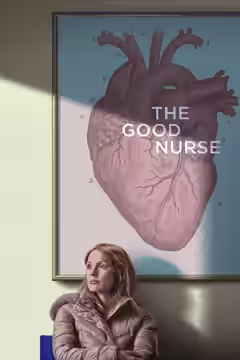
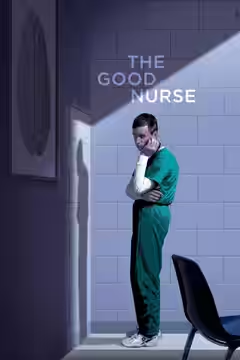
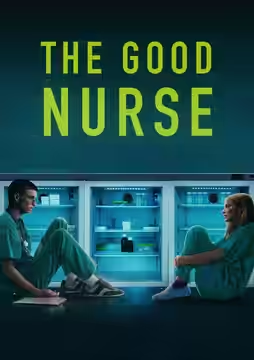
Tobias Lindholm’s hospital crime drama is worth seeing for Jessica Chastain’s patient, believable Amy Loughren. The procedural passages are less persuasive, and its criticism of the healthcare system needs more attention than it gets.
The Good Nurse is a worthwhile crime drama whose most compelling subject is the person trying to do her job properly. Director Tobias Lindholm keeps our attention on Amy Loughren, played by Jessica Chastain, and on the effort involved in caring for other people. That choice gives the film much of its strength. When it becomes a more familiar police procedural, the performances have to work harder to hold us.
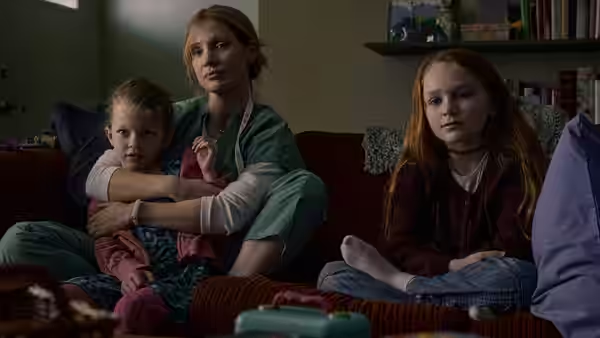
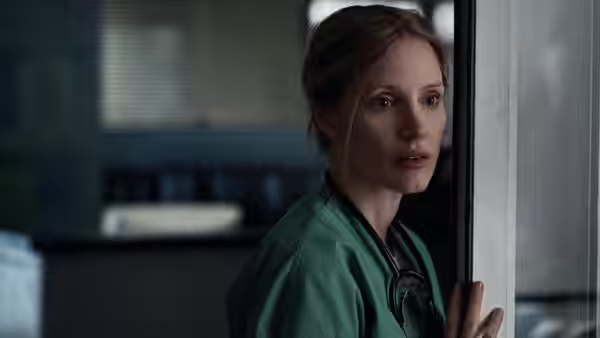
The lead performance is attentive without being saintly. There is vulnerability in the way Jessica Chastain plays the nurse, but she never seems to be asking us to congratulate her for showing it. Krysty Wilson-Cairns’s screenplay gives Amy Loughren’s work enough importance for her to remain someone with responsibilities beyond advancing an investigation. We believe she cares about patients, and that belief matters when the film begins asking how much care the institution itself is prepared to provide.
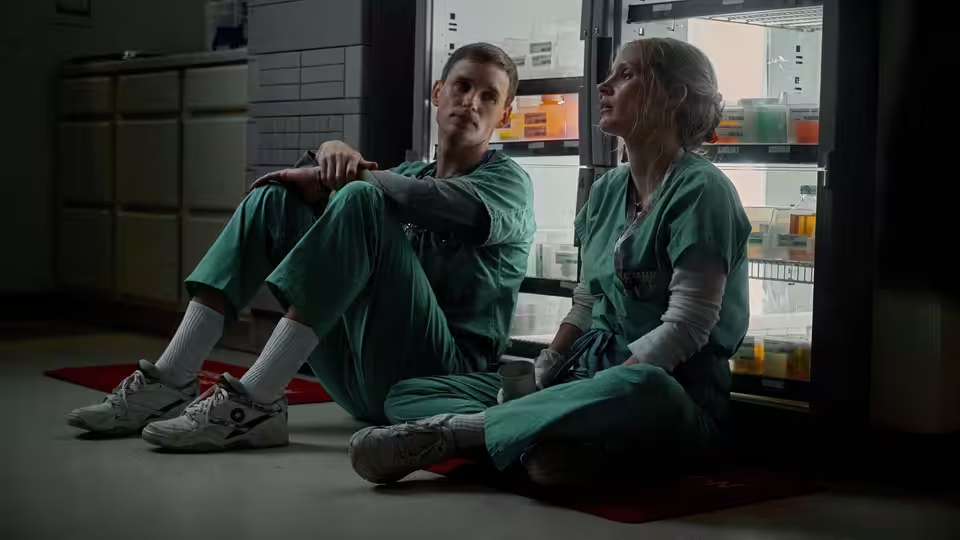
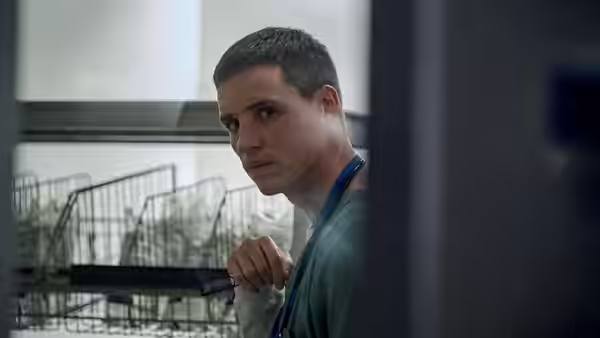
Eddie Redmayne is effective as Charles Cullen when the performance stays small. His apparent concern is credible, which makes his colleague’s uncertainty more troubling than a sequence of obvious warning signs would have been. We found that concern unnerving: he allows us to understand why someone might accept this man’s help. The character remains frustratingly thin, however, and when the performance becomes more demonstrative it loses some of the discomfort that his quieter work has established.
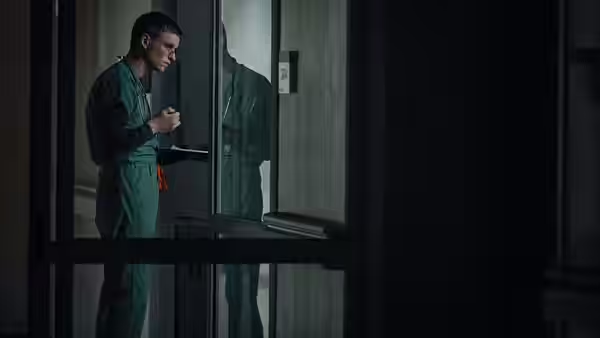
Jody Lee Lipes’s cinematography and Shane Valentino’s production design give the hospital a dispiriting impersonality that suits the story. It feels like a place where a patient’s distress could become an administrative inconvenience, and that makes the hospital’s priorities easier to believe. The music by Clint Mansell and Biosphere sustains the unease without supplying much warmth. This subdued approach often works, although its coolness can also keep us at a distance from people whose danger ought to feel immediate.
The editors, Michael Rolt and Adam Nielsen, are more persuasive with the slowly developing unease than with the procedural business. The measured pace lets us consider Amy Loughren’s trust in her colleague, but it also gives familiar investigative material more time than it deserves. We can feel the screenplay pushing for suspense where the relationship already provides it. At 121 minutes, the film has room to tighten without sacrificing the patience that makes its performances work.
The larger question is what allows a hospital system to protect itself at the expense of those in its care. Tobias Lindholm and Krysty Wilson-Cairns make that accusation clear, but they are less thorough about examining it. Institutional failures matter here, yet the film’s attention repeatedly returns to the more manageable business of suspicion and investigation. For a true-crime drama, the attention to care is welcome; we could have used some of that same attention to how responsibility is avoided.
Even with those limitations, the central relationship keeps us interested because its initial reassurance is believable. The film gives its actors space, and their quieter work rewards the patience the procedural passages sometimes test. This is worth an evening for a performance-led crime drama with some concern for the people around its central suspect. Do not choose it for the detective work.