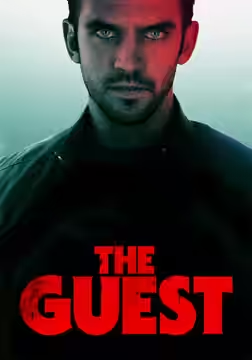
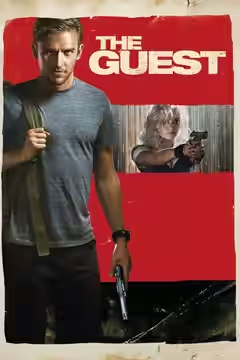
Adam Wingard’s thriller about a soldier who turns up on a grieving family’s doorstep is sleek, funny and knowingly nasty, and Dan Stevens is the whole show. The last half hour gets louder as it gets sillier, but the fun is real.
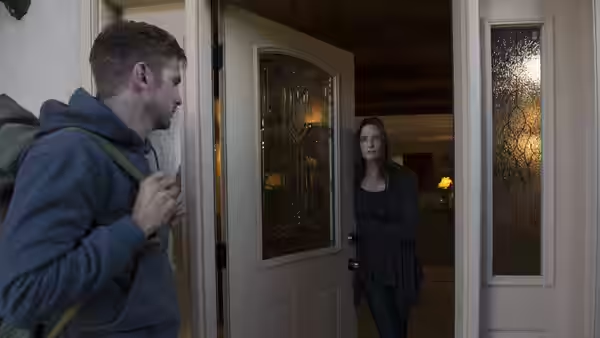
Adam Wingard’s The Guest starts the way a hundred thrillers have started. A young man knocks at the door of a family that has lost a son, says he served with the boy and promised to look in on them, and is asked to stay the night. His name is David, he is played by Dan Stevens, and within a day he is doing the washing-up and the mother has made up the spare room. Wingard and his writer Simon Barrett know exactly which film you think you are watching, and for 101 minutes they play on that. It is a sleek, funny and properly nasty piece of work, and it belongs to Stevens from the first smile.
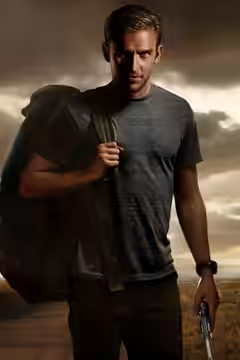
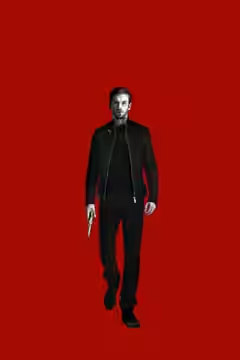
Stevens, until then best known for a stately home drama on television, plays David as a man who has learned his manners from a manual and learned them well. He says ma’am and sir, holds eye contact a beat too long, and keeps his body still while everyone around him fidgets. The trick of the performance is that the charm is not fake; it is simply attached to nothing. Whenever a question lands that he ought to have to think about, Stevens lets the smile arrive a fraction after the answer. That fraction is where the film lives.
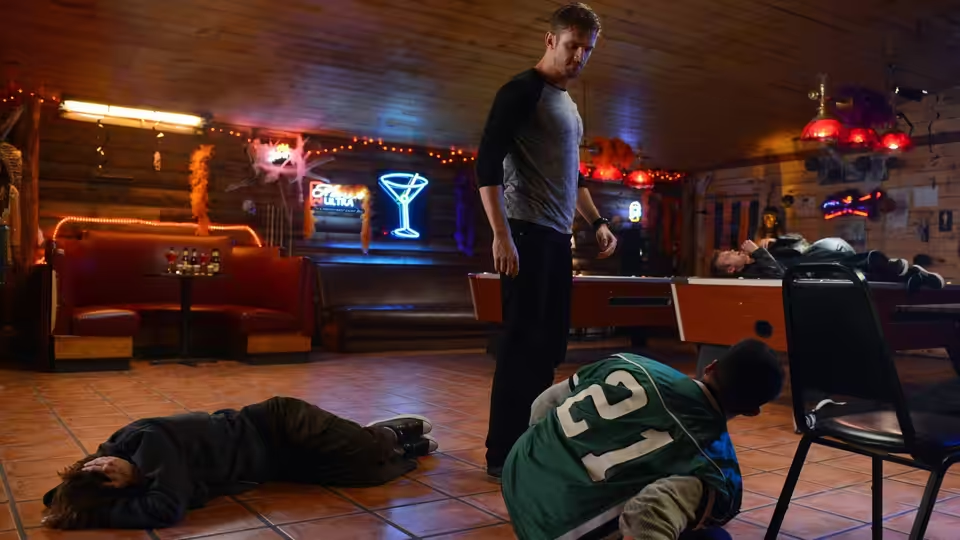
The family is drawn quickly and well. Leland Orser’s Spencer is a tired man; David gets a few beers into him and he is talking like a man with a friend. Brendan Meyer’s Luke is being pushed around at school, and the scene in which David deals with the boys responsible is where we noticed what the film was doing to us. We were cheering. Then we caught ourselves, because what we were cheering was a grown man hurting a teenager, and Wingard had shot it so that we would. Maika Monroe’s Anna is the one who does not fall for it, a waitress with a boyfriend who deals (Chase Williamson’s Zeke) and the only person in the house who thinks to make a phone call.
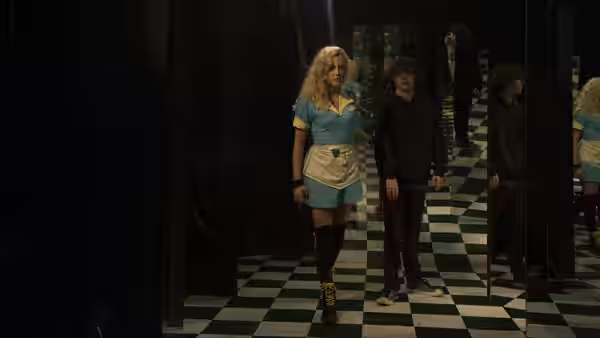
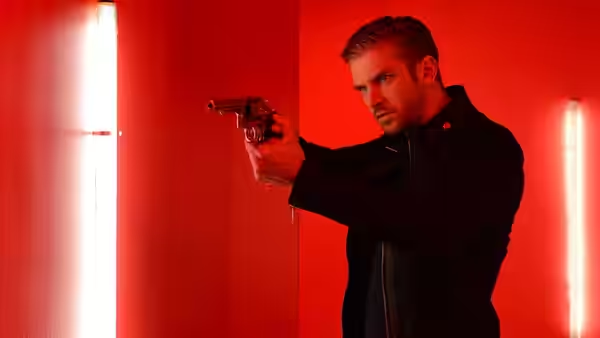
Robby Baumgartner shoots the Peterson house in warm lamplight, paper pumpkins and skeletons taped to the walls, and saves the hard reds and blues for later, so the film cools as David warms up. Tom Hammock keeps the house small and lived-in and builds the finale’s setting, a school haunted house of fog and plywood corridors, as a place that is all surface, which suits the film. Steve Moore’s synthesiser score is the other lead performance, a slow, thick pulse under the dinner scenes and a sprint when the knives come out, mixed loud enough that you can feel the film grinning. Wingard cuts it himself, and he cuts tight; hardly a scene outlasts the point it is making.
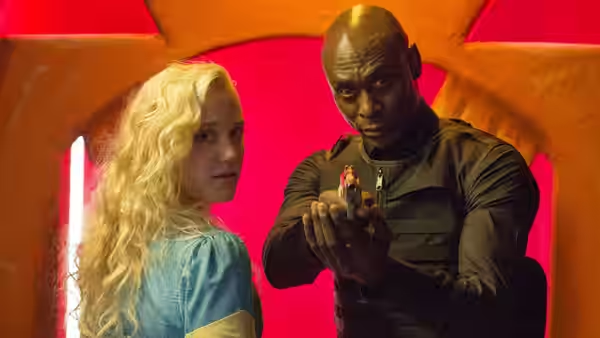
The trouble is what happens when the film has to say who David is. Lance Reddick arrives in the second half as Major Carver with a column of men and an explanation, and the explanation is thin and would not survive a second question. From there the film becomes an action picture, a competent one, but louder and dumber than the first hour promised. The jokes keep landing, which is some compensation, but Anna’s friends are there to be dealt with rather than to be people, and the body count rises faster than our interest in it. By the final maze we were enjoying ourselves a little less: the film had stopped asking us to wonder about David and started asking us to watch him shoot.
Set beside Wingard and Barrett’s You’re Next, which gave a home-invasion film a heroine with a plan, this is the more confident object and the shallower one. The most sceptical of the reviews so far call it empty, and that is not wrong. It is also not quite the point. Barrett is not writing a metaphor; he is writing a cover version of a 1980s thriller with the colours turned up, and on those terms it is close to faultless until the last reel.
See it with someone who likes a thriller that knows what it is doing and will laugh when it winks. It runs 101 minutes, carries a 15, and has a soundtrack you will still be humming on your way to check the back door is locked.