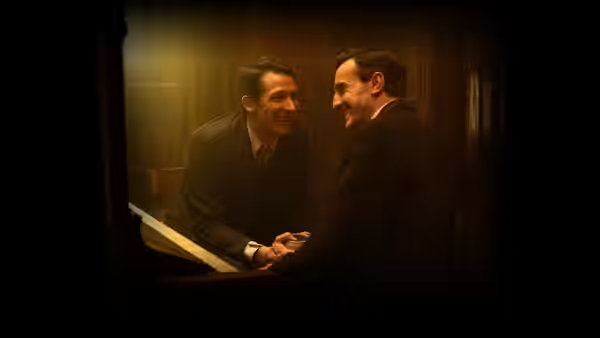
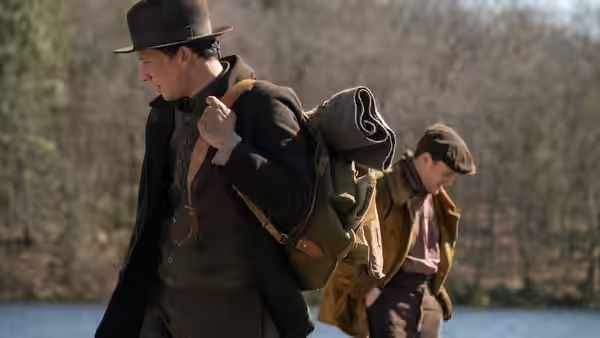
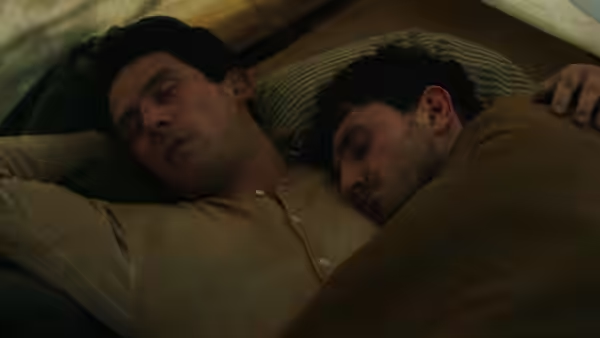
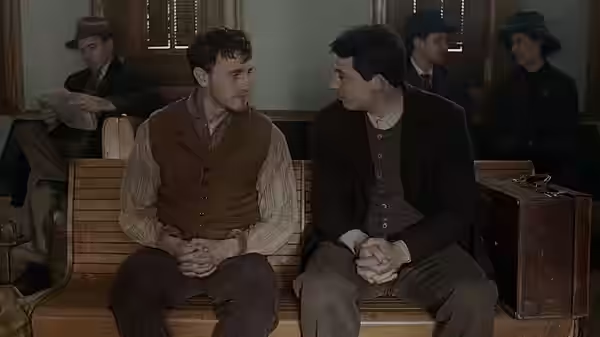
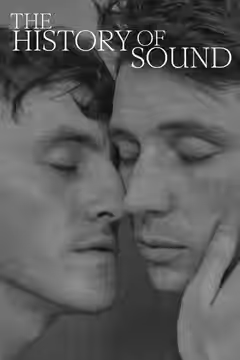
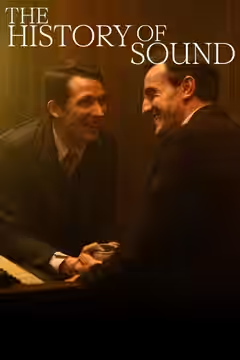
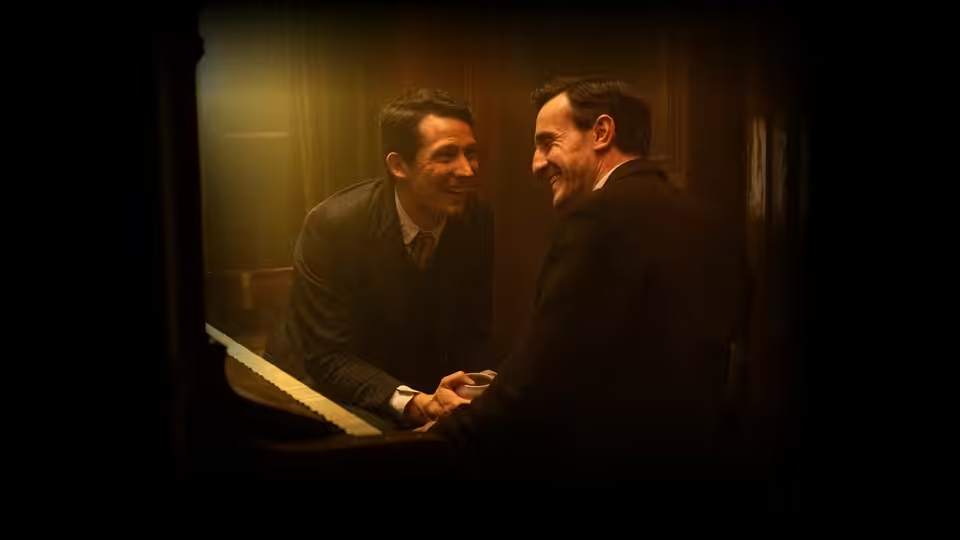
Lionel (Paul Mescal) and David (Josh O'Connor) laughing in a wooden elevator
Film review

The History of Sound

2025 · Directed by Oliver Hermanus · 2h 08m · IMDA R21

In a sentenceThe folk singers sound ready to tell us everything; the lovers could take a lesson

Lionel Worthing (Paul Mescal) and David White (Josh O’Connor) travel into isolated backwoods communities to collect folk songs. They want to preserve the singers’ voices, and recording the music gives them a reason to work and listen together. Their shared task becomes bound up with a clandestine romance, with private feelings developing alongside their interest in the songs. The encounters with singers place other people’s stories around their own, as they build a collection of voices and a relationship they keep to themselves. Hadley Robinson plays Belle Sinclair.

Plays from YouTube when you press play; nothing loads from them until then.

Fi1m review

Paul Mescal and Josh O’Connor make the song-collecting scenes worth hearing and watching. Oliver Hermanus’s romance is less persuasive: carefully made, sometimes moving, and too restrained to sustain its length.

The History of Sound is worth considering for its performances and folk songs, though the romance is too cautious to be consistently involving. Oliver Hermanus treats the relationship between Lionel Worthing (Paul Mescal) and David White (Josh O’Connor) with a patience that sometimes becomes frustrating. Ben Shattuck’s screenplay gives them worthwhile work to share: recording folk songs in isolated backwoods communities. The film is most convincing when it lets that work occupy their attention, without asking their subdued manner to carry every feeling.

Paul Mescal makes Lionel Worthing’s loneliness affecting without turning it into an exhibition. His stillness has weight, although the film asks us to interpret it for longer than it should. Josh O’Connor brings more animation to David White, and the difference matters: we can sense someone the other man might want to spend time with. Their company is appealing enough to keep us interested, even when the direction makes the attraction feel unnecessarily remote.

We were moved by the scenes of the two men recording folk songs together. Listening gives them something to do besides silently convey longing, and the encounters with singers allow other lives into a film that can feel sealed off. Oliver Coates’s score holds the melancholy steady, but it is less persuasive than the human voices. When the score gives way to singing, the film briefly stops telling us how sad to feel.

Alexander Dynan’s cinematography gives the period settings a composed, pictorial finish, though the consistency gradually becomes a limitation. The images do little to distinguish the excitement of discovery from the ache of remembering. Deborah Jensen’s production design helps the backwoods song-collecting passages feel removed from ordinary bustle, but the careful presentation can make these encounters look too neatly arranged. There is skill here; we wanted a little more room for the untidiness of people making music.

The larger difficulty is duration. At 128 minutes, the film spends too long sustaining a mood it has already established, and Chris Wyatt’s editing does not give the middle section enough momentum. Quiet passages can be absorbing when each one changes our understanding of the people involved; here they begin to feel like further demonstrations of the same sadness. The later stretches contain feeling, but they cannot quite repay the patience asked for along the way.

There is nothing inherently bloodless about a restrained period romance, and a clandestine relationship need not announce itself to be understood. What this one lacks is enough sense of discovery between the lovers to make their attachment fully convincing. Hadley Robinson brings a welcome precision to Belle Sinclair, suggesting how much can be communicated without raising the emotional volume. Oliver Hermanus needs more variation in the scenes between his leads.

The songs remain a substantial reason to give it an evening, especially for anyone interested in how people share and preserve music. There is enough tenderness in the performances to make the film’s caution frustrating, because the actors seem capable of giving more. We would recommend it chiefly for the music, with fair warning about the slow middle. Anyone coming for a consuming love affair will need more than the film is willing to give.

Critical consensus AI synthesised

54
Positive
9
Mixed
6
Negative
11

The reviews are sharply divided on The History of Sound, with negative verdicts narrowly outnumbering positive ones. Praise clusters around Paul Mescal and Josh O’Connor’s performances and the folk-song recording scenes, which several critics find more intimate and affecting than the surrounding romance. Even some sceptical reviews respond to the singing, while admirers find the patient pace and melancholy atmosphere essential to the film’s emotional pull.

The central disagreement is over restraint: for supporters it makes the love story moving; for detractors it leaves the relationship cautious and unconvincing. Complaints about pacing recur even in favourable reviews, particularly around the middle and second half. The spread is wide: Deadline finds a haunting romance sustained by both leads and the music, whereas Variety finds little convincing feeling, praising O’Connor but faulting Mescal’s stillness. The Guardian also disputes one of the more common points of praise, finding the songs emotionally remote.

IndieWire
11 September 2025 · B · Ryan Lattanzio
77

Lattanzio finds the romance affecting and haunting, though its second half loses some emotional assurance. He praises Mescal’s understated performance and the film’s evocative music and patient atmosphere.

Read the full review →
Empire
23 January 2026 · Laura Venning
75*

Venning finds the film profoundly affecting despite its muted pace and old-fashioned approach. She singles out the performances, especially Chris Cooper’s moving turn, and the songs’ power to preserve stories.

Read the full review →
The Hollywood Reporter
21 May 2025 · festival review · David Rooney
75*

Rooney finds the film restrained and sometimes meandering, but ultimately a moving, melancholic romance. He especially praises Mescal and O’Connor’s performances and the folk music, which give the story its emotional force.

Read the full review →
Screen Daily
21 May 2025 · festival review · Lee Marshall
71*

Marshall describes the film as an intense, restrained period drama. The headline singles out the clandestine romance between its two leads.

Read the full review →
Radio Times
23 January 2026 · James Mottram
70*

The review presents the film as a tender, decade-spanning love story likely to deepen its stars’ fanbases. It praises Oliver Hermanus’s telling as exquisite.

Read the full review →
Little White Lies
festival review · Hannah Strong
65*

Strong finds the film a unique, moving romance, though its restraint and sagging pace may frustrate some viewers. She particularly praises Josh O’Connor’s performance and the soulful folk soundtrack.

Read the full review →

Straight answers AI written, from our review

Is The History of Sound worth watching?
The History of Sound is worth considering chiefly for its folk music and performances, and we score it 62/100. Paul Mescal and Josh O’Connor make the song-collecting scenes moving, but the cautious romance and slow middle stretch its 128 minutes; we recommend it to those interested in preserving music rather than anyone seeking a consuming love affair.
How long is The History of Sound, and what is it rated?
The History of Sound runs 2h 08m and is rated R21 by the IMDA in Singapore. It is a drama and romance film.
Where can I watch The History of Sound in Singapore?
The History of Sound is not on any streaming or rental service in Singapore at the moment. It is available in 34 other countries; change your country at the top of the page to see where. Availability is checked daily.
How violent or frightening is The History of Sound, and is it suitable for children?
The History of Sound carries a UK 15 certificate, so it is not suitable for children under 15. That classification alone does not tell us how violent or frightening particular scenes are; we would recommend this slow, melancholy romance chiefly to older teenagers and adults with an interest in folk music.
How does The History of Sound compare to Cold War?
The History of Sound is the less persuasive romance beside Cold War, which we recommend for its compact storytelling, performances and music. Both connect folk music with a difficult relationship, but Cold War allows its lovers more room to quarrel, while The History of Sound is strongest when its leads collect songs together. The reservation with Cold War is that gaps between scenes sometimes obscure the lovers’ feelings.
What should I watch after The History of Sound?
After The History of Sound, try Cold War (2018, Fi1m 85): Folk music and a difficult romance, with rather more willingness to quarrel. Then Happy Together (1997, Fi1m 86): Another troubled love between men, played with far less emotional caution; and Weekend (2011, Fi1m 86): Two men talk their way towards an intimacy that feels earned.

Cast

If you liked this, try…

  1. Cold War (2018, Fi1m 85)Folk music and a difficult romance, with rather more willingness to quarrel.

  2. A Month in the Country (1987) · not on Fi1m yetTwo men at work, with wartime memories neither can put aside.

  3. Happy Together (1997, Fi1m 86)Another troubled love between men, played with far less emotional caution.

  4. The Music Room (1958) · not on Fi1m yetMusic preserves a way of life its host cannot afford to lose.

  5. Weekend (2011, Fi1m 86)Two men talk their way towards an intimacy that feels earned.