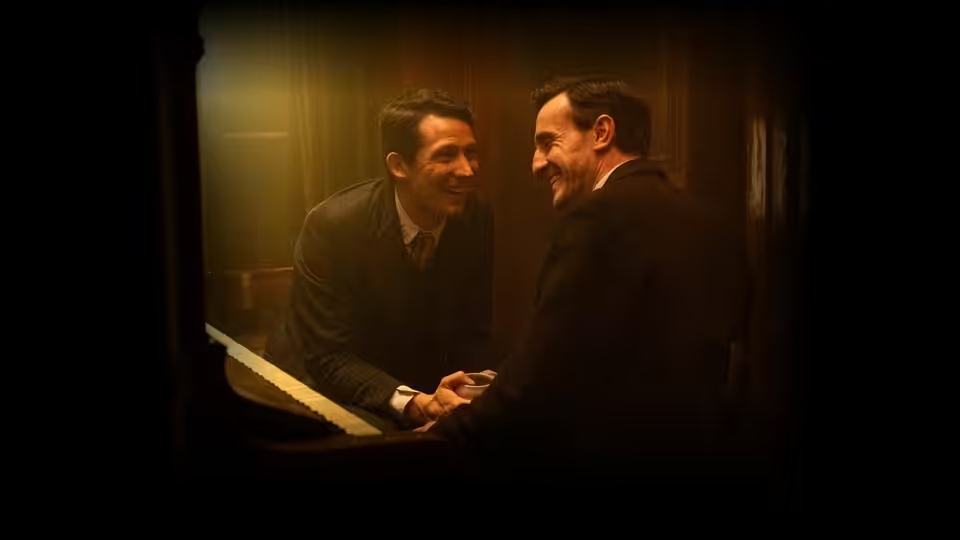
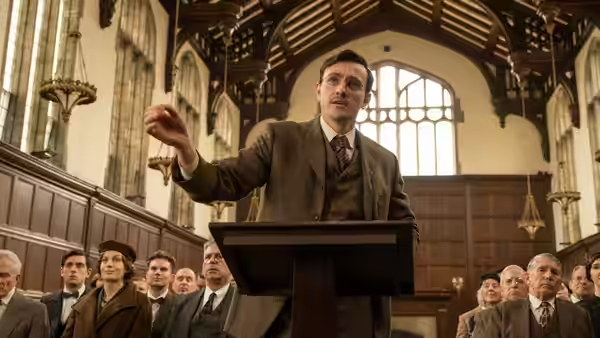
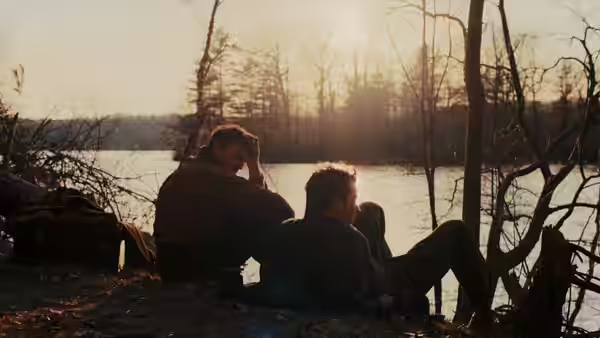
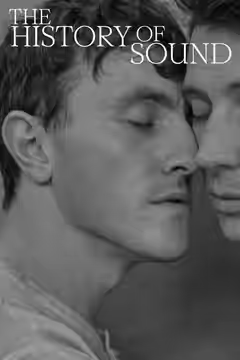
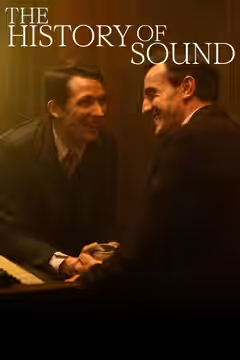
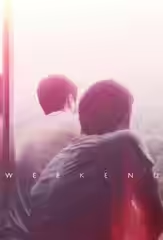
Paul Mescal and Josh O’Connor make the song-collecting scenes worth hearing and watching. Oliver Hermanus’s romance is less persuasive: carefully made, sometimes moving, and too restrained to sustain its length.
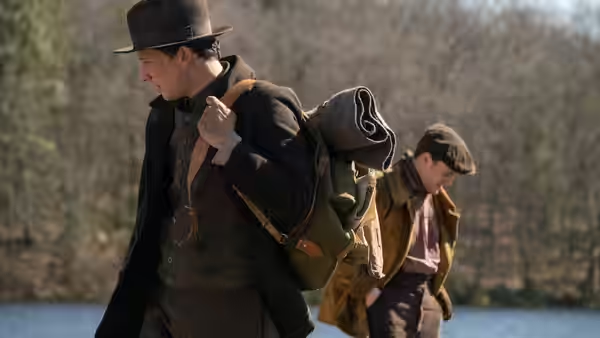
The History of Sound is worth considering for its performances and folk songs, though the romance is too cautious to be consistently involving. Oliver Hermanus treats the relationship between Lionel Worthing (Paul Mescal) and David White (Josh O’Connor) with a patience that sometimes becomes frustrating. Ben Shattuck’s screenplay gives them worthwhile work to share: recording folk songs in isolated backwoods communities. The film is most convincing when it lets that work occupy their attention, without asking their subdued manner to carry every feeling.
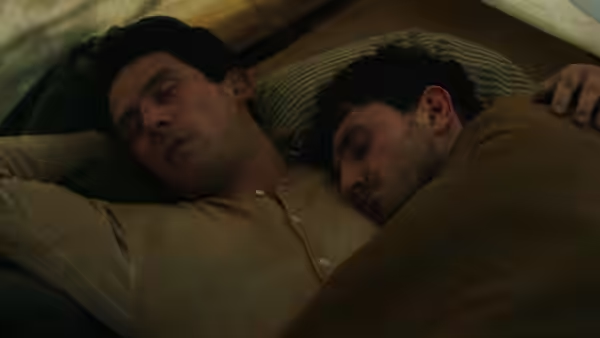
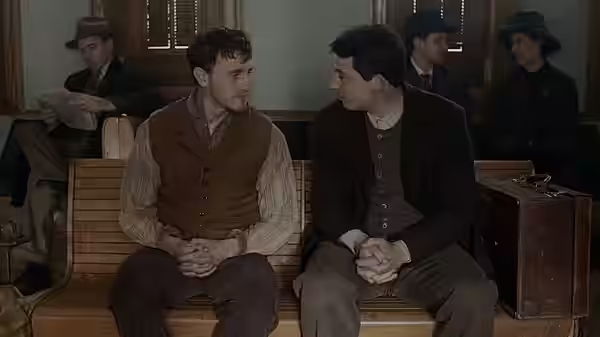
Paul Mescal makes Lionel Worthing’s loneliness affecting without turning it into an exhibition. His stillness has weight, although the film asks us to interpret it for longer than it should. Josh O’Connor brings more animation to David White, and the difference matters: we can sense someone the other man might want to spend time with. Their company is appealing enough to keep us interested, even when the direction makes the attraction feel unnecessarily remote.
We were moved by the scenes of the two men recording folk songs together. Listening gives them something to do besides silently convey longing, and the encounters with singers allow other lives into a film that can feel sealed off. Oliver Coates’s score holds the melancholy steady, but it is less persuasive than the human voices. When the score gives way to singing, the film briefly stops telling us how sad to feel.
Alexander Dynan’s cinematography gives the period settings a composed, pictorial finish, though the consistency gradually becomes a limitation. The images do little to distinguish the excitement of discovery from the ache of remembering. Deborah Jensen’s production design helps the backwoods song-collecting passages feel removed from ordinary bustle, but the careful presentation can make these encounters look too neatly arranged. There is skill here; we wanted a little more room for the untidiness of people making music.
The larger difficulty is duration. At 128 minutes, the film spends too long sustaining a mood it has already established, and Chris Wyatt’s editing does not give the middle section enough momentum. Quiet passages can be absorbing when each one changes our understanding of the people involved; here they begin to feel like further demonstrations of the same sadness. The later stretches contain feeling, but they cannot quite repay the patience asked for along the way.
There is nothing inherently bloodless about a restrained period romance, and a clandestine relationship need not announce itself to be understood. What this one lacks is enough sense of discovery between the lovers to make their attachment fully convincing. Hadley Robinson brings a welcome precision to Belle Sinclair, suggesting how much can be communicated without raising the emotional volume. Oliver Hermanus needs more variation in the scenes between his leads.
The songs remain a substantial reason to give it an evening, especially for anyone interested in how people share and preserve music. There is enough tenderness in the performances to make the film’s caution frustrating, because the actors seem capable of giving more. We would recommend it chiefly for the music, with fair warning about the slow middle. Anyone coming for a consuming love affair will need more than the film is willing to give.