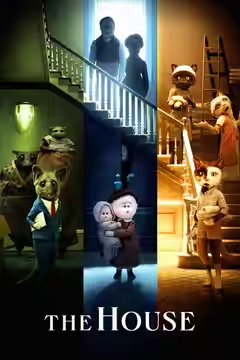
Three directors, one house, in felt and fur. The first story is a proper nightmare, the second a sharp farce, the third a gentle fable that lets the air out. Worth an evening for the craft and the first forty minutes.
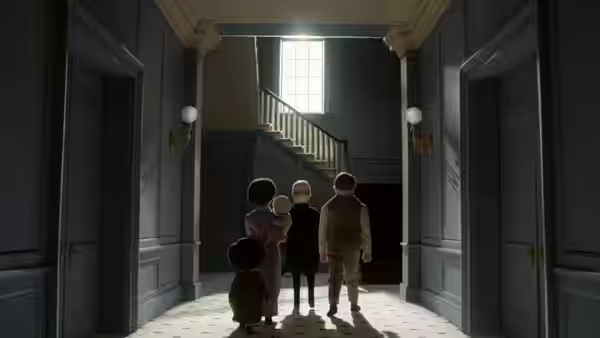
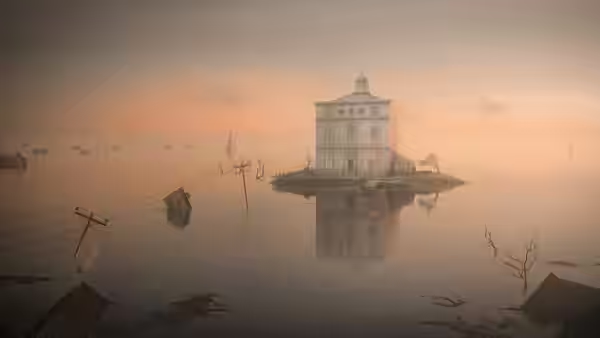
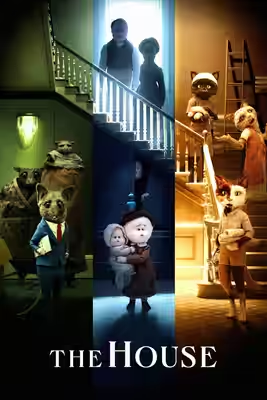
The House is an anthology: three stories, four directors, one building, told in stop-motion over 97 minutes from a script by Enda Walsh. Emma De Swaef and Marc James Roels open it with a family of felt figures in the past. Niki Lindroth von Bahr follows with a rat developer in something like the present. Paloma Baeza closes with a cat landlady in a flooded future. The subject, each time, is what a house does to the people who think they own it. It is a good idea, and the film has the stories in the right order, because they get weaker as they go.
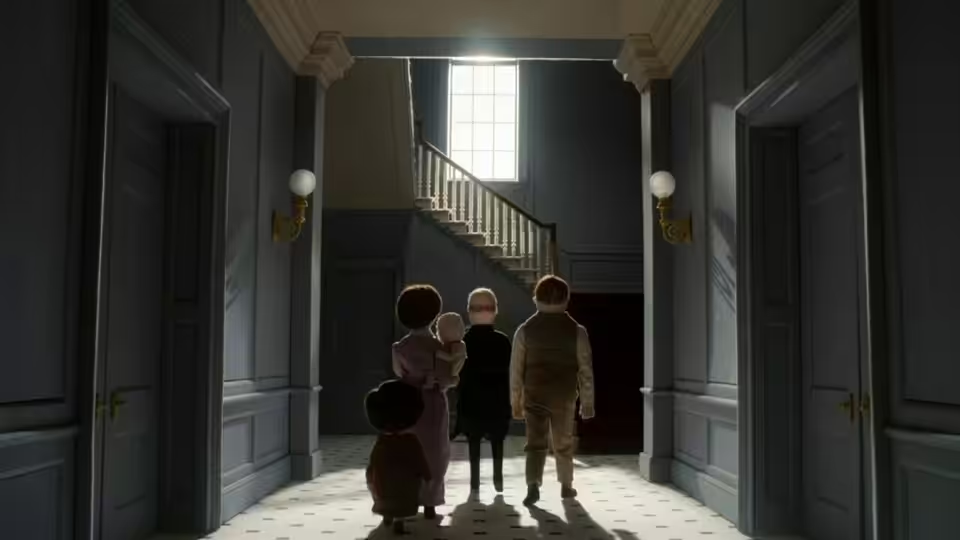
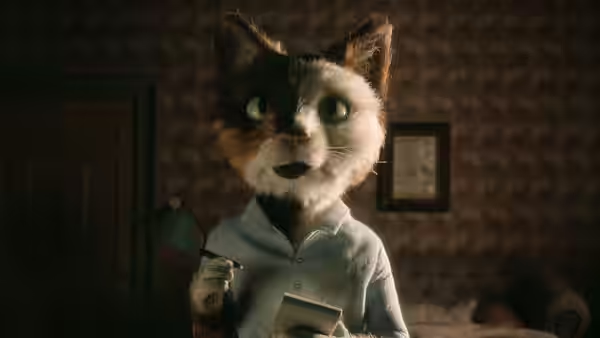
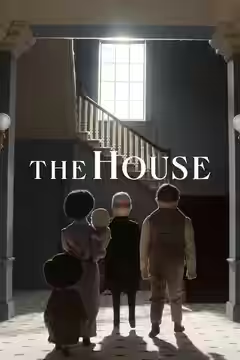
De Swaef and Roels work in wool and felt, and the texture does half the work. Raymond (Matthew Goode) and Penelope (Claudie Blakley) have faces like unfinished dolls, two black beads for eyes and a stitched line for a mouth, so that every expression is something we read into them. Mia Goth gives Mabel a small, careful voice, a child who notices more than she says. Mark Heap’s Mr. Thomas speaks for the architect in a tone of unbending politeness that makes every instruction sound like a sentence being passed. The house, designed by Alexandra Walker, grows while the family sleep: lamps carried through empty rooms at night, corridors that were not on the plan, workmen who never answer. We were properly unnerved by it, more than by most live-action horror. Nothing jumps out. Things are simply where they should not be, and Malcolm Hadley and James Lewis hold the camera on them a beat longer than is comfortable, close enough that we can see the weave.
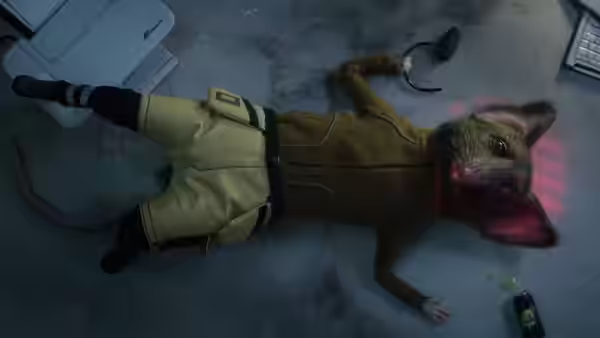
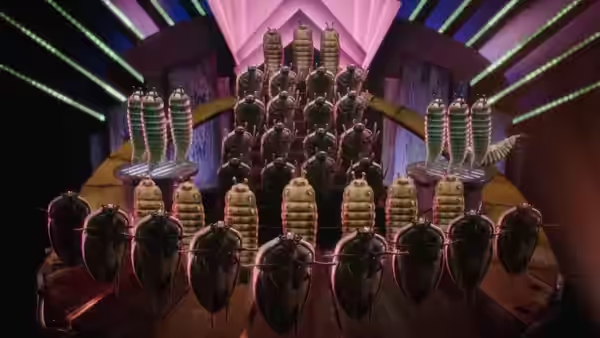
Lindroth von Bahr’s middle story is the funniest. The house is now a renovation owned by a rat developer (Jarvis Cocker) who has borrowed too much, and the segment is a farce about a viewing day going wrong, from the fitted kitchen he cannot stop stroking to the beetles in the oven. There is a dance number, and it is a good one. Sven Wollter and Yvonne Lombard voice a pair of prospective buyers who arrive, say almost nothing, and do not leave, and their silence is the best joke in the film. Cocker plays panic as sales patter that will not switch off. The idea is thinner than the first story’s but the shape is cleaner, and Barney Pilling cuts it like comedy, on the reaction.
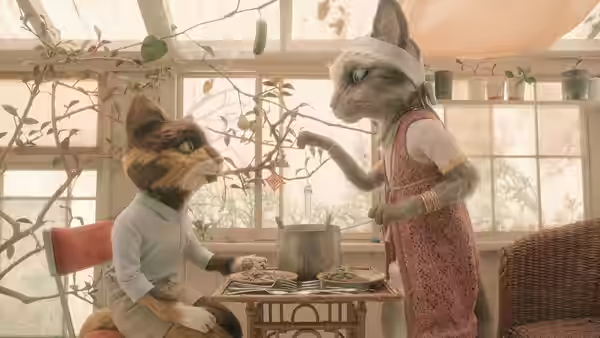
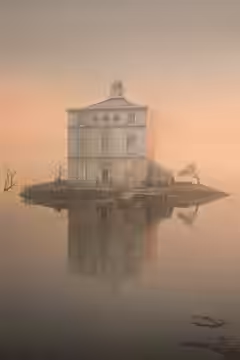
Baeza’s finale is where it goes soft. The world has flooded, the house stands alone in the water, and a cat landlady is trying to renovate it while her two tenants pay their rent in fish and crystals. It is pleasant to look at, the fur lit grey-blue through the mist, and it means well, and we felt it arrive at its moral about ten minutes before it did. After two stories about what a house costs, a third that tells us to let go is the obvious note to end on, and the film plays it slowly, with the characters mostly standing about saying what they feel.
Gustavo Santaolalla’s score is sparse, plucked strings and a low hum, and it is used with restraint in the first story and more freely later; it suits the fables better than the farce. Walker’s production design is the through-line, the same floor plan dressed three ways, cornices in the first story, plasterboard in the second, water stains in the third, and it is the one place where the film’s single idea holds all the way through. It carries a 12 certificate, which is about right. The first story would frighten a small child, and should.
Anthologies are nearly always uneven and this one is uneven in the usual direction. Most critics have settled around the middle, admiring the animation and doubting the stories, and we are not far from them, though we think the first story is better than that and the third worse. Walsh gives each segment a theme but not always a plot, and the gap shows most where the stakes are lowest.
See it for the first forty minutes and stay for the beetles. If the last story sends you to sleep, you will at least have been put there gently.