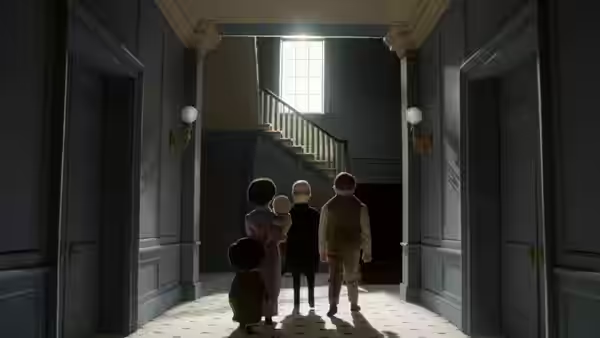
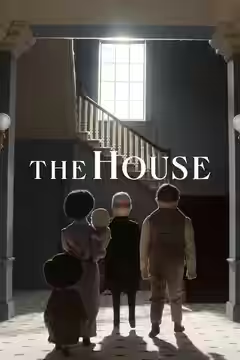
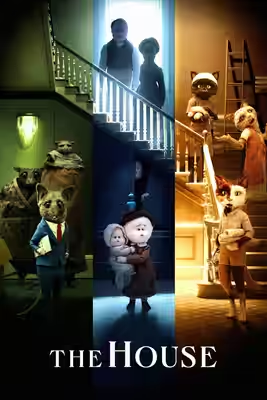
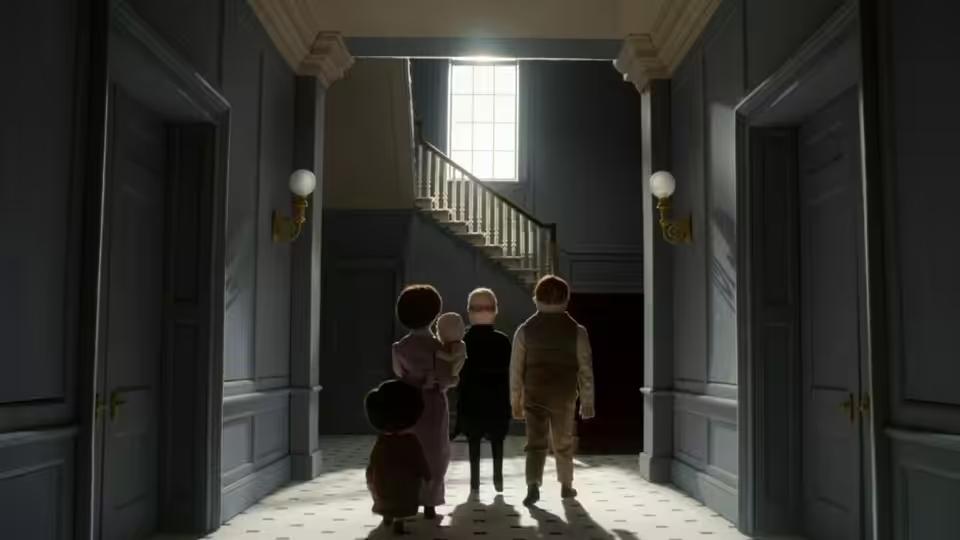
A family enters a grand hallway and faces the staircase beneath a tall window
Film review

The House

2022 · Directed by Paloma Baeza, Marc James Roels, Emma De Swaef, Niki Lindroth von Bahr · 1h 37m

In a sentenceA stop-motion estate agent’s nightmare: three owners, one house, and nobody who can afford to stay or bear to leave

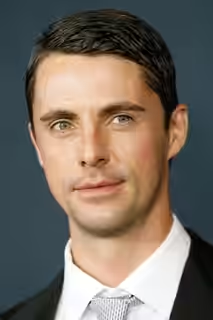
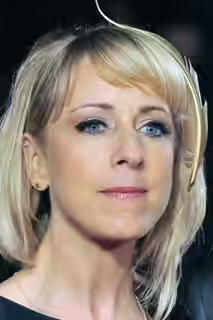
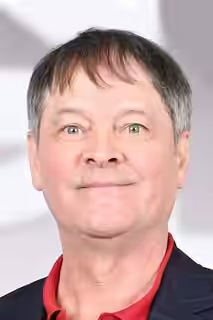
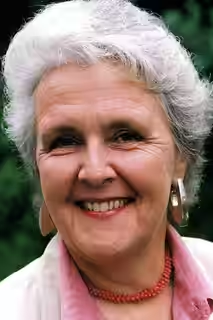
A cold cottage in a wood, in the age of carriages. Raymond (Matthew Goode) and Penelope (Claudie Blakley) are raising their daughters Mabel (Mia Goth) and Isobel (Eleanor De Swaef-Roels) on what is left of his family’s land. When Great Aunt Eleanor (Stephanie Cole) and Aunt Clarice (Miranda Richardson) call, they make his poverty a joke over dinner. That night, drunk, Raymond meets the architect Van Schoonbeek, who offers to build the family a grand house for nothing, on one condition: they must give up the cottage and live in it. Mr. Thomas (Mark Heap) oversees the work. The family arrive to find rooms unfinished, builders who do not speak, and a staircase that was not there yesterday. Two further stories, set in the same house, follow.

Plays from YouTube when you press play; nothing loads from them until then.

Fi1m review

Three directors, one house, in felt and fur. The first story is a proper nightmare, the second a sharp farce, the third a gentle fable that lets the air out. Worth an evening for the craft and the first forty minutes.

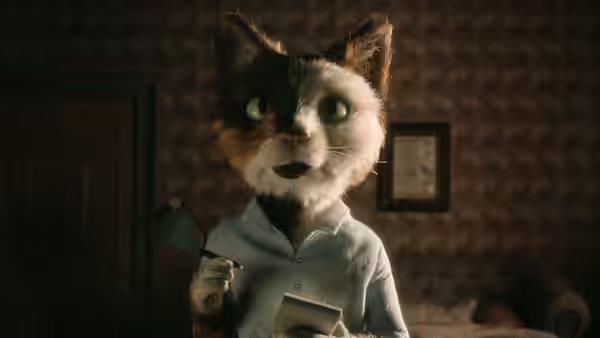
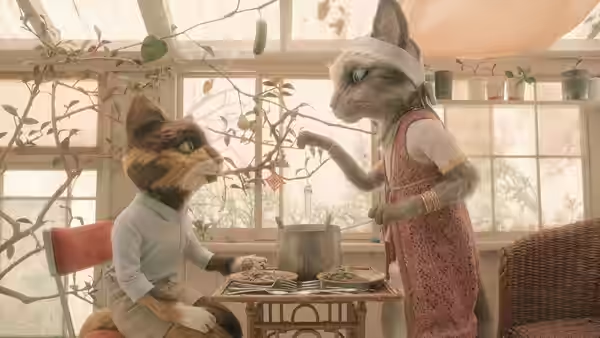
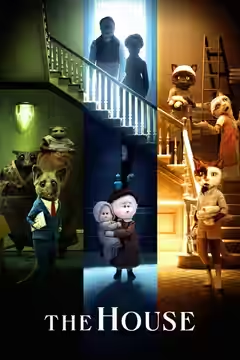
The House is an anthology: three stories, four directors, one building, told in stop-motion over 97 minutes from a script by Enda Walsh. Emma De Swaef and Marc James Roels open it with a family of felt figures in the past. Niki Lindroth von Bahr follows with a rat developer in something like the present. Paloma Baeza closes with a cat landlady in a flooded future. The subject, each time, is what a house does to the people who think they own it. It is a good idea, and the film has the stories in the right order, because they get weaker as they go.

De Swaef and Roels work in wool and felt, and the texture does half the work. Raymond (Matthew Goode) and Penelope (Claudie Blakley) have faces like unfinished dolls, two black beads for eyes and a stitched line for a mouth, so that every expression is something we read into them. Mia Goth gives Mabel a small, careful voice, a child who notices more than she says. Mark Heap’s Mr. Thomas speaks for the architect in a tone of unbending politeness that makes every instruction sound like a sentence being passed. The house, designed by Alexandra Walker, grows while the family sleep: lamps carried through empty rooms at night, corridors that were not on the plan, workmen who never answer. We were properly unnerved by it, more than by most live-action horror. Nothing jumps out. Things are simply where they should not be, and Malcolm Hadley and James Lewis hold the camera on them a beat longer than is comfortable, close enough that we can see the weave.

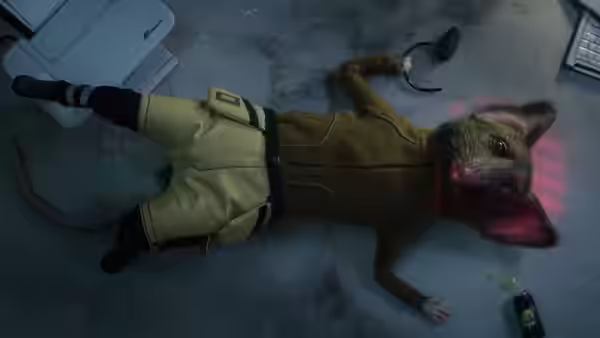
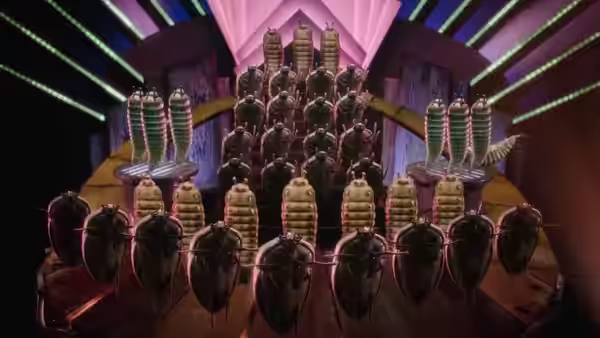
Lindroth von Bahr’s middle story is the funniest. The house is now a renovation owned by a rat developer (Jarvis Cocker) who has borrowed too much, and the segment is a farce about a viewing day going wrong, from the fitted kitchen he cannot stop stroking to the beetles in the oven. There is a dance number, and it is a good one. Sven Wollter and Yvonne Lombard voice a pair of prospective buyers who arrive, say almost nothing, and do not leave, and their silence is the best joke in the film. Cocker plays panic as sales patter that will not switch off. The idea is thinner than the first story’s but the shape is cleaner, and Barney Pilling cuts it like comedy, on the reaction.

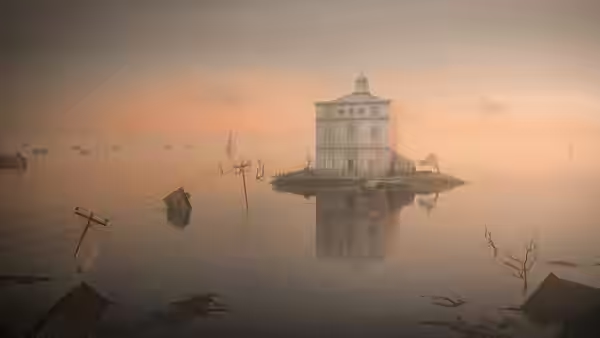
Baeza’s finale is where it goes soft. The world has flooded, the house stands alone in the water, and a cat landlady is trying to renovate it while her two tenants pay their rent in fish and crystals. It is pleasant to look at, the fur lit grey-blue through the mist, and it means well, and we felt it arrive at its moral about ten minutes before it did. After two stories about what a house costs, a third that tells us to let go is the obvious note to end on, and the film plays it slowly, with the characters mostly standing about saying what they feel.

Gustavo Santaolalla’s score is sparse, plucked strings and a low hum, and it is used with restraint in the first story and more freely later; it suits the fables better than the farce. Walker’s production design is the through-line, the same floor plan dressed three ways, cornices in the first story, plasterboard in the second, water stains in the third, and it is the one place where the film’s single idea holds all the way through. It carries a 12 certificate, which is about right. The first story would frighten a small child, and should.

Anthologies are nearly always uneven and this one is uneven in the usual direction. Most critics have settled around the middle, admiring the animation and doubting the stories, and we are not far from them, though we think the first story is better than that and the third worse. Walsh gives each segment a theme but not always a plot, and the gap shows most where the stakes are lowest.

See it for the first forty minutes and stay for the beetles. If the last story sends you to sleep, you will at least have been put there gently.

Critical consensus AI synthesised

59
Positive
3
Mixed
2
Negative
1

The reviews lean cautiously positive, and almost every critic starts in the same place: the stop-motion craft. The handmade detail of the three houses, the unsettling design of the first segment and the richly built setting of the second are praised across the board, by admirers and doubters alike. Several find the anthology genuinely eerie, with nightmare imagery that lands, and most agree it is at the very least worth looking at.

Where the critics part is on whether the stories earn the animation. The Guardian and Slant Magazine both think they do not, calling the later segments underdeveloped and the final one sentimental, and Slant is the one outright negative notice. Paste and Polygon admit to feeling little for the characters, or to a weaker middle story, but still recommend it. /Film stands well apart from everyone else, calling it close to great. The spread is wide: the same craft is either the whole point or a surface with too little beneath it.

The i Paper
17 January 2022 · Christina Newland
60*

Newland finds the anthology worth seeing but too imprecise and lightweight to revisit. She praises its gorgeous, unsettling stop-motion imagery, while noting that the stories lack precision.

Read the full review →
The Guardian
13 January 2022 · Lucy Mangan
45*

Mangan finds the anthology visually impressive but ultimately underwhelming because its stories do not match the painstaking animation. She singles out the first segment’s eerie design and effective nightmare imagery, while finding the later stories underdeveloped.

Read the full review →
Slant Magazine
12 January 2022 · Steven Scaife
30*

Scaife finds the anthology’s technical craft stronger than its storytelling, leaving the work disappointing overall. He praises the second segment’s impressively detailed setting, while faulting the final segment’s mawkish sentimentality.

Read the full review →
/Film
14 January 2022 · 9/10 · Chris Evangelista
90

The critic calls the anthology enchanting, disturbing, and ultimately lovely, even suggesting it may be the first great movie of 2022. They single out its meticulous stop-motion artistry as a source of real magic.

Read the full review →
Paste
12 January 2022 · 7.8/10 · Annie Lyons
78

Lyons finds the anthology transportive and idiosyncratic, despite limited emotional connection to its characters. She especially praises its magnificent stop-motion animation and handcrafted details.

Read the full review →
Polygon
15 January 2022 · Tasha Robinson
70*

The critic finds the anthology dark and effectively unnerving, though its middle story is less satisfying. The stop-motion craft and richly detailed worlds are singled out for praise.

Read the full review →

Straight answers AI written, from our review

Is The House worth watching?
The House is worth an evening for its stop-motion craft and for its first story, a felt-and-wool haunting that unnerved us more than most live-action horror, and we scored it 65. The three segments weaken as they go, and the flooded-future finale states its moral slowly. Watch it for the first forty minutes and the beetles in the oven.
How long is The House, and what is it rated?
The House runs 1h 37m. It is an animation and drama film.
Where can I watch The House in Lithuania?
The House is streaming on Netflix in Lithuania. Availability is checked daily; the links above go straight to each service.
How violent or frightening is The House, and is it suitable for children?
The House carries a UK 12 certificate, and we think that is about right. There is no gore or jump scare; the first story frightens by having rooms grow overnight and workmen who never answer, held on screen a beat too long, and it would upset a small child. The middle farce and the gentle final fable are much milder, so older children and teenagers should be fine.
What should I watch after The House?
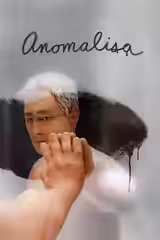
After The House, try Mary and Max (2009, Fi1m 80): Australian clay animation about loneliness, far sadder and funnier than it looks. Then Anomalisa (2015, Fi1m 82): Puppets in a hotel, every face the same but one; quietly devastating.

Cast

If you liked this, try…

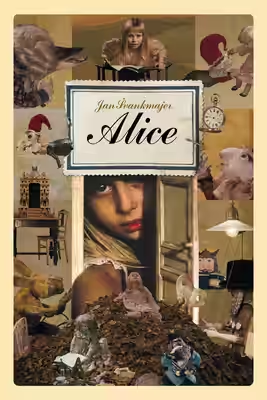
  1. Alice (1988) · not reviewed yetŠvankmajer’s Carroll, with stuffed rabbits and drawers; the first story’s clear ancestor.

  2. Mary and Max (2009, Fi1m 80)Australian clay animation about loneliness, far sadder and funnier than it looks.

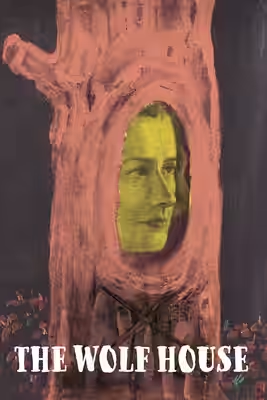
  3. The Wolf House (2018) · not reviewed yetChilean stop-motion horror in which the house itself is repainted around you.

  4. Kwaidan (1964) · not reviewed yetFour Japanese ghost stories told slowly, in painted skies; patience rewarded.

  5. Anomalisa (2015, Fi1m 82)Puppets in a hotel, every face the same but one; quietly devastating.

Free account

Know what to watch tonight

Two lists that know where things are streaming, collections you can share, your own score beside ours, and Discover that remembers what you have seen.

  • Want to see, sorted by what is streaming now
  • Seen, with your score out of ten
  • No adverts, ever