Paul Feig’s adaptation of the airport-novel hit is an hour of polite drift followed by an hour of proper trash, and Amanda Seyfried is the reason to sit through the first to reach the second. It is fun; it is also 131 minutes.
Paul Feig has adapted Freida McFadden’s novel, the one that has been in everyone’s hand luggage for three years, and he has done it more or less straight. Millie Calloway (Sydney Sweeney) has a criminal record, is sleeping in her car, and takes the only job that will have her: live-in housemaid to Nina Winchester (Amanda Seyfried), her handsome husband Andrew (Brandon Sklenar) and their daughter Cece (Indiana Elle). Her room is in the attic and the door locks from the outside. Nina is charming at the interview and something else by breakfast the next day.
For an hour The Housemaid is a household thriller of the familiar kind, done competently and not much better. For its second hour it is wilder, louder and a good deal more fun. It is worth an evening if you are prepared to sit through the first part to get to the second, and it would be a better film at 100 minutes than at 131.
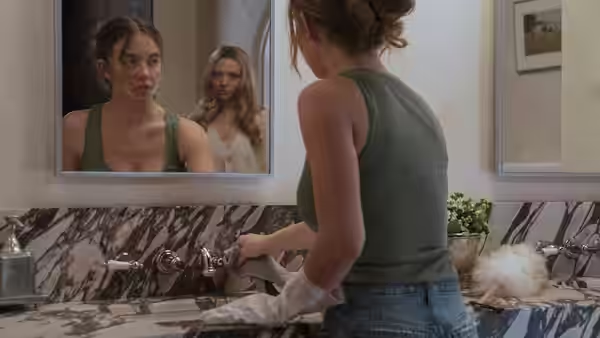
Nina is the part people will talk about, and Seyfried plays her with the dial turned all the way up: sweet, then vicious, then in tears, then sweet again, often inside a single scene. She wrecks rooms Millie has just cleaned and blames her for the mess. We laughed out loud at her more than once and we were meant to, because Seyfried knows precisely what sort of film she is in. The surprise is that she can also make Nina frightening, and she does it by going quiet rather than louder.
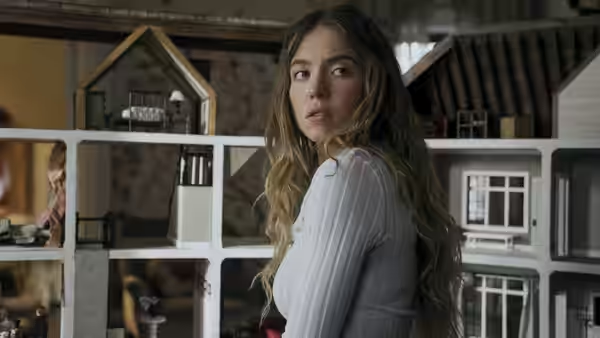
The trouble is that the film belongs to Millie, and for its first hour Millie mostly stands there and takes it. Sweeney is watchful and likeable and gives Millie the wariness of someone who has learned not to argue with people who can sack her, but Rebecca Sonnenshine’s script leaves her little to do beyond being mistreated and noticing things. Michele Morrone’s Enzo turns up at intervals to warn her in Italian she cannot understand, which is a running joke the film is only half in on. Sklenar’s Andrew is kind, reasonable and well dressed. Elizabeth Perkins, as his mother, gets two scenes and makes them count.
John Schwartzman shoots the house like a property listing, bright and even and clean, so that nothing casts a shadow until the film needs one. Elizabeth Jones’s production design gives the Winchesters white walls and glass downstairs and Millie a bare box under the roof, and most of the early unease comes from cutting between the two. Renee Ehrlich Kalfus dresses Nina in things that cost money and Millie in things that do not, and the film lets the clothes make the point without underlining it. Theodore Shapiro’s score jabs and swoons in the old manner, and we did not mind. Brent White cuts the first hour at a walk and the last forty minutes at a run, and the last forty minutes are the better ones.
Around the midpoint the film takes a turn we will not describe. What we can say is that it was the moment we sat forward, having spent the previous twenty minutes a little bored and slightly cross at being bored by something so plainly built for pleasure. Everything after the turn is played faster and closer to comedy, and the finale is preposterous in a way we enjoyed without reservation. Feig has always been better with a woman making a scene than a woman keeping her head down, and once his women are allowed to make scenes the film finds its feet.
A Simple Favor (2018) did this trick, suburban menace with a wink, in less time and with a lead who drove the story rather than survived it. Here the wink arrives an hour late. Against the household thrillers of the early nineties, the nannies and lodgers and new best friends, it is neither as nasty nor as tight, though it is better dressed than any of them.
See it with someone who will talk back to the screen. Do not ask it to mean anything; it does not, and unlike some of its admirers it is not claiming to. It runs 131 minutes and carries a 15 certificate.