Ralph Fiennes’s Dickens romance is worth considering for its performances, though the central relationship stays frustratingly distant. Felicity Jones does careful work; Joanna Scanlan, as the wife, makes the stronger impression.
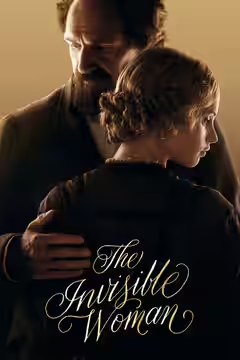
Ralph Fiennes wants to give Nelly Ternan a life of her own in a romance dominated by Charles Dickens. The Invisible Woman is a decent, frustratingly distant drama, with performances that deserve a less cautious screenplay. Its sympathy for Nelly is never in question. The problem is that Felicity Jones has to supply so much of what we need to understand about her.
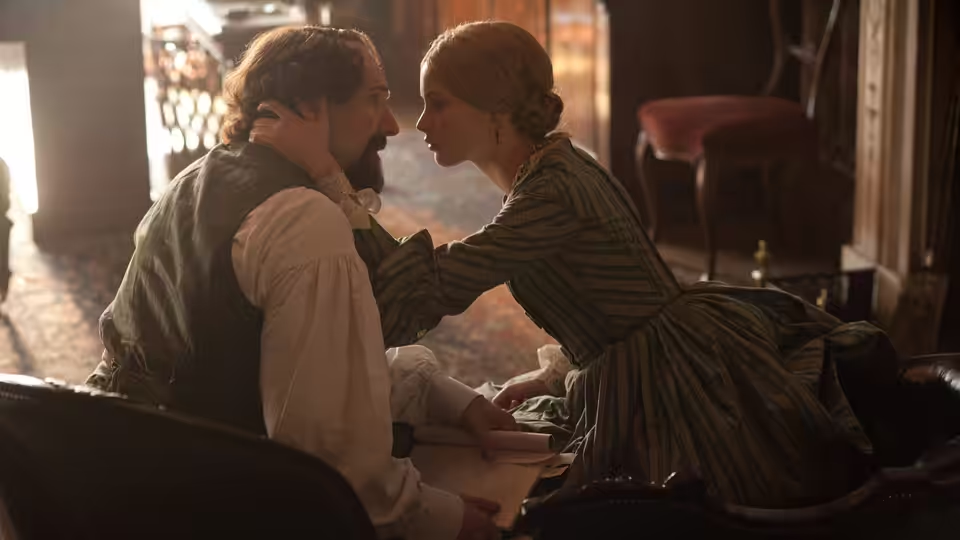
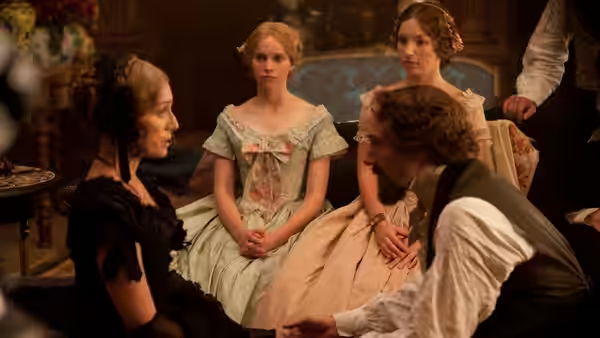
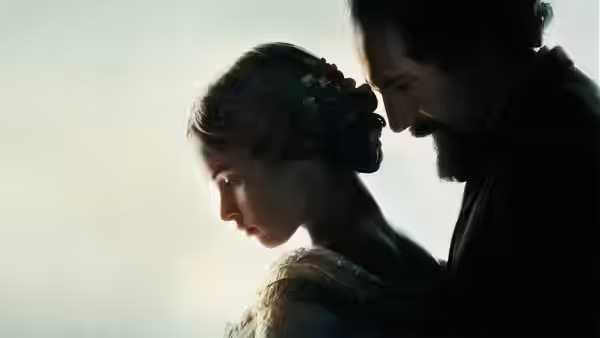
As Dickens, Ralph Fiennes supplies the energy that such a cautious film needs. His liveliness makes Nelly’s attraction credible, and he avoids smoothing away the difficulties of the man she wants. Felicity Jones gives Nelly’s reserve a recognisable tension, making us sense both romantic expectation and the effort of keeping it in check. The performance asks for close attention, though there are passages when the film relies on her presence to hold our interest without giving her enough to play.
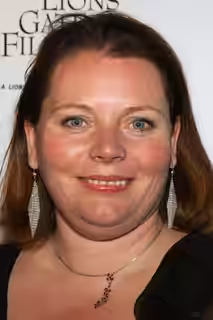
Joanna Scanlan, playing Catherine Dickens, makes a sharper impression in much less time. We were moved by her resignation, because she makes the wife seem to understand the painful situation without having the freedom to change it. She gives Catherine an emotional life beyond being an impediment to somebody else’s romance. The performance brings the marriage into focus and makes us wish the central attachment were drawn with the same clarity.
Abi Morgan’s screenplay gives proper weight to the unequal terms of the affair. Nelly’s wish to preserve her respectability is not treated as mere fussiness, which matters in a story so dependent on what she feels able to ask for. Yet understanding her hesitation only takes us so far. The romance needs to make her desire equally clear, and too often we are left with the broad predicament of a young woman attached to a married man.
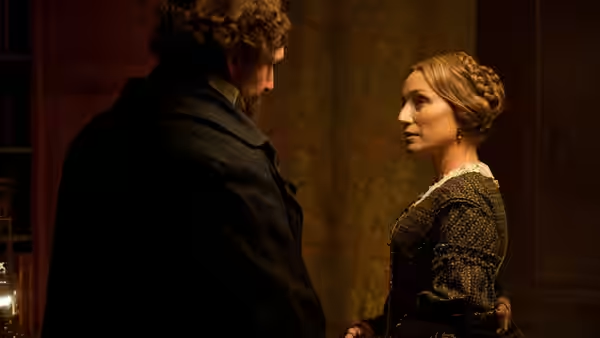
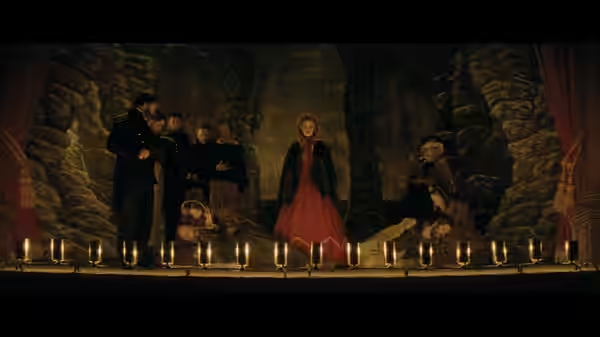
Rob Hardy’s composed images make Felicity Jones’s guarded expression worth studying, and the visual care helps sustain the quieter passages. Their polish can also make the unhappiness seem too neatly presented. Maria Djurkovic’s production design is equally assured about the Victorian setting. That confidence in the period detail is useful when the scenes themselves are slow to develop.
Nicolas Gaster gives the performances space in the editing, though the movement between timelines is less persuasive. Instead of deepening our involvement, the structure can make a slow film feel further interrupted. Ilan Eshkeri’s score does little to overcome that reserve; the actors’ quieter moments supply the strongest feeling. At times the measured pace becomes tedious, and the film’s consideration starts to feel like an unwillingness to move on.
Period romance can accommodate this much restraint, but it needs to make the things people cannot say unmistakable. The actors sometimes achieve that, especially Joanna Scanlan, who makes Catherine’s disappointment easy to understand. For viewers interested in Dickens, or in the women expected to fit around him, there is enough here to warrant the patience. Choose it for the performances, with no expectation of being swept into the affair.