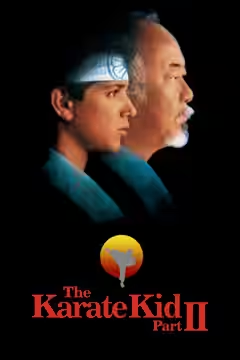
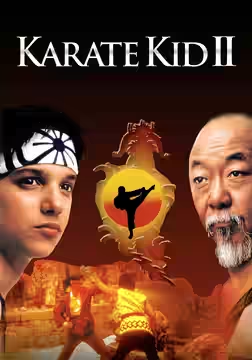
Ralph Macchio and Pat Morita give this modest sequel enough warmth to justify another visit. The familiar lessons and thin dramatic development make it a better prospect for returning admirers than anyone hoping to be converted.
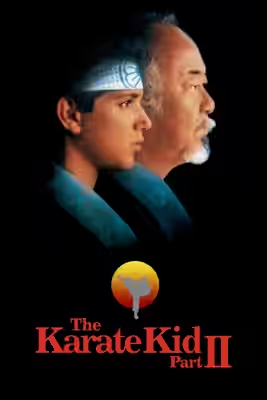
We find The Karate Kid Part II an agreeable but limited sequel, sustained by two performers whose company remains more appealing than much of their material. John G. Avildsen understands that affection for Daniel and Miyagi is a reason to return, and gives their relationship room. That is a sensible starting point for a family adventure. The difficulty is making another film feel necessary once the pleasure of seeing familiar faces has settled down.
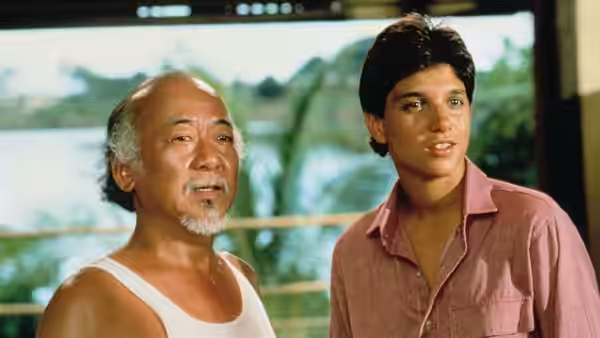
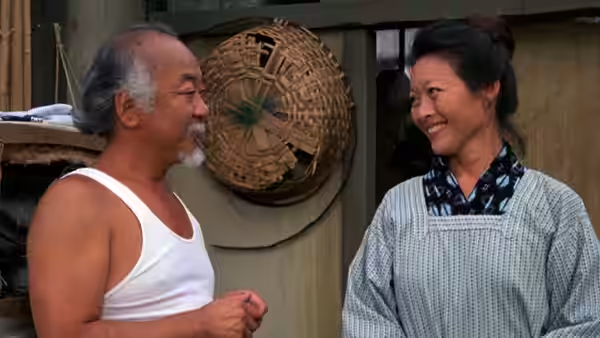
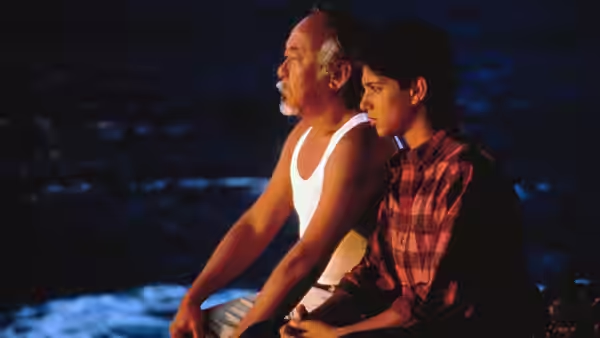
Ralph Macchio retains the awkward charm that makes Daniel easy to forgive, including when the writing makes him less interesting than it ought to. Pat Morita gives Miyagi enough personality to keep the advice from entirely swallowing the person delivering it. We smiled at Macchio’s ungainliness beside Morita’s composure; their contrasting manner makes the companionship feel comfortable without making the younger man suddenly polished. Neither performer needs much persuasion to hold our attention, though the film leans rather heavily on that goodwill.
Robert Mark Kamen’s writing is less dependable. The lessons accumulate, and advice that might sound touching in isolation becomes predictable when the film keeps returning to the same method of explaining itself. There is nothing inherently wrong with a family film saying what it means, particularly when its appeal rests partly on the reassurance of an older person taking a younger one seriously. But we wanted more occasions when character could emerge without being accompanied by instruction. Morita does useful work making those passages bearable.
The craft is competent, without providing a strong independent reason to recommend the film. James Crabe’s cinematography and William J. Cassidy’s production design give it a presentable setting, but neither makes the familiar drama feel especially fresh. Bill Conti’s music helps maintain the warmth, although warmth is already the quality the actors supply most readily. Editors David Garfield, John G. Avildsen and Jane Kurson cannot quite disguise how little forward movement there is between the film’s repeated lessons. At 113 minutes, the smallness of the dramatic development becomes noticeable.
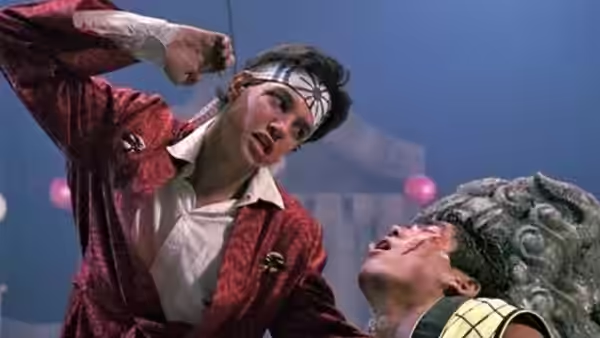
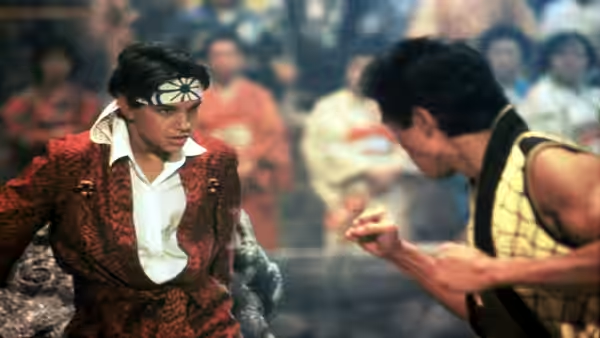
The action offers a change of activity without entirely solving that problem. Macchio remains the principal attraction, but putting more responsibility on Daniel does not automatically make him a richer character. Against the expectations of a family adventure, the film offers an accessible mixture of reassurance and confrontation; against the promise of a sequel, it develops too little. Its gentleness is welcome, and its interest in companionship gives it something worth preserving. Those virtues explain why it is easier to remain fond of the characters than excited by the story.
The critical response is mixed, with more reservations than enthusiasm, and we understand the impatience. We are a little more forgiving because Macchio and Morita keep making the relationship worth watching, even when the surrounding material is ordinary. Returning admirers should find enough here for a pleasant evening, provided another helping of familiar advice sounds comforting rather than exhausting. Anyone waiting for the film to stop teaching and get on with things may need rather more patience than Daniel.