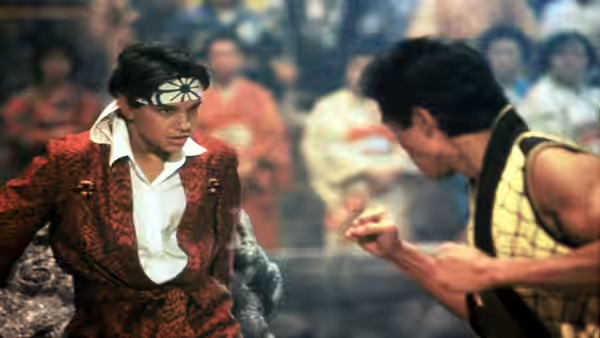
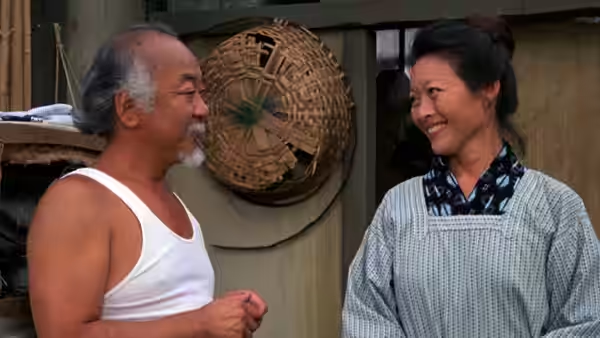
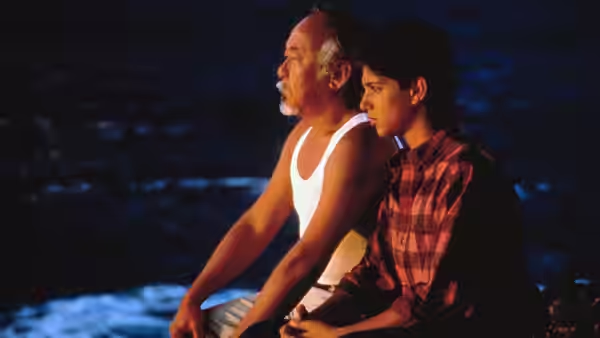
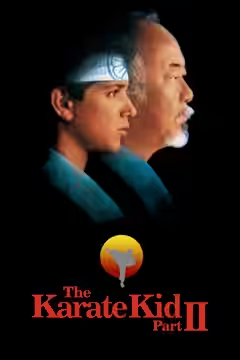
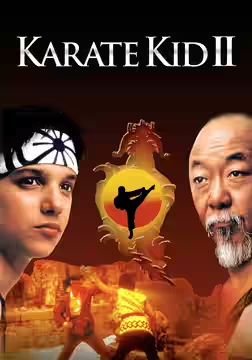
Two people sit together on a rocky shore, watching the sunset
Film review

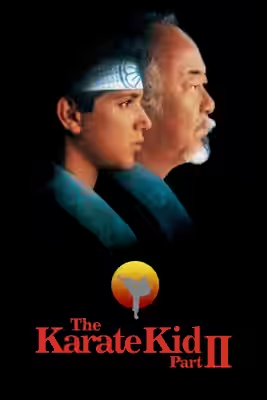
The Karate Kid Part II

1986 · Directed by John G. Avildsen · 1h 53m

In a sentenceMacchio and Morita remain good company, even when another karate lesson feels suspiciously like the previous karate lesson

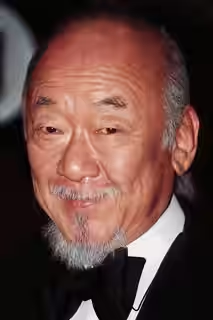
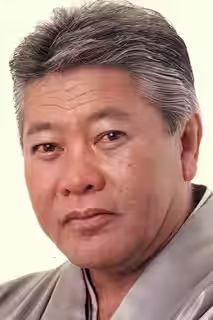
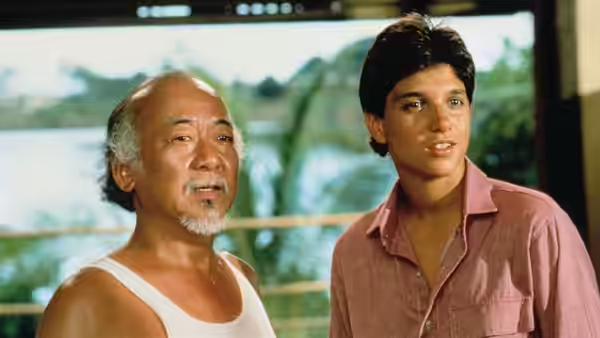
Daniel (Ralph Macchio) and Miyagi (Pat Morita) remain at the centre of this family adventure, which brings together karate, romance and their continuing friendship. Around them are Sato (Danny Kamekona), Yukie (Nobu McCarthy), Chozen (Yuji Okumoto) and Kumiko (Tamlyn Tomita). Miyagi’s father (Charlie Tanimoto) also figures in the story. Daniel’s experiences share space with Miyagi’s own relationships, giving the older man a personal stake beyond Daniel’s progress. The drama follows both characters, with their companionship connecting the action and the more personal encounters.

Fi1m review

Ralph Macchio and Pat Morita give this modest sequel enough warmth to justify another visit. The familiar lessons and thin dramatic development make it a better prospect for returning admirers than anyone hoping to be converted.

We find The Karate Kid Part II an agreeable but limited sequel, sustained by two performers whose company remains more appealing than much of their material. John G. Avildsen understands that affection for Daniel and Miyagi is a reason to return, and gives their relationship room. That is a sensible starting point for a family adventure. The difficulty is making another film feel necessary once the pleasure of seeing familiar faces has settled down.

Ralph Macchio retains the awkward charm that makes Daniel easy to forgive, including when the writing makes him less interesting than it ought to. Pat Morita gives Miyagi enough personality to keep the advice from entirely swallowing the person delivering it. We smiled at Macchio’s ungainliness beside Morita’s composure; their contrasting manner makes the companionship feel comfortable without making the younger man suddenly polished. Neither performer needs much persuasion to hold our attention, though the film leans rather heavily on that goodwill.

Robert Mark Kamen’s writing is less dependable. The lessons accumulate, and advice that might sound touching in isolation becomes predictable when the film keeps returning to the same method of explaining itself. There is nothing inherently wrong with a family film saying what it means, particularly when its appeal rests partly on the reassurance of an older person taking a younger one seriously. But we wanted more occasions when character could emerge without being accompanied by instruction. Morita does useful work making those passages bearable.

The craft is competent, without providing a strong independent reason to recommend the film. James Crabe’s cinematography and William J. Cassidy’s production design give it a presentable setting, but neither makes the familiar drama feel especially fresh. Bill Conti’s music helps maintain the warmth, although warmth is already the quality the actors supply most readily. Editors David Garfield, John G. Avildsen and Jane Kurson cannot quite disguise how little forward movement there is between the film’s repeated lessons. At 113 minutes, the smallness of the dramatic development becomes noticeable.

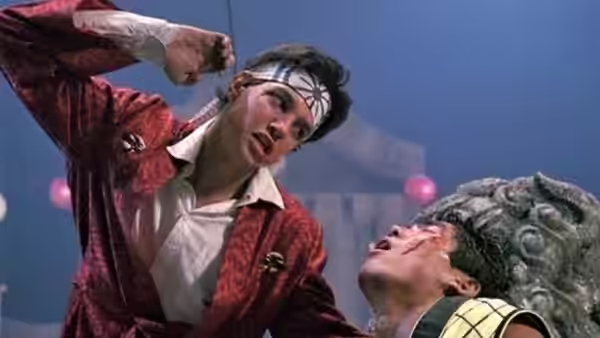
The action offers a change of activity without entirely solving that problem. Macchio remains the principal attraction, but putting more responsibility on Daniel does not automatically make him a richer character. Against the expectations of a family adventure, the film offers an accessible mixture of reassurance and confrontation; against the promise of a sequel, it develops too little. Its gentleness is welcome, and its interest in companionship gives it something worth preserving. Those virtues explain why it is easier to remain fond of the characters than excited by the story.

The critical response is mixed, with more reservations than enthusiasm, and we understand the impatience. We are a little more forgiving because Macchio and Morita keep making the relationship worth watching, even when the surrounding material is ordinary. Returning admirers should find enough here for a pleasant evening, provided another helping of familiar advice sounds comforting rather than exhausting. Anyone waiting for the film to stop teaching and get on with things may need rather more patience than Daniel.
Critical consensus AI synthesised

51
Positive
1
Mixed
1
Negative
2
Time Out
· DPe
70*

The review considers the sequel successful, retaining much of the original’s appeal. It singles out Ralph Macchio’s gawky charm as a strength.

Read the full review →
Radio Times
★★ · Jeremy Aspinall
40

Aspinall regards the sequel as an uninspired retread. He singles out its Japanese setting as the only interesting aspect.

Read the full review →
Variety
1 January 1986 · Variety Staff
35*

The review is dismissive of the film’s appeal to adult viewers, while acknowledging its intended young audience. It singles out the succession of “wise old Eastern homilies” and Ralph Macchio’s dominance of the action as drawbacks.

Read the full review →
Collider
30 May 2010 · Andre Dellamorte
65*

The critic finds the sequel less successful and less substantial than the original, but still charming. The chemistry between Macchio and Morita is singled out as a key strength.

Read the full review →

Straight answers AI written, from our review

Is The Karate Kid Part II worth watching?
The Karate Kid Part II is worth considering for returning admirers of Daniel and Miyagi, though we score this agreeable but limited sequel 62 out of 100. Ralph Macchio and Pat Morita keep their friendship warm and engaging, but repeated lessons and thin dramatic development make it a less persuasive choice for newcomers.
How long is The Karate Kid Part II, and what is it rated?
The Karate Kid Part II runs 1h 53m. It is an adventure and drama film.
Where can I watch The Karate Kid Part II in Singapore?
The Karate Kid Part II is not on any streaming or rental service in Singapore at the moment. It is available in 21 other countries; change your country at the top of the page to see where. Availability is checked daily.
How does The Karate Kid Part II compare to The Karate Kid?
The Karate Kid Part II is less satisfying than The Karate Kid, retaining the warmth of Macchio and Morita’s friendship but giving their familiar lessons less dramatic purpose. We find the earlier film earns its sentiment more convincingly; the sequel suits returning admirers who are content to spend more time with the pair despite the limited development.
Do you need to have seen the other The Karate Kid films before The Karate Kid Part II?
The Karate Kid Part II is an accessible family adventure, but we recommend starting with The Karate Kid rather than meeting Daniel and Miyagi here. The sequel follows their continuing friendship and gives Miyagi’s own relationships space, yet much of its appeal depends on affection for the pair rather than a story strong enough to win newcomers over.
What should I watch after The Karate Kid Part II?
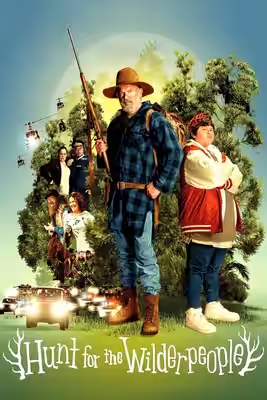
After The Karate Kid Part II, try The Karate Kid (1984, Fi1m 81): The original gives Daniel and Miyagi’s friendship a more satisfying dramatic shape. Then Billy Elliot (2000, Fi1m 81): A different physical discipline, with equally important questions about encouragement and belonging; and Hunt for the Wilderpeople (2016, Fi1m 82): An awkward youngster and reluctant guardian build affection through shared difficulties.
What order should I watch the The Karate Kid films in?
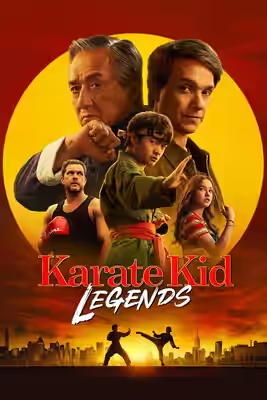
Release order is the safe choice for The Karate Kid, and it is the order our collection page lists them in. The Karate Kid Part II is number 2 of the 3 The Karate Kid titles on Fi1m; before it comes The Karate Kid and after it Karate Kid: Legends. The full order.

Part of · 2 of 3

The Karate Kid

3 films on Fi1m · 1984–2025 · average 69 · best The Karate Kid 81

All 3 in order

Cast

Awards

Kids' Choice Award for Favorite Movie, 1987

Won
Kids' Choice Award for Favorite Movie

If you liked this, try…

  1. The Karate Kid (1984, Fi1m 81)The original gives Daniel and Miyagi’s friendship a more satisfying dramatic shape.

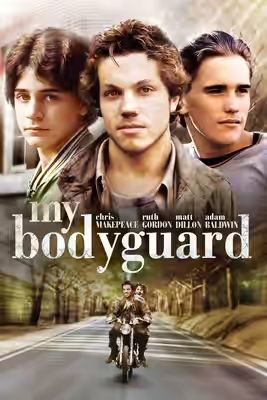
  2. My Bodyguard (1980) · not reviewed yetAnother young outsider discovers that protection and friendship are complicated business.

  3. Billy Elliot (2000, Fi1m 81)A different physical discipline, with equally important questions about encouragement and belonging.

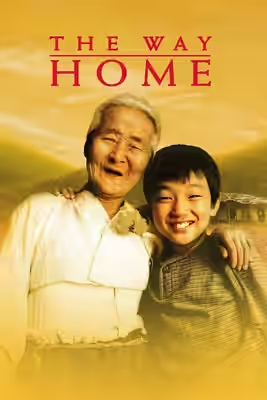
  4. The Way Home (2002) · not reviewed yetA quieter Korean story about a child learning to appreciate an elder.

  5. Hunt for the Wilderpeople (2016, Fi1m 82)An awkward youngster and reluctant guardian build affection through shared difficulties.

Free account

Know what to watch tonight

Two lists that know where things are streaming, collections you can share, your own score beside ours, and Discover that remembers what you have seen.

  • Want to see, sorted by what is streaming now
  • Seen, with your score out of ten
  • No adverts, ever