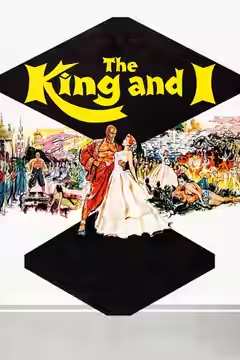
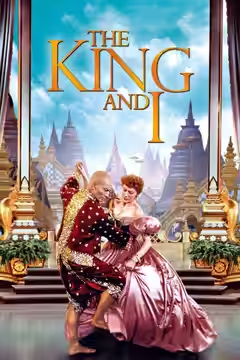
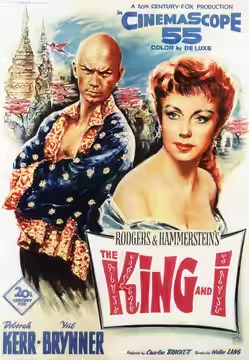
Walter Lang’s film of the stage musical is large, slow and superbly dressed, and Yul Brynner holds it up almost on his own. The songs are still good and the view of Siam has not aged well; go for him and for the ballet.
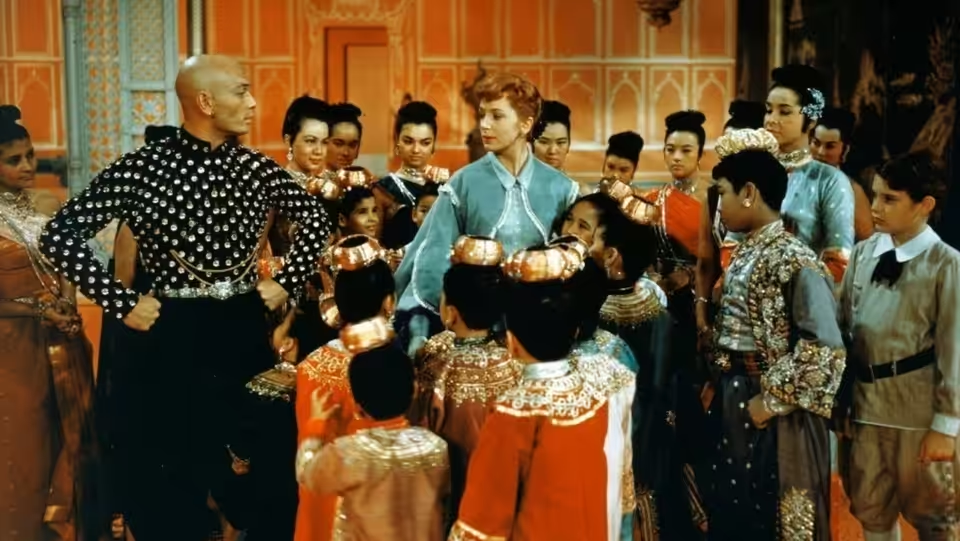
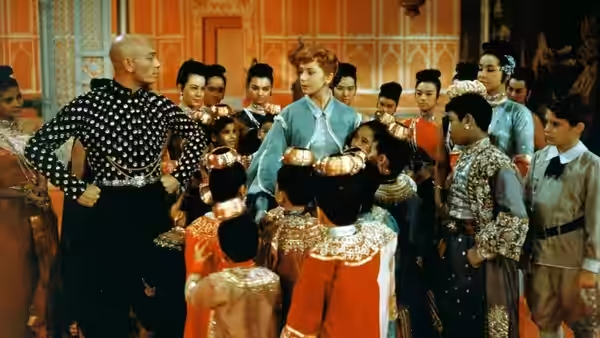
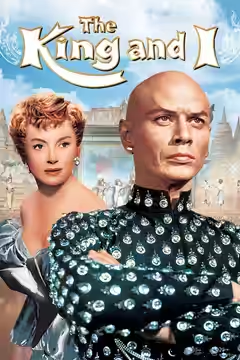
Walter Lang’s job was to put a hit stage musical on a screen twice as wide as the stage and lose nothing on the way. He has largely done it. The King and I is a big, stately, richly dressed film, shot in CinemaScope 55 so that every silk and gilded pillar gets its due, and for about half its length it is a pleasure. The other half is the price. It runs 133 minutes, the tone towards its Siamese characters is one you will have to decide whether to forgive, and only Yul Brynner, a handful of Richard Rodgers’s songs and one remarkable ballet keep it upright.
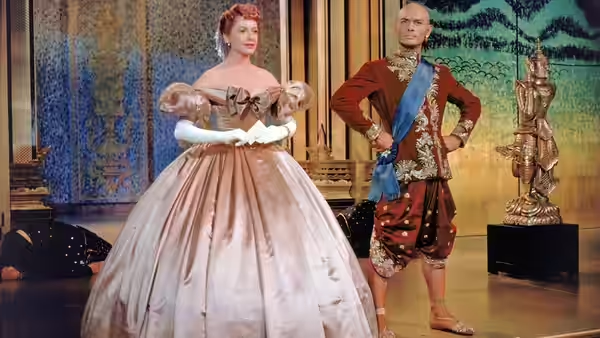
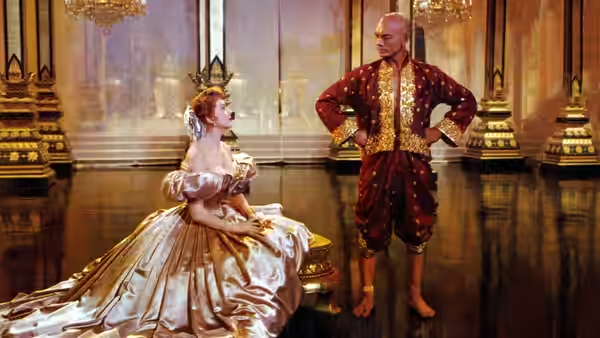
Brynner is the reason to watch. He plays King Mongkut barefoot, bare-chested and with his fists on his hips, a man who has read the European books and is terrified they might be right. He barks “et cetera, et cetera, et cetera” at anyone who has finished a point before he has, and makes the tic funny the first time and sad the tenth. In A Puzzlement, alone on the throne-room floor, he argues himself in circles about what a king ought to believe, and Brynner lets you see a clever man with nobody to ask. It is a large performance in a large film and it is never a cartoon.
Deborah Kerr has the thankless half of the bargain. Anna is right about everything and knows it, and for the first hour she is hard to warm to. Kerr plays her stiff-backed and precise, fighting for her house outside the palace walls as if the house were the point. She is best with the children: Getting to Know You, taught to a row of princes in a classroom with a world map they refuse to believe, is the one number where she stops instructing and starts enjoying herself.
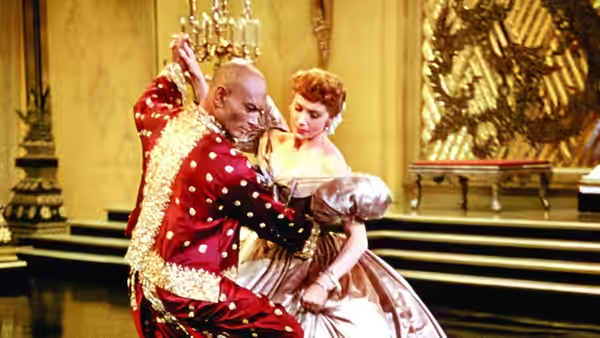
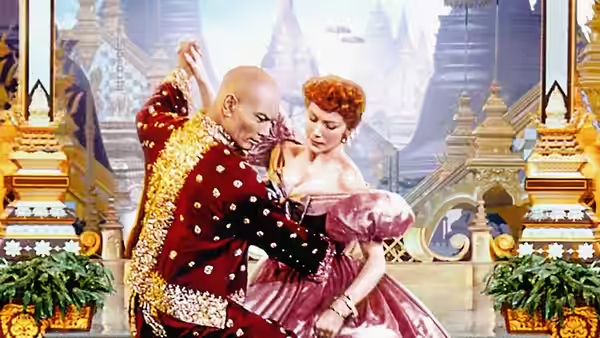
Leon Shamroy shoots the palace in gold, red and deep green and lights it like a cathedral, so that even a scene about who sits where has weight. Irene Sharaff’s costumes carry more of the story than the script does. Anna’s hoop skirts are enormous and pale and take up a quarter of the frame, and every time she walks through a doorway the women in their fitted silks have to move out of her way. The scene that got at us, and we did not expect it to, is Shall We Dance?. Brynner puts his hand on Kerr’s waist, she shows him the polka, and Robert L. Simpson holds the shot as they go round the floor and round again. We had thought we knew this film. We found our throat had tightened, and nothing had happened except two people dancing who cannot say what they want.
The best fifteen minutes belong to Tuptim. The Small House of Uncle Thomas is her retelling of Uncle Tom’s Cabin as Siamese court dance, staged for a British dinner party with masks, banners and snow made of white cloth shaken by dancers, and it is the one stretch where Lang stops photographing the stage and starts making a film. It is also the only stretch where a Siamese character is allowed an opinion about kings and running away.
Elsewhere the tone is harder to sit through. Ernest Lehman’s screenplay, from the stage book and Margaret Landon’s novel, writes the court as a roomful of charming children who need an Englishwoman to explain the world. The wives giggle behind fans, the king cannot pronounce things, and Anna corrects everyone. Rita Moreno and Carlos Rivas, as Tuptim and Lun Tha, are given two duets and almost no scenes, so their romance is a plot device with a tune. Martin Benson’s glowering Kralahome is the only courtier allowed to be intelligent, and the script has no use for him. Between numbers the second hour drags, and Alfred Newman’s orchestrations, handsome as they are, cannot fill a gap that is not there for a reason.
The reviews in 1956 were close to rapturous. A later reappraisal calls it patronising and historically careless, and it is both. We do not think that cancels the rest. You are watching a superb performance and some of the best-dressed frames of the decade, laid over a view of Asia that was not fresh even then.
See it on the largest screen you own. On a small one the palace shrinks to a set, the hoop skirts lose their comedy, and 133 minutes starts to feel like a school term.