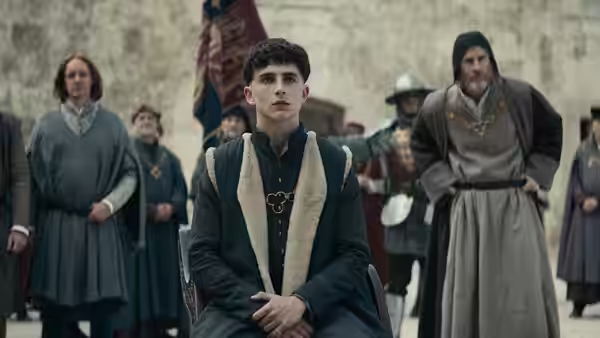
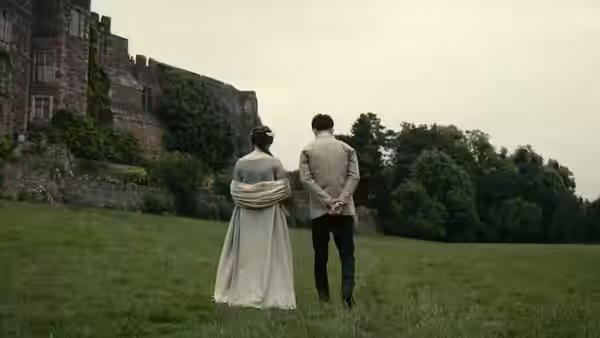
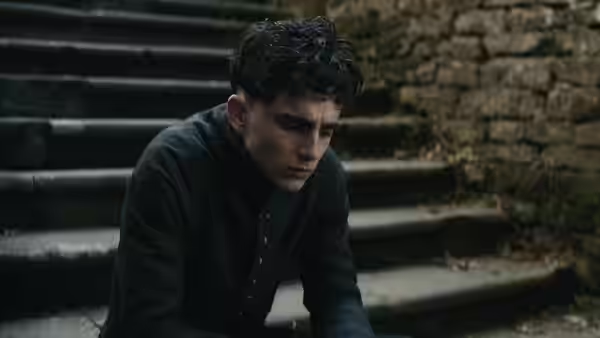
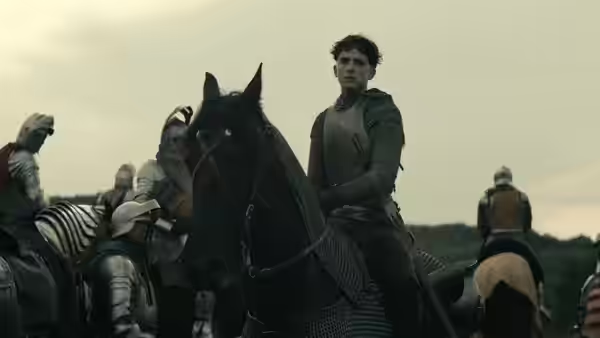
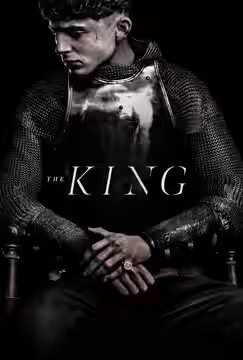
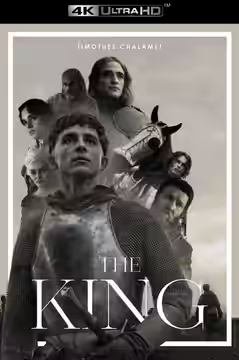
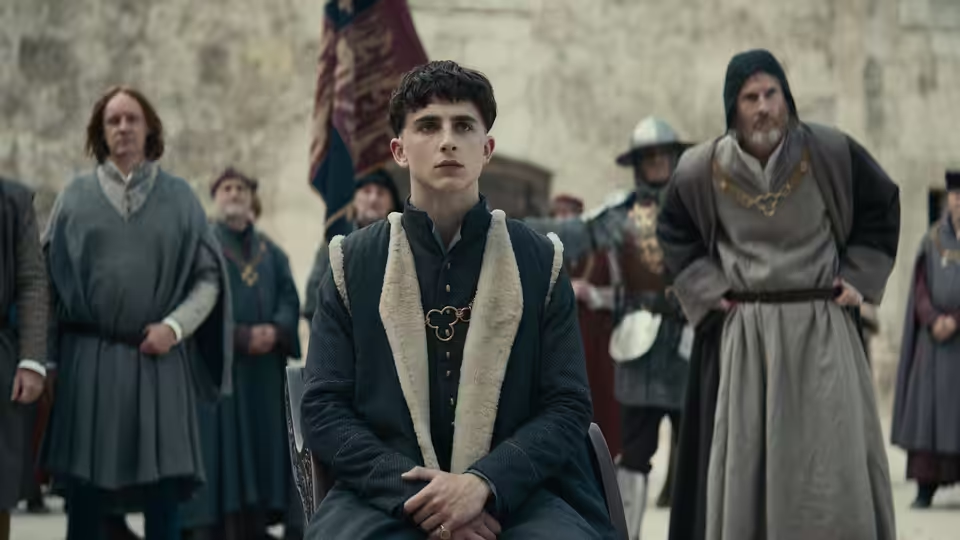
Hal (Timothée Chalamet) stands among clerics and attendants in a pale stone hall
Film review

The King

2019 · Directed by David Michôd · 2h 20m

In a sentenceHenry V with the words taken out and the mud left in

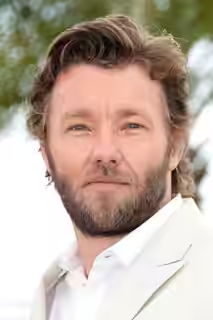
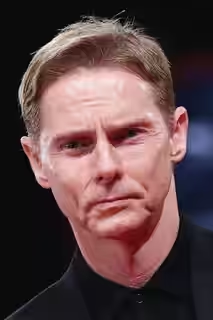
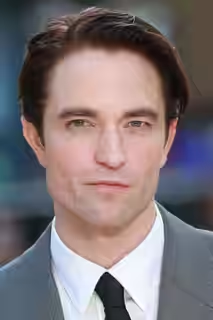
England, early in the fifteenth century. Prince Hal (Timothée Chalamet) drinks in a London tavern with the old soldier Falstaff (Joel Edgerton) and wants nothing to do with his father, King Henry IV (Ben Mendelsohn), who is dying and would rather pass the crown to Hal’s younger brother Thomas (Dean-Charles Chapman). A rebellion led by Hotspur (Tom Glynn-Carney) draws Hal back to court, where he offers to settle it by fighting Hotspur alone in front of both armies. The king’s counsellor William (Sean Harris) watches him closely. When the crown does come to Hal, he means to rule without war. Then a gift arrives from France, sent on behalf of the Dauphin (Robert Pattinson), and it is not meant kindly.

Plays from YouTube when you press play; nothing loads from them until then.

Fi1m review

David Michôd’s version of the Henry plays looks the part, with grey stone, wet fields and a weary, worldly Falstaff from Joel Edgerton. But it removes Shakespeare’s speeches and puts little in their place, and Timothée Chalamet’s king spends much of 140 minutes staring at one fixed point.

David Michôd and Joel Edgerton have taken the two parts of Henry IV and Henry V, thrown out the verse, and rebuilt them as a realist drama about a young man who thinks he has refused a war and finds it has been arranged for him anyway. That is a decent idea and the film means it. The King is handsome, well cast at its edges and slow through its middle, and the slowness is not the mud’s fault. It is the writing’s.

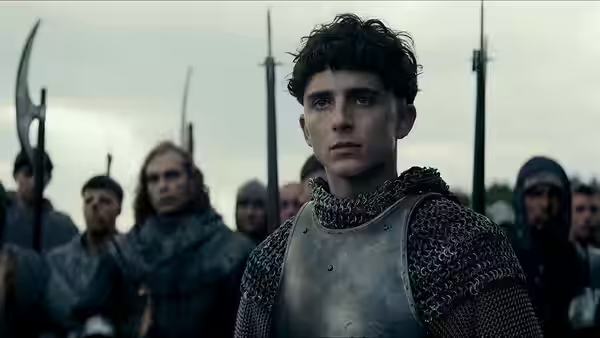
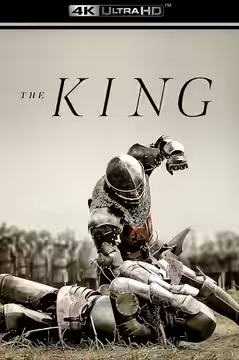
The first act is the best of it. Hal is a sulking drunk in a tavern; his father is coughing in a cold hall; a rebel army is forming in the north. When Hal offers to fight Hotspur alone to spare both sides, the film gives us two men in full plate in a wet field, no music, a great deal of clanging and falling over, and a fight that ends because one of them can no longer get up. Tom Glynn-Carney’s Hotspur is loud and young and plainly frightened under the shouting. We felt, for the only time in the film, that a boy might die in front of us, and we were not sure which one.

Chalamet plays Hal as a scowl that hardens into a stare. He is watchful and quiet and he never raises his voice unless the scene demands it, and we can see the thinking behind the choice: a prince who has decided that stillness is the same as strength. The trouble is that he arrives at the throne already shut, and the remaining hundred minutes give him nowhere to go. When he speaks to his army before battle he does it in short plain sentences, and it is over quickly. Shakespeare gave the actor a saint’s day and five minutes; this gives him a raised voice and a field.

The supporting cast does the work he does not. Edgerton’s Falstaff is not the fat clown but a tired veteran who drinks because he has seen fighting and would rather not see it again, and the screenplay gives him the film’s one properly good idea, which is that the man who knows mud is more use than the men who know maps. Sean Harris plays William as a soft, tilted whisper, every line a suggestion rather than a statement, and we trusted him about as far as he intended. Pattinson arrives late as the Dauphin, blond and lolling and giggling in a French accent that dares you to object, and the film sits up for the first time in an hour. Mendelsohn sweats and spits and gives Henry IV a bitterness that the film does not spend long enough with.

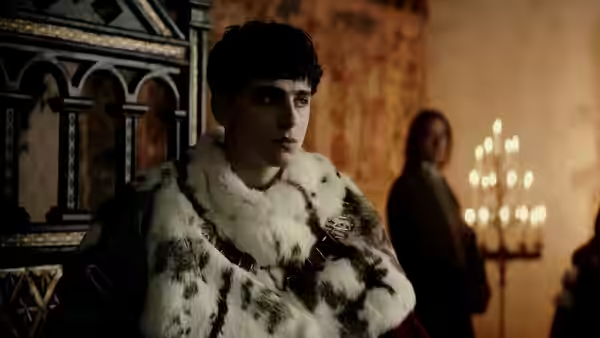
Adam Arkapaw shoots it in flat grey daylight and candlelight, faces half in shadow, and he makes the English weather look like a policy. Fiona Crombie’s halls are bare stone, high and cold, a long table and not much else, so that power looks like an empty room with a chair in it. Jane Petrie keeps Hal in black wool and saves colour for the French, which tells you where the film’s eye is. Nicholas Britell’s score is low strings and a slow pulse; it is right for the battle and a little insistent everywhere else, asking for solemnity in rooms that were already solemn. Peter Sciberras cuts the hour between the coronation and the Channel crossing at the pace of the tables it is set around, and it is here that we were bored, and then annoyed at being bored by a film this carefully made.

Agincourt wakes it up. Michôd shoots the battle close and low, a long muddy scrum in which men drown in their own armour and nobody can see who is winning, and the not-seeing is the point. We were gripped and faintly sick, which is presumably what was intended. After it, the film has one turn left, which we will not describe; it is the most interesting thing in the screenplay, and it comes too late to change how the previous two hours felt.

Michôd’s Animal Kingdom (2010) was also about a quiet young man pulled into a family’s violence, and it made the quiet frightening. Here the quiet mostly sits there. Watch it for Edgerton, for Pattinson’s twenty minutes of nonsense, and for the mud. Keep something to read to hand for the hour in between, and do not feel guilty about it.
Critical consensus AI synthesised

60
Positive
10
Mixed
8
Negative
7

The reviews split almost down the middle, with slightly more in favour than against. Where critics do agree, it is on the cast. Most find Timothée Chalamet a compelling Prince Hal, growing more layered as the crown settles on him, and several single out Joel Edgerton’s worldly, reimagined Falstaff and Robert Pattinson’s flamboyant Dauphin as the film’s most enjoyable turns. The battle scenes, above all Agincourt, are widely praised as grim and unsentimental, and the cinematography earns steady approval.

The reservations cluster around pace and purpose. A large group finds the film ponderous and self-serious, its ideas about power raised and then left undeveloped. Chalamet also divides: the Guardian, Empire and NME each find him miscast or unchanging. Consequence objects to retelling the Henriad without Shakespeare’s dialogue. The spread is wide, from near-raves at the Venice premiere to outright dismissals from The New Yorker, Vulture and Polygon once the film reached general release.

The Hollywood Reporter
2 September 2019 · festival review · David Rooney
90*

The critic finds the adaptation stirring, lucid, and thoughtfully balanced in its treatment of power and war. He especially praises the restrained, emotionally compelling performances of Timothée Chalamet and Joel Edgerton.

Read the full review →
Los Angeles Times
10 October 2019 · Kenneth Turan
85*

Turan finds the film an impressive, contemporary reimagining with strong storytelling. He especially praises Chalamet’s compelling portrayal of Hal and the film’s striking battle sequences.

Read the full review →
Variety
2 September 2019 · festival review · Owen Gleiberman
85*

The critic finds the film engrossing and praises Timothée Chalamet’s star presence as Henry V. He also singles out its grim, unsentimental depiction of battle.

Read the full review →
Evening Standard
3 September 2019 · ★★★★ · David Sexton
80

Sexton finds the film thoroughly enjoyable, recasting Shakespeare’s history plays as a modern, violent political drama. He especially praises Robert Pattinson’s flamboyant Dauphin and Joel Edgerton’s loyal, reimagined Falstaff.

Read the full review →
Time Out
2 September 2019 · ★★★★ · Phil de Semlyen
80

The review calls the film a sturdily entertaining historical drama. It praises Timothée Chalamet’s soulful performance as Prince Hal.

Read the full review →
Screen Daily
3 September 2019 · festival review · Jonathan Romney
64*

The accessible page identifies this as Screen Daily’s Venice review, but its verdict is unavailable. The paywall also hides any specific praise or complaint.

Read the full review →

Straight answers AI written, from our review

Is The King worth watching?
The King is worth watching only for the interested, and we scored it 58. Joel Edgerton's tired Falstaff, Robert Pattinson's twenty minutes of nonsense as the Dauphin, and a close, muddy Agincourt are the reasons to stay; the hour between the coronation and the Channel crossing bored us, and Timothée Chalamet's Hal spends much of 140 minutes staring at one fixed point.
How long is The King, and what is it rated?
The King runs 2h 20m. It is a drama and history film.
Where can I watch The King in Italy?
The King is streaming on Netflix in Italy. Availability is checked daily; the links above go straight to each service.
How violent or frightening is The King, and is it suitable for children?
The King is not for children: it carries a US R and no UK certificate, and its violence is heavy, close and muddy rather than heroic. Two men in full plate beat each other until one cannot stand, and Agincourt is a long scrum in which men drown in their own armour, which left us gripped and faintly sick. Older teenagers who can take that will be fine.
How does The King compare to Macbeth?
The King and Macbeth share the cinematographer Adam Arkapaw and a taste for grey weather and mud, but Macbeth keeps Shakespeare's verse and The King throws it out, and the earlier film is the better one. Michael Fassbender and Marion Cotillard give Macbeth a grief the Chalamet film never finds. Choose The King only if you want the plot without the poetry.
What should I watch after The King?
After The King, try Macbeth (2015, Fi1m 77): Arkapaw again, in fog and firelight, with the verse left in. Then The Lion in Winter (1968, Fi1m 81): Plantagenets at Christmas, and everyone talks like they mean to draw blood.

Cast

Awards

AACTA Award for Best Actor in a Leading Role, 2019

Nominated
AACTA Award for Best Actor in a Leading Role

AACTA Award for Best Cinematography, 2019

Won
AACTA Award for Best Cinematography

AACTA Award for Best Costume Design, 2019

Won
AACTA Award for Best Costume Design

AACTA Award for Best Direction, 2019

Nominated
AACTA Award for Best Direction

AACTA Award for Best Editing, 2019

Nominated
AACTA Award for Best Editing

AACTA Award for Best Film, 2019

Nominated
AACTA Award for Best Film

AACTA Award for Best Production Design, 2019

Won
AACTA Award for Best Production Design

AACTA Award for Best Sound, 2019

Nominated
AACTA Award for Best Sound

Australian Film Institute Award for Best Screenplay, 2019

Nominated
Australian Film Institute Award for Best Screenplay

If you liked this, try…

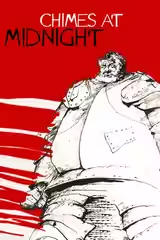
  1. Chimes at Midnight (1965) · not on Fi1m yetWelles plays Falstaff himself, and the Shrewsbury mud has never been bettered.

  2. Henry V (1989) · not on Fi1m yetBranagh keeps every word and the speeches are why you came.

  3. Macbeth (2015, Fi1m 77)Arkapaw again, in fog and firelight, with the verse left in.

  4. Outlaw King (2018) · not on Fi1m yetAnother muddy medieval king, this one Scottish and rather more cheerful about it.

  5. The Lion in Winter (1968, Fi1m 81)Plantagenets at Christmas, and everyone talks like they mean to draw blood.