Zack Snyder leaves the superheroes behind and sends two men across South America to cook, brood and kill for 135 minutes. It is handsomely shadowed and has almost nothing to say, and the violence is dwelt on long past any purpose we could find.
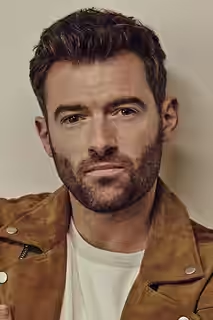
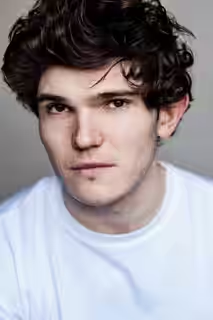
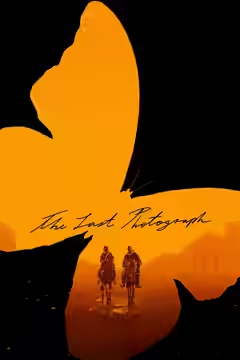
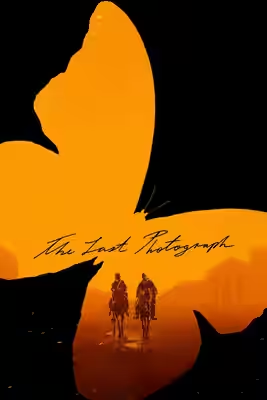
Zack Snyder has put the capes away. The Last Photograph has no city to level and nobody who can fly; it is an adventure drama about two men, Ethan Black (Stuart Martin) and Joe Wallace (Fra Fee), crossing South America, and Snyder directs it, photographs it and supplies the story, with Kurt Johnstad writing the screenplay. That is a real change of scale for him, and the one critic so far to find much to like has admired him for trying it. So do we, up to a point. The film itself is poor: dark, slow, repetitive and unkind, and at 135 minutes it is a long time to spend with two men who barely speak.
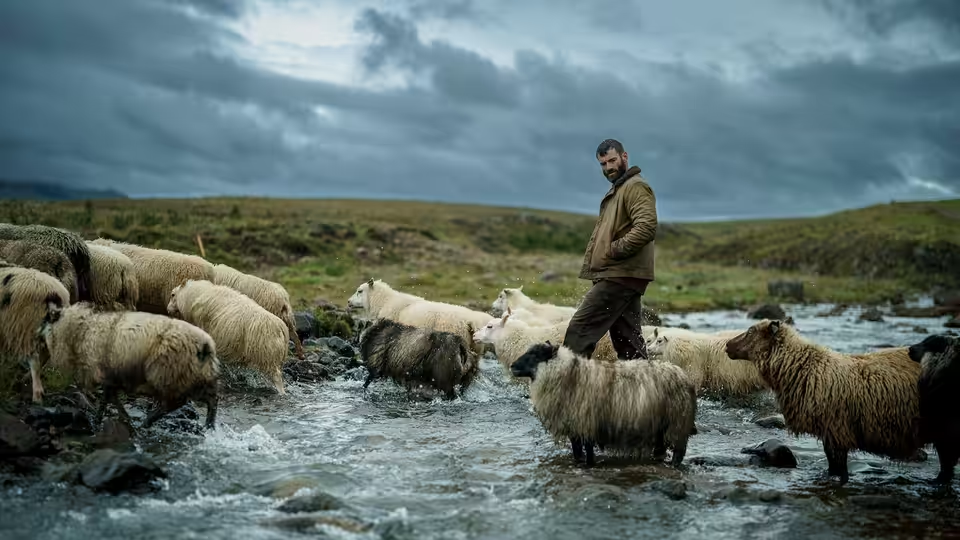
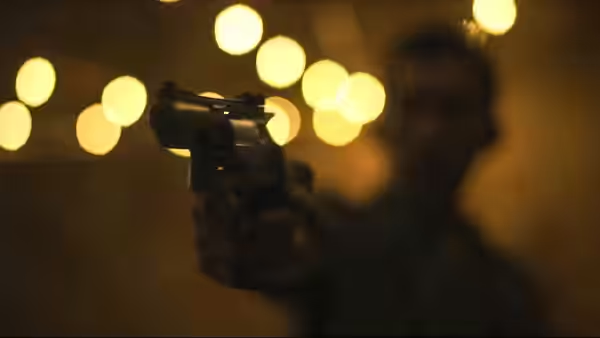
The look is the best of it. Snyder shoots his own picture and lights it as though electricity had not been invented: flickering light, faces half in shadow, rooms where the dark takes up more of the frame than the people. It is handsome, and it suits the two or three scenes in which the film works. Those are the meals. When Black and Wallace stop to cook, the camera stays put, the food is prepared without hurry, and for a few minutes we were as settled as they were. They are the only scenes in the film that seem to know how long they should last.
Then the men get up from the table and the trouble starts. Johnstad’s dialogue is flat by design, two men in a deadpan that is meant to read as intimacy, and for a while it does; then the same clipped exchange arrives for the fourth time and it reads as a shortage of things to say. Melissa Remenarich’s cut has the same problem. Scenes repeat their shape, a journey, a stop, a meal, a killing, and each is given the same weight, so nothing builds on what came before. We were bored by the hour mark, and by the end we were angry about being bored, because the pieces of a better film are visible in the dark.
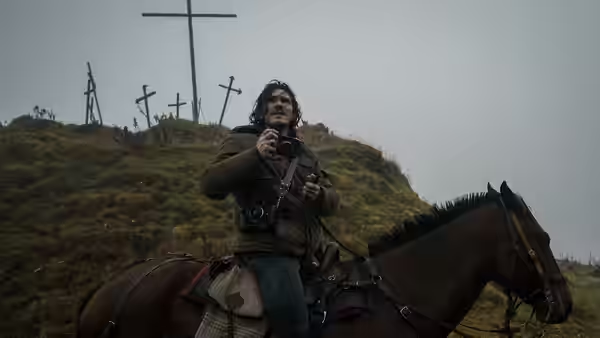
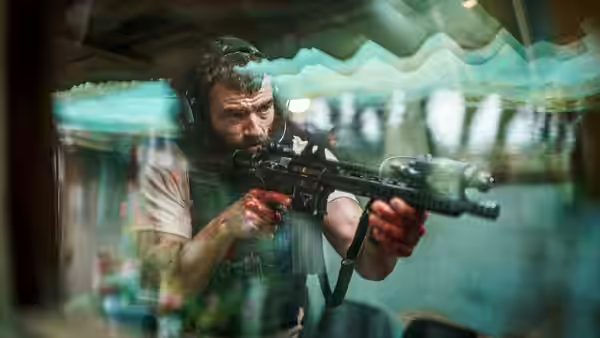
The violence is the part most of the reviews so far have condemned, and they are right. It is gruesome, it is lingered on, and the lingering does not seem to be for anything. We winced the first time, as intended; by the third we had stopped wincing and started wondering what Snyder thought he was showing us. There is a good deal of symbolism, or what is offered as symbolism, and the title promises a photograph, but we could not make the images add up to a meaning, and we suspect the film cannot either.
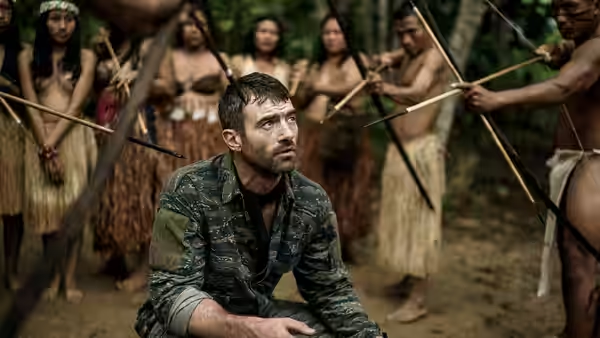
The people the two men meet fare worst. Marlon Moreno and Costanza Andrade are billed third and fourth and given almost nothing to do; the Indigenous communities the men pass through are treated as scenery, and the women are looked at rather than listened to. Diego Garcia’s production design is mostly seen in that flickering light, and the costumes by Johanna Buendía Páramo and Stephanie Portnoy Porter disappear into the same shadow. Hans Zimmer, with Steven Doar and Omer Benyamin, supplies the music, and it is asked to carry more than the story gives it.
Snyder’s better films had a book underneath them. 300 (2006) and Watchmen (2009) were composed against somebody else’s pages, and it showed. Rebel Moon (2023), also written with Johnstad, was his own story, and it was hollow in the way this is: assembled, lit and scored, with nobody in it we cared about. Taking away the spectacle was a brave thing to try. Without it, the dialogue and the story have to carry the evening, and they cannot.
Anyone who has followed Snyder this far will find the images and the seriousness intact, and may be glad to see him attempt something quieter. Everyone else should know that quieter here means darker and slower, not gentler. The dinner scenes are good. We would happily watch him make a whole film about two men cooking, and we suspect it would run under 135 minutes.