Mike Flanagan’s Stephen King adaptation has a street-corner dance good enough to justify the ticket, and an end-of-the-world chapter nearly as good. Then it spends its last forty minutes telling us, in words, what it had already shown us.
Mike Flanagan has adapted Stephen King twice before, in Gerald’s Game (2017) and Doctor Sleep (2019), and both times he chose horror. This time he has chosen a story with no monster in it. The Life of Chuck is told backwards in three chapters, beginning with the end of the world and finishing with a boy learning to dance in his grandparents’ house. It is sincere to the point of discomfort, it has one sequence we would not have missed for anything, and it explains itself far more than it needs to.
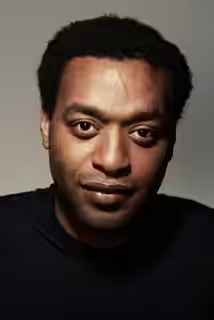
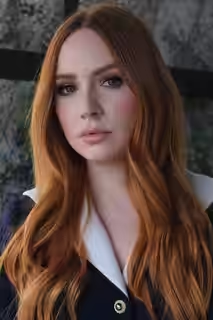
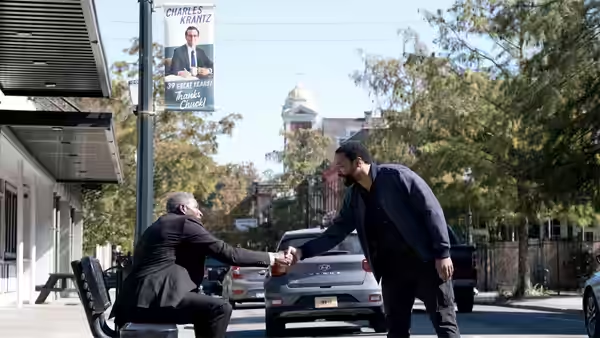
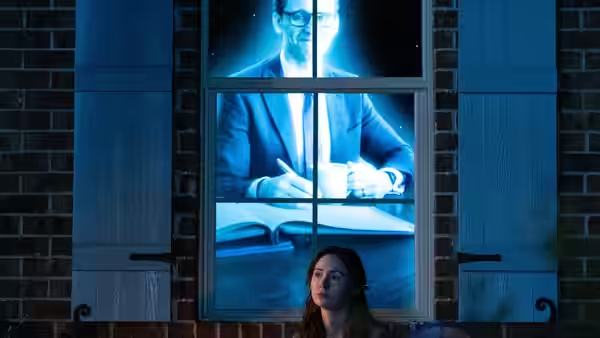
The first chapter is the best, and the one nobody would expect from this material. Marty Anderson (Chiwetel Ejiofor), a schoolteacher, watches the world come apart a piece at a time. His ex-wife Felicia Gordon (Karen Gillan) works nights at the hospital and is surprised to find she still wants to talk to him. Nobody panics much; they go to work and come home. On every billboard a man in a suit smiles above a message thanking Charles Krantz for thirty-nine great years, and nobody knows who he is. Eben Bolter shoots it under failing streetlight and in rooms lit by whatever still works, and there is a walk home along a darkening road that gave us a proper chill. Andrew Grush and Taylor Stewart keep the score to a low hum here, and Ejiofor plays a man who has stopped expecting answers and is quietly relieved.
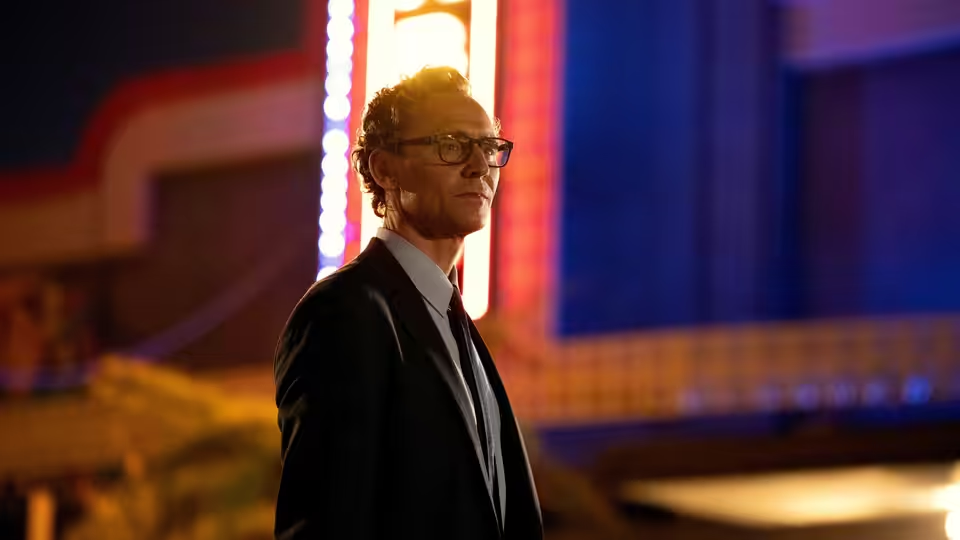
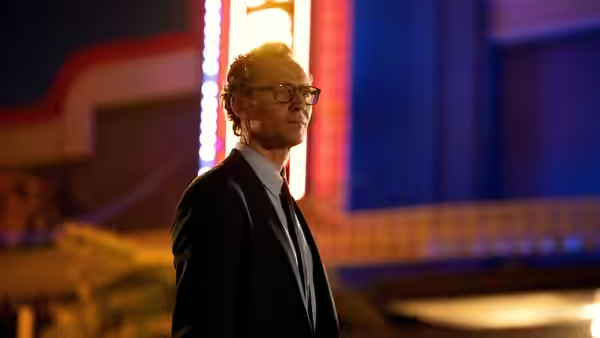
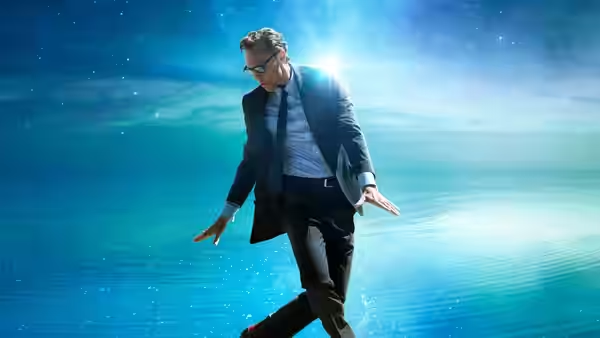
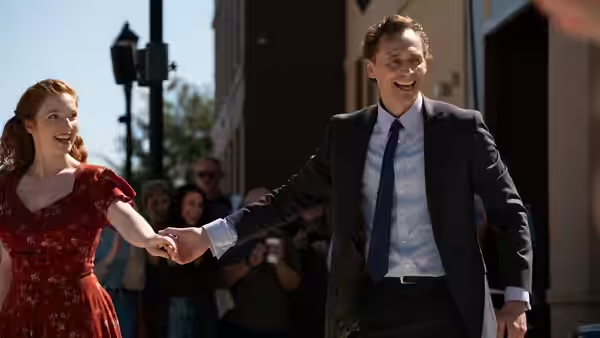
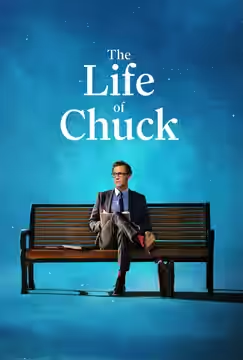
Then the chapter called Act Two, and the dance. Chuck (Tom Hiddleston), a man in a suit carrying a briefcase, walks past a busker drumming on a corner, sets the briefcase down and starts to move. Janice Halliday (Annalise Basso), who has just been dumped by text, gets pulled in. It runs for several minutes and Flanagan, who edits the film himself, mostly lets it run, holding wide enough that we can see the whole body and the crowd forming. Hiddleston dances like a man who took lessons as a child and has told nobody since, loose in the hips and pleased with himself, and Basso matches him. We grinned in the dark for the whole of it and were sorry when he picked the briefcase back up. It is the reason to see the film, and the reason most critics forgive what follows.
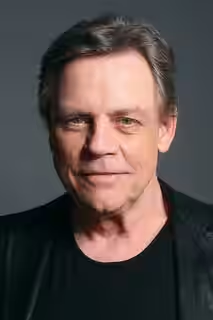
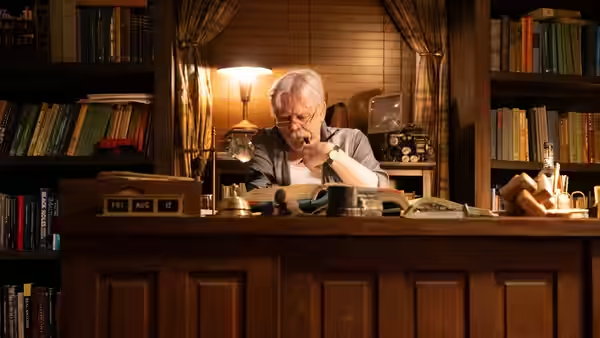
What follows is the longest chapter and the weakest. Chuck grows up with his grandparents, played as a boy by Benjamin Pajak and at other ages by Jacob Tremblay and Cody Flanagan. Albie Krantz (Mark Hamill) is his grandfather, Sarah Krantz (Mia Sara) his grandmother, and it is Sarah who dances in the kitchen and passes it on. Miss Rohrbacher (Samantha Sloyan) runs the school dance club where Chuck partners Cat McCoy (Trinity Jo-Li Bliss). Steve Arnold gives the family a tall wooden house with a cupola, the sort of place King has been writing about for fifty years, and Hamill is good in it, gruff and careful, with fear underneath. But the chapter goes on, and on, and each scene exists to account for something in the two before it.
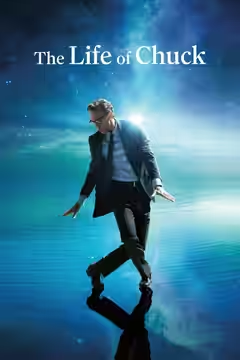
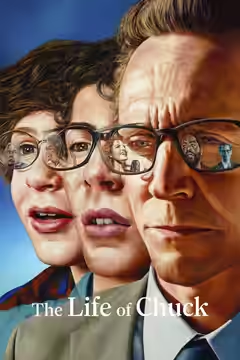
The trouble is the narrator. Nick Offerman reads long stretches of prose over the picture, telling us what Marty is thinking, what Chuck decides, what the grandfather’s silence means. The actors are already showing us. Every time the film comes near something we might have worked out for ourselves, Offerman arrives to make sure we do not have to. The idea on the poster, that every life is a universe all its own, is spoken, then paraphrased, then illustrated. Once would have done. By the last half hour the mystery of the billboards has been answered in full, and we felt the film taking something back from us that we had been glad to hold.
Flanagan is the most sympathetic reader King has had on screen in years, and he can hold a large sad idea steady; Doctor Sleep did it for two and a half hours. Here he has 111 minutes and one idea, that an ordinary life is the size of a universe, and he does not trust us with it. Because the film runs backwards, its high point arrives at the halfway mark, and everything after is explanation.
See it for the first chapter and for the dance, and go in knowing the film will then explain both. Bring someone who cries easily; they will have a better night than you will. It carries a 15 and opened in British cinemas on 22 August 2025.