Frank Sinatra gives this addiction drama a vulnerability that survives its more emphatic melodrama. Otto Preminger’s film can feel stage-bound, but its concern for a suffering man remains persuasive.
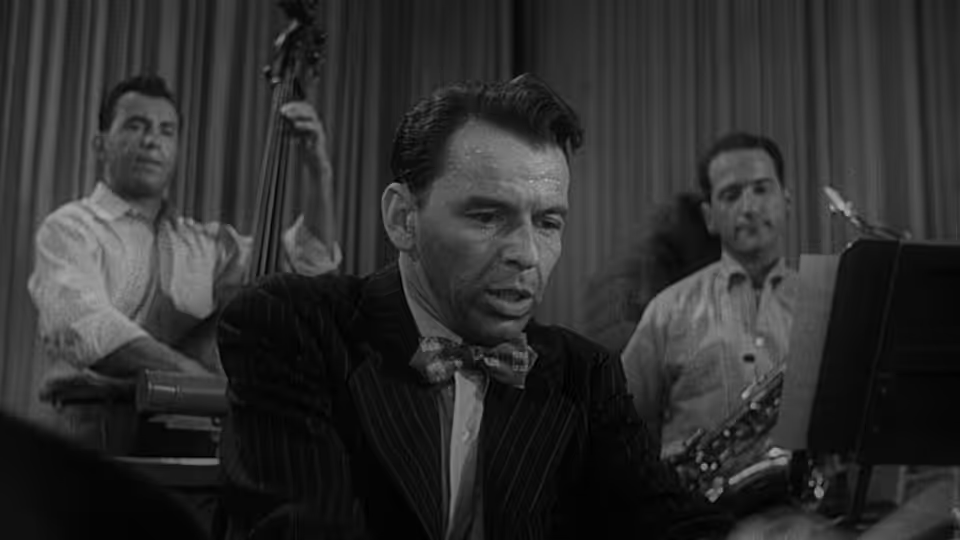
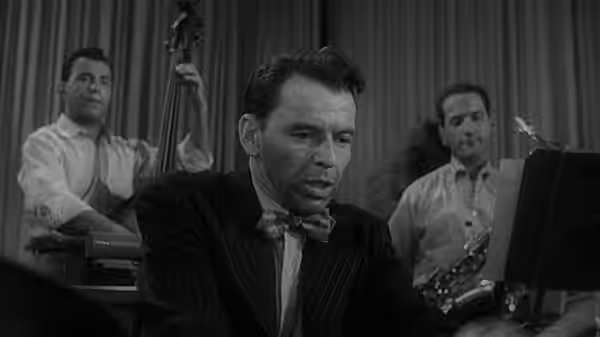
The Man with the Golden Arm is worth seeing for Frank Sinatra, whose vulnerability keeps a sometimes stiff drama painfully human. Otto Preminger takes drug addiction seriously enough to let it be uncomfortable, and there is no need to admire the film merely for tackling the subject. We care because Frankie Machine seems so poorly equipped to withstand another disappointment. The weakness is that the surrounding drama sometimes works too hard to make certain we understand how much he suffers.
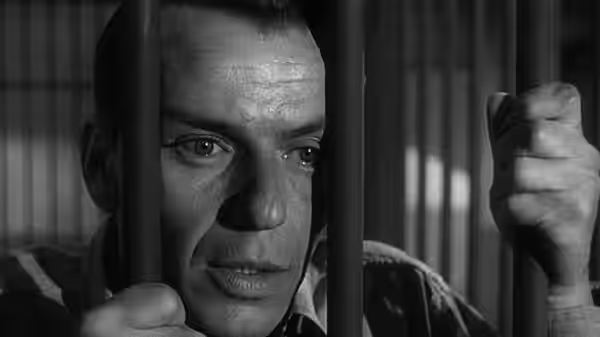
The central performance avoids making weakness contemptible. There is nothing comfortably picturesque about Frankie’s deterioration, and little invitation to enjoy watching a star demonstrate how far he can descend. Frank Sinatra makes the character’s difficulty in carrying on persuasive enough that we need no special pleading on his behalf. That matters in a film about dependence, where pity can easily become the only feeling available to an audience.
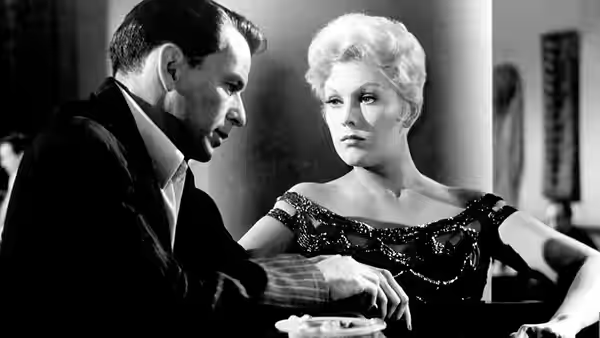
The poker sequence is where that pressure becomes most absorbing. We felt anxious watching the effort of carrying on; the game becomes exhausting because Frankie’s vulnerability remains apparent throughout it. Louis R. Loeffler’s editing is particularly effective here, giving the strain time to register without making the sequence feel merely prolonged. Elsewhere, the dramatic emphasis can become tiring, but here the duration is part of what makes the scene work: we start to feel how much continuing costs him.
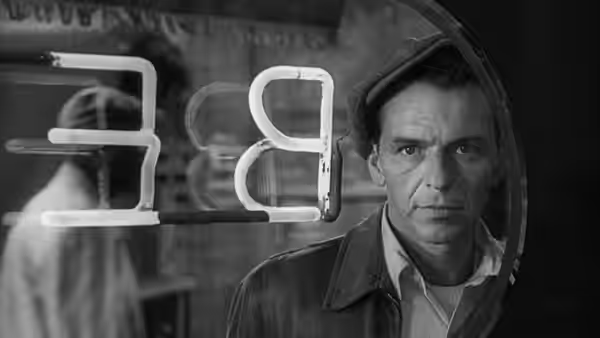
Sam Leavitt’s cinematography is most persuasive when our attention rests on the performers. Faces hold our interest more securely than the world around them, which never quite loses its enclosed, theatrical feel. Joseph C. Wright’s production design contributes to that limitation: the settings feel prepared for a drama rather than inhabited before it began. This does not ruin the film, but it sometimes makes the suffering seem arranged for inspection, particularly when the acting becomes emphatic too.
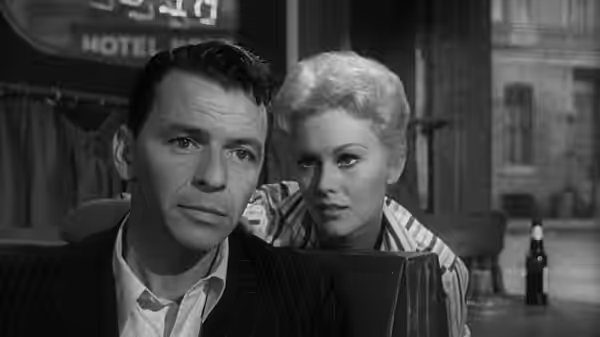
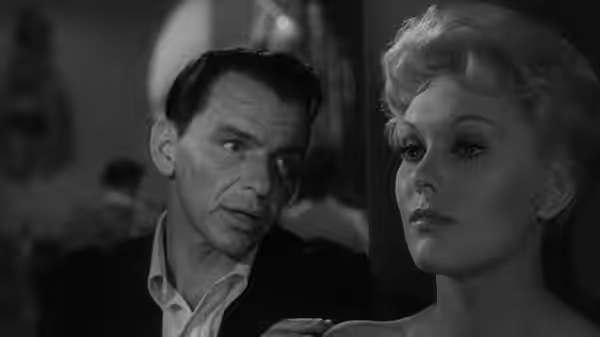
Kim Novak supplies a welcome degree of restraint as Molly, giving the film someone whose sensitivity does not need to be underlined. Eleanor Parker’s Zosh Machine is harder to accept on those terms; the performance can feel over-insistent beside the uncertainty of the lead. The screenplay by Lewis Meltzer and Walter Newman is susceptible to the same problem, pressing an emotional point after it has registered. These are connected weaknesses rather than separate disasters, but they account for much of the film’s stiffness.
Elmer Bernstein’s music is forceful enough to risk adding another layer of insistence. We find its urgency more persuasive than some of the dramatic exchanges, however, because it gives the anxiety a momentum that the dialogue cannot always sustain. The score helps the film feel unsettled even when the staging seems fixed. It is a useful reminder that restraint is not the only way to take a character’s pain seriously.
As an addiction drama, the film succeeds most clearly in keeping our attention on a particular person rather than asking us to approve its seriousness. Its theatrical passages require some tolerance, and the supporting characters do not all feel equally convincing. See it for Frank Sinatra and Kim Novak, and accept that the film occasionally presses harder than either of them needs it to.